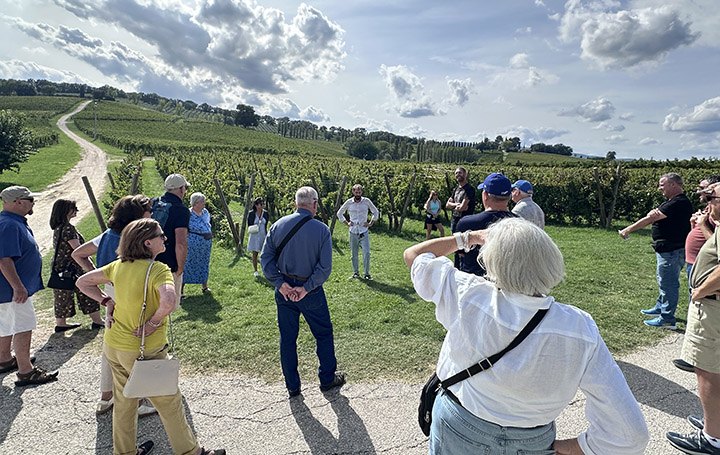
WineMaker magazine readers joined Publisher Brad Ring to explore Tuscany, Italy’s world-famous wine regions in September. The group of 21 met with local pro winemakers happy to answer questions from North American home winemakers while we enjoyed sampling their wines and walking through their cellars very active from the 2025 grape harvest.
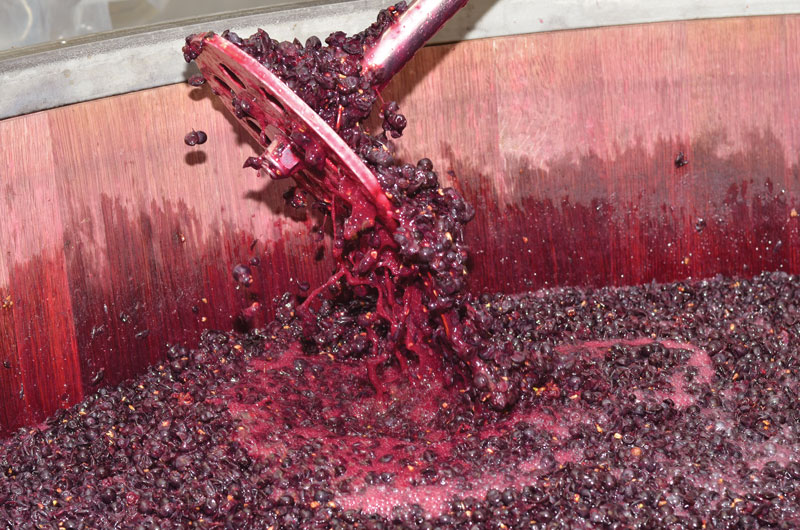
Harvest is always a special time to visit wineries and the WineMaker group had the opportunity to watch Sangiovese grapes getting crushed and destemmed, taste just-pressed rosé juice straight from the tanks, and walk through bins of grapes coming in from the fields.
There’s also a very unique wine in Tuscany that gets its start during harvest: Vin Santo. The group had the chance at Avignonesi Winery to see grapes laid out on straw mats just after being picked where they will dry for several months. The resulting raisins are then pressed and sealed by wax in small barrels along with a special mother yeast for ten years to create this special dessert wine. The white Vin Santo is most often made from Trebbiano or Malvasia grapes, while Sangiovese grapes are used to produce “Occhio di Pernice,” translating to the eye of the partridge for its color.
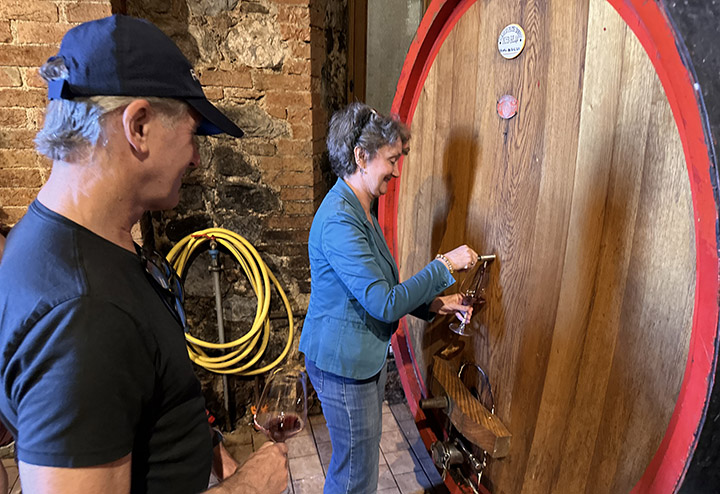
Sangiovese is the star grape of Tuscany and this group of home winemakers had the chance to explore its various expressions based on different regions within Tuscany, whether it was called Chianti, Brunello di Montalcino, Vino Nobile di Montepulciano, or even just Sangiovese!

It is always a treat to be in the heart of the Chianti region in Tuscany and we had tours and tastings at two classic and beautiful wineries — Castello di Volpaia and Castello di Albola — both built into medieval buildings on hilltops overlooking their vineyards. The Tuscan hilltop village of Montalcino is all about the famous Brunello di Montalcino. The vineyards surrounding Montalcino produce some of the most sought-after, and priciest, wines in the world. We had the opportunity to do several barrel samples and drink through some older vintages of this 100% Sangiovese wine during a harvest winery tour at Cinelli Colombini and even try out some gelato made from Brunello in town. Our visits to well-known Tuscan Sangiovese wine regions also included a stop at another hilltop town: Montepulciano, home to the classic Vino Nobile di Montepulciano made with 100% Sangiovese. The group walked the steep roads of Montepulciano exploring some of the labyrinth of wine caves carved into the limestone beneath its streets and of course tasted the wines named after the beautiful town.
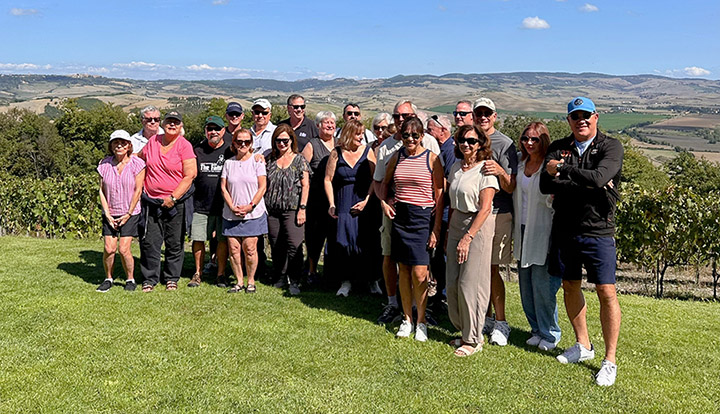
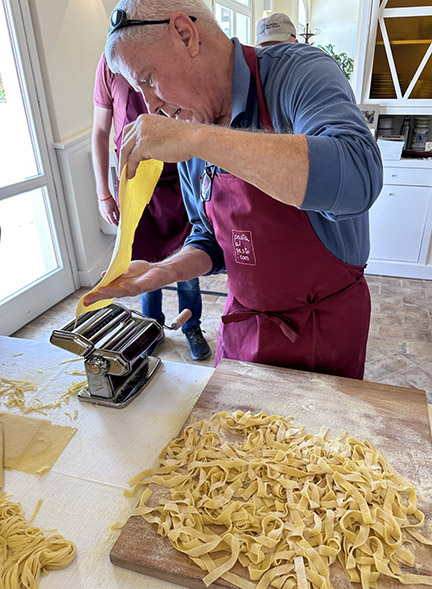
In Italy, great food always accompanies great wines. We explored the incredible food side through several wine-paired dinners and lunches as well as local meats and cheeses at every winery during tastings. The group also worked for their food donning aprons for a cooking class at the Umbrian winery Cantina Scacciadiavoli. We created a delicious three-course lunch of panzanella salad, fresh pasta in a zucchini and mint marscapone sauce, and a tiramisu using the winery’s special passito dessert wine. Then we enjoyed a wine-paired lunch eating our hard work. The group also accompanied professional truffle hunters one afternoon on their private lands watching two Lagotto Romagnolo dogs dig up late-season black truffles.

Our two 2026 WineMaker trips both have space available. We’ll visit New Zealand during the Southern Hemisphere grape harvest next March 15–23, 2026. And from June 14–19, 2026, WineMaker is heading to Mexico’s Valle de Guadalupe to explore this exciting wine region just two hours south of San Diego, California. Details can be found at winemakermag.com/trip. We hope you can join us on a future WineMaker trip as we visit different famous wine regions around the world and learn from local winemakers. Cheers!


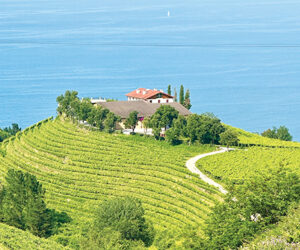
WineMaker readers recently joined Publisher Brad Ring exploring Spain’s Rioja wine region and either side of the Spain-France border in Basque Country. We share images and an overview from a trip of a lifetime.
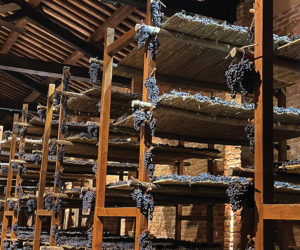
Wineries can, and often do, create four distinct wines from a single vineyard in the Italian Valpolicella region. Amarone is the most famous, requiring the grapes to partially dry prior to pressing, but all four unique wines highlight techniques that the home winemaker can learn from.