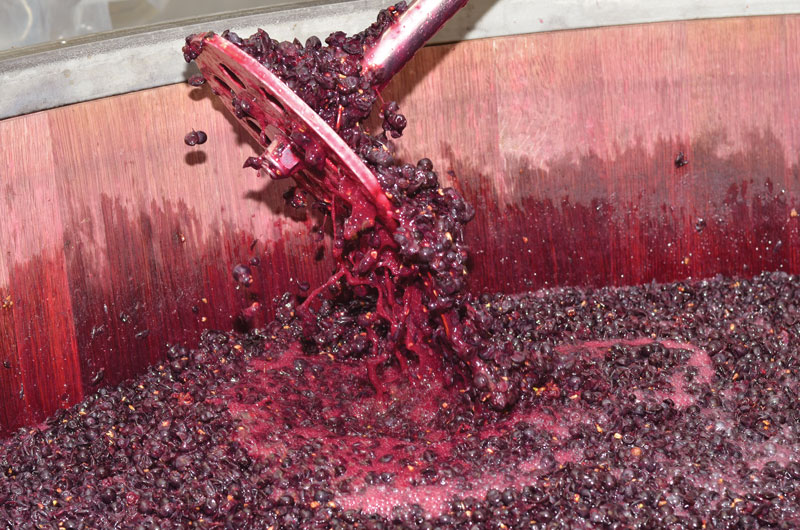
Thanks for writing with such a vivid description of your rosé-making adventure. Even winemakers who’ve been at it for years know how quickly Pinot Noir can surprise you. Its skins are thin, but they can release pigment readily, and once the juice starts to pick up color, it can change faster than you think — particularly if the fruit is warm or if the cap gets stirred often.
In your case, the main culprit sounds like timing. You just didn’t check early and often enough. Color pickup in juices is relatively unpredictable and can vary with the vintage and the clone of the grape. Three and a half hours on the skins is quite a long soak for rosé. If you’re aiming for a lighter-color style, it’s best to start checking color every 30 minutes or so, especially during the first couple of hours after crushing. The best practice is to make color checks part of your routine from the very beginning, taking frequent, small samples so you can watch the color deepen in real time and decide exactly when to press.
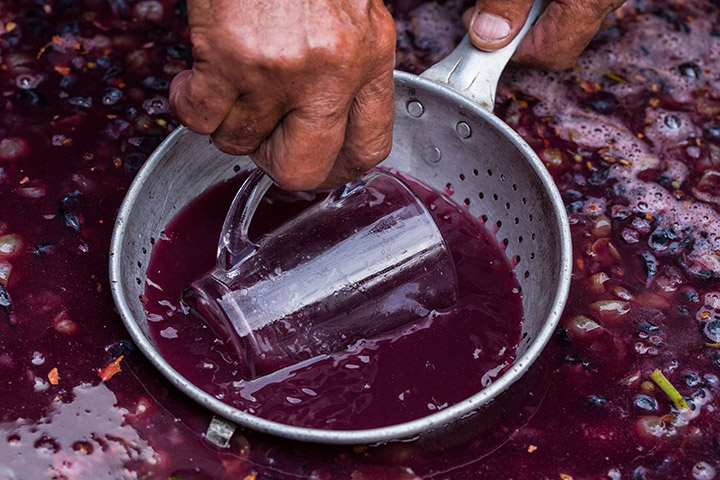
The other challenge was how you judged the color. When you scooped out a glass of must and thought it wasn’t pink enough, you were looking at a mixture still full of suspended solids — bits of pulp, skin, and seeds that scatter light and make the juice look paler than it really is. Once you stirred the cap, you mixed in more of that pigment-rich material and saw how dark the liquid had already become. Even though it’s hard to get a perfectly clear sample when juice is still turbid, give it your best shot. Try pouring it first through a colander to catch the big chunks, then through a kitchen strainer, and finally through a coffee filter to get as much clarity as possible. It takes a few minutes, but it’s the only way to get a realistic idea of what your eventual wine will look like. Even if you can only collect 10 mLs in a small glass graduated cylinder you’ll be able to hold it up to the light and get a good idea of where you are. Try to check the color in both natural light and indoors; light quality makes a big difference in how color appears.
One trick some winemakers use when making rosé is to actually load some of it into the press right away and let color evolve in the press and press pan. Depending on how much must you have and how quickly you’ll be able to separate the skins from the juice, it can let you get a jump on the process so you’re not overshooting your color mark. Factor in the pressing time as part of the remaining skin contact for at least a portion of the juice. You might want to start the pressing process the minute you think you’re at your minimum color level so you can dial it in as you go. This works especially well if you’ve got a big press pan or vessel you’re pressing into so you can monitor the color of the whole batch as it comes out.

Once the skins are removed, the color won’t deepen any further. In fact, some pigment will drop out during fermentation and aging, so the final wine will usually be a bit lighter than the juice you pressed off — but only modestly so, perhaps by 15–25%. Don’t rely on that natural fading to transform a light red into a pale pink; the direction of your rosé’s color is largely set the moment you press.
You mentioned adding bentonite and PolymustTM Rosé after pressing. Those are both fine tools for clarifying and polishing, and they can help brighten color slightly by removing excess phenolics or haze, but they won’t drastically reduce pigment. If, once fermentation and settling are complete, the color is still darker than you’d like, you can consider a light fining with a decolorizing carbon such as Charbon Actif Plus GR from Laffort. Be sure you’re buying the color-removing type, not the deodorizing kind.
Carbon fining should be done on finished wine, never on juice, so that you know where your true starting point is and you can make adjustments gradually and evaluate the results as you go. Dissolve the carbon in about ten times its weight in water and let it hydrate for an hour before adding it to the wine during a gentle mixing or pumpover. Allow the treated wine to settle for about 48 hours, then rack it carefully off the carbon. Because activated carbon particles are very fine and sometimes reluctant to settle, adding an enzyme such as LafazymTM CL will help them clump and drop more efficiently. Even so, you may find it takes weeks for the wine to fully clear, and some winemakers follow up with a fine or sterile filtration to be sure no residue remains.
When using carbon, start with a conservative dose. Like all fining agents, it might remove more than just the target compound — it can take a bit of aroma and freshness with it. Small, cautious additions will give you better control and help preserve the wine’s fruit character.
Looking ahead, prevention really is the best strategy. For rosé, temperature control makes a big difference. If you can, chill the must to about 50 °F (10 °C) before soaking; that slows pigment extraction and gives you a wider window to monitor the developing color. I know well how hot Paso Robles can get during harvest season, so try to pick your grapes as cool as possible — dawn picking in Paso (and most places) can be best so the grapes have benefitted from a full night’s chill down on the vine. Frequent sampling, clarification (as much as possible) of your test juice, and good record-keeping on time and temperature will help you repeat (or refine) your results from year to year.
One final note about keeping that bright, fresh pink hue: I generally avoid putting rosés through malolactic fermentation (MLF). MLF tends to push pink tones toward salmon or orange as pigments react with lactic acid bacteria. Most rosés don’t need the softer mouthfeel that MLF provides anyway, and keeping the wine crisp and fruity helps preserve its fresh color.
Think of this batch as a learning experience, one that will sharpen your eye for future harvests. Pinot Noir can be a fickle partner for rosé, but once you find your rhythm — sampling often, straining carefully, pressing at just the right moment — you’ll have no trouble pouring a wine you’ll be proud to share.