Abundance
Ever have one of those good ideas that pops up from seemingly nowhere? That usually happens to me in the shower, not during a public rally. But there it was, emerging fully developed from what I was hearing from a spirited speaker on the Plaza Square in downtown Sonoma this past July. The presentation was put on by an organization called Extra Food, a highly effective non-profit in Marin, California, whose mission is to end hunger and wasted food in the Bay Area through their regional food recovery programs. One of those programs, Share the Bounty, collects extra and unwanted fruits and vegetables from small farms and private backyard gardens and delivers that produce directly to people in need, usually bypassing traditional food banks and pantries.
I’ve been interested in doing something significant to combat hunger for some time now as I find it unconscionable that there are people starving in America when there is such an abundance of food to be had. As a commercial winemaker, I feel the need to be proactive in my own space given that vineyard workers in California experience high rates of food insecurity due to low wages, unstable work, and the high costs of living. And let’s call it as it is, many are immigrants and may face legal barriers to accessing public assistance programs.
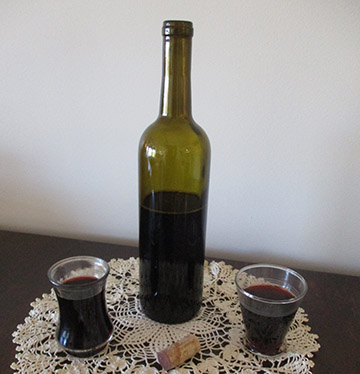
Hence, I am pleased to announce that in only a few short months my winery, Tiny Vineyards Wine Company, began working with Extra Food to develop a program that gleans excess grapes from private vineyards in Sonoma Valley and turns that harvest into premium wine to be sold directly to the public under the label name Abundance. Our initial plan for this first year is to make approximately 100 cases of Abundance wine to be sold at $20 to $25 per bottle. Hopefully we can turn those wine sales into meaningful funding to directly support Extra Food’s distribution efforts, which will be focusing on local commercial vineyard workers in Sonoma Valley experiencing food insecurity due in part to the downturn in the industry, and the fact that many workers are afraid to visit local food banks because of immigration enforcement.
We’re purposely starting small this first year. More a proof-of-concept than anything else. But the idea is imminently scalable. I fully believe taking 100 cases to 10,000 cases to 100,000 cases with participating vineyards in wine regions across the country is doable, and the impact could be substantial.

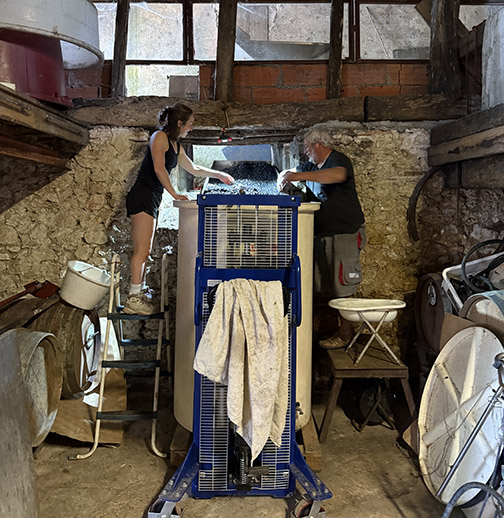
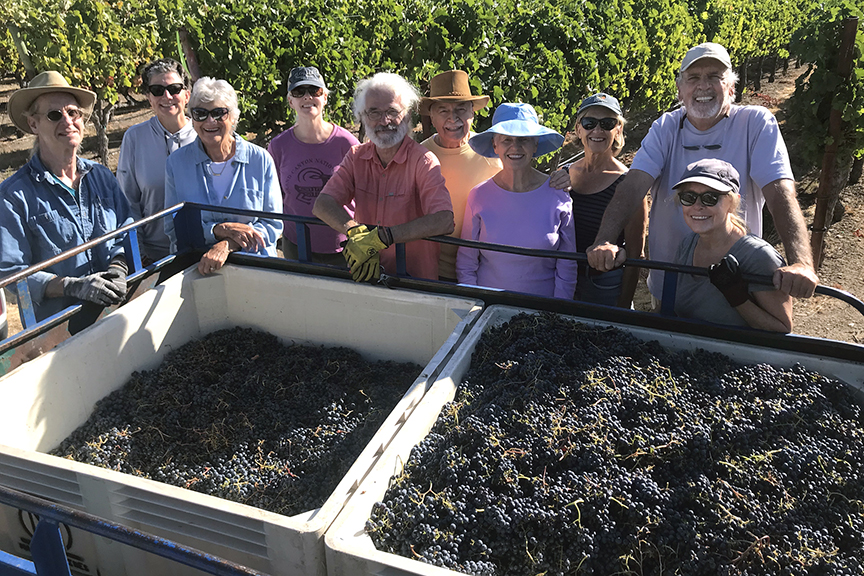
To date, we’ve secured generously donated production services and materials through all stages of the winemaking process (grape crushing and pressing, fermentation tanks, barrels, storage, bottling, sales website, etc.) to guarantee that 100% of the sales proceeds from the wine will be used to fund critical food deliveries. And, we formed a volunteer harvest team that picked two tons of grapes in one day donated from both private and commercial vineyards in what effectively was a giant Bordeaux-style field blend. As improbable as it sounds, all the grapes — Cabernet Sauvignon, Merlot, Cabernet Franc, and Malbec — were ripe enough in the relative percentages of a classic Left Bank Bordeaux and were crushed together with the resulting lab analysis of the must reading 23.7 °Brix, 3.64 pH, 3.94 TA. We’ll add a little acid after fermentation, and we’re counting on 15 gallons (57 L) of donated Petite Verdot bulk wine as a blender adjustment, but we’re on our way to a darn good wine.
Despite the obvious tangible benefits of raising money to facilitate unencumbered food deliveries, there’s a certain righteous level of poetic justice in supporting the folks who tended the vineyards and picked the grapes that went into that bottle of fine wine you enjoyed with your dinner!