10 Great Gadgets
In this 10th anniversary issue of WineMaker magazine, we present 10 items that will make your home winemaking more enjoyable. From old mechanical stand-bys to new computerized state-of-the-art doo-dads, here’s a list that every gadget junkie will want to ponder.
For anyone growing their own vines or evaluating fresh grapes they have purchased, it’s important to know the sugar content of the fruit. A refractometer measures the percentage of sugar in your grapes with just 2 or 3 drops of juice from a single grape. It saves you from having to crush a bunch of grapes to take a hydrometer reading. Simply squeeze the juice of a single grape onto the prism end and close the glass plate. Point the refractometer to a light source and look through the eyepiece. The scale in the prism reads the sugar level from 0 to 32 in ºBrix. You can then convert the reading to specific gravity (SG) and potential alcohol.
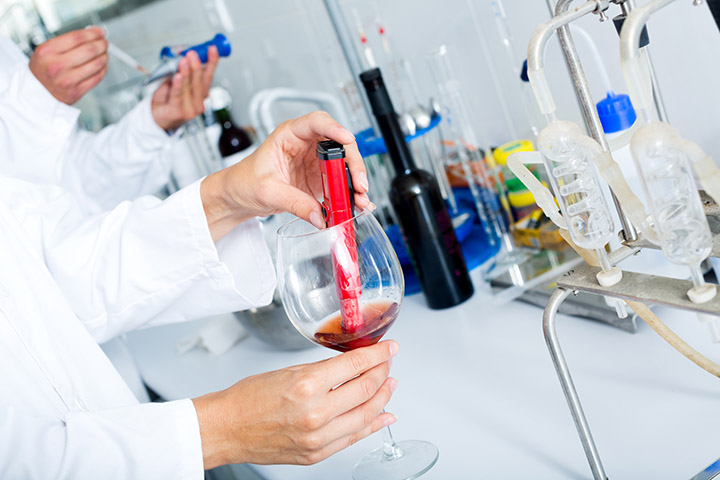
Every advancing winemaker knows that pH in grapes before, during and after fermentation is a huge contributing factor to the biological stability of your wine. Optimum pH in grapes is just as important as sugar and acid. pH paper works when there’s nothing else, but a pH meter can give quick accurate results. I use a pen style hand-held floating pH meter in a waterproof casing, with a protective cap, and a replaceable pH electrode. Just dip the tip in the fluid and read the display. Done.
A grape crusher/destemmer gently separates the grapes from the stems and breaks them open. It consists of a steel hopper with a mouth of about 20” x 30” (50 x 75 cm) and 4’ (1.21 m) long poles to straddle the mouth of the catch tub. Just place the crusher over a primary fermenter, dump the grapes into the top of the hopper and crank the flywheel. As you turn the wheel, a paddle style auger feeds the grape bunches through double rollers, gently breaking the grapes open as they fall into the fermenter.
Leaving the stems on the grapes contributes to a high level of astringency in the finished wine. To separate the stems there is also the slightly upgraded de-stemmer model that discards the grape stems out the side while the broken grapes go into the tub.
Racking wine can be messy. When wine leaves one container and moves to the next, it’s vulnerable to contamination. An auto siphon lets you rack cleanly. It lets you get your wine moving without having to use your mouth or anything else to prime the racking hose.
Simply put the end of the hose in the receiving vessel, insert the wand into the wine and pump the J-tube once or twice. The wine flows instantly without disturbing sediment. If you have to stop racking for any reason, simply lift it out of the fluid. You can get it going again with a few pumps in even a few inches of liquid. Auto-siphons are also ideal if you’re filling bottles manually with a bottle-filling wand. They are available in two hose sizes: 3⁄8” ID and 1⁄2” ID.
This vacuum bottler is an ingenious table-top bottle filler fit for even a large scale winemaker. Using a vacuum pump, the filler is self-priming. It draws wine from your carboys, even if it’s sitting on the floor. Just put the wand in the wine and turn it on. The filler spigot can adjust the fluid height to the kind of cork space you want. Remove the filled bottle and insert the next one. The pump has a continuous duty cycle, so it can run non-stop. As it fills, the vacuum also reduces the amount of oxygen in the headspace of your bottles. The fill rate is adjustable up to 180 bottles per hour. You can fill bottles as fast as a helper can cork them. To sanitize the lines, simply run a sulfite solution through, then flush it with water.
These machines are true work horses. I used to work at an on-premise winemaking facility where these Enolmatic bottle fillers ran all day, every day. One of the coolest appliances in my home winery.
To maximize the science of winemaking there are software programs for home winemakers. Programs range from very simple software to calculate acid, or SO2 (WineMaker offers a free online SO2 calculator), or software to work with extremely comprehensive variables. For under $100, some companies offer software that helps create and visualize the winemaking process from crush right through to bottling. After you enter the ºBrix, pH, acid and SO2 of your must, the program crunches the numbers and tells you how to adjust your must with sugar, or tartaric acid to achieve the best result and will calculate the potential alcohol. The results can be displayed as text, 2D or 3D graphs, and pie charts.
But wait, it doesn’t end at software. For the small apartment or condo dweller, now you can own your own computerized winery. For $4,500 the WinePod is a complete micro winery elegantly shaped like a stainless steel kettle the size of a regular dishwasher. The manufacturer sources the grapes from high-end vineyards from around the world and ships them to you with a detailed fruit analysis, so you can produce wine from the varietal of your choice all year.
The pod ferments your wine, and uses interactive software to communicates wirelessly with your computer, tracking all the vital statistics of fermentation like a professional winery. You can sit on your living room couch and monitor your winery with your laptop. Welcome to the new millenium, where your home winery can now be a kitchen appliance.
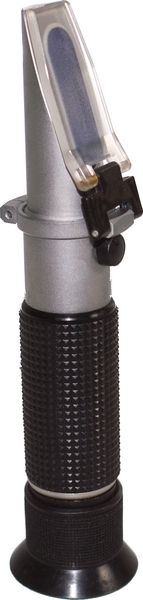 1. Hand refractometer ($80+)
For anyone growing their own vines or evaluating fresh grapes they have purchased, it’s important to know the sugar content of the fruit. A refractometer measures the percentage of sugar in your grapes with just 2 or 3 drops of juice from a single grape. It saves you from having to crush a bunch of grapes to take a hydrometer reading. Simply squeeze the juice of a single grape onto the prism end and close the glass plate. Point the refractometer to a light source and look through the eyepiece. The scale in the prism reads the sugar level from 0 to 32 in ºBrix. You can then convert the reading to specific gravity (SG) and potential alcohol.
 2. pH meter ($80+)
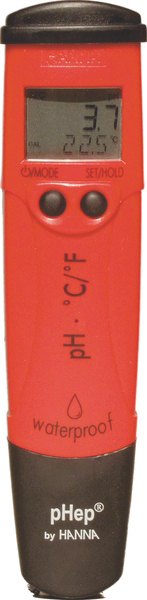
Every advancing winemaker knows that pH in grapes before, during and after fermentation is a huge contributing factor to the biological stability of your wine. Optimum pH in grapes is just as important as sugar and acid. pH paper works when there’s nothing else, but a pH meter can give quick accurate results. I use a pen style hand-held floating pH meter in a waterproof casing, with a protective cap, and a replaceable pH electrode. Just dip the tip in the fluid and read the display. Done.
 3. Manual grape crusher/destemmer ($150–$400)
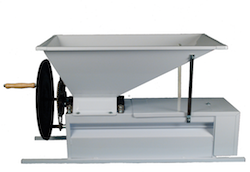
A grape crusher/destemmer gently separates the grapes from the stems and breaks them open. It consists of a steel hopper with a mouth of about 20” x 30” (50 x 75 cm) and 4’ (1.21 m) long poles to straddle the mouth of the catch tub. Just place the crusher over a primary fermenter, dump the grapes into the top of the hopper and crank the flywheel. As you turn the wheel, a paddle style auger feeds the grape bunches through double rollers, gently breaking the grapes open as they fall into the fermenter.
Leaving the stems on the grapes contributes to a high level of astringency in the finished wine. To separate the stems there is also the slightly upgraded de-stemmer model that discards the grape stems out the side while the broken grapes go into the tub.
4. Fermentation Heating Pad/Belt and Thermostat ($40+)
If your winery is in a cool basement, you’ll appreciate the value of temperature control during fermentation. It’s important to keep the yeast working between 68–85 ºF (20–30 ºC). If the temperature drops below that optimum range, fermentations can become sluggish or stop early. Heating belts can prevent this from happening, but without a thermostat I’ve had to manually cycle my heating belts on and off to maintain the proper temperature. A thermostat-controlled heating pad uses a probe contained within a suction cup that sticks onto the side of your fermenting container. Some have a probe that sits in the wine. The mats or belts that can be fit under or around the primary fermenter. The heat is controlled with a dial that can be set from 60 to 100 ºF (15–37 ºC) — giving you the freedom to ferment your wines at different temperatures.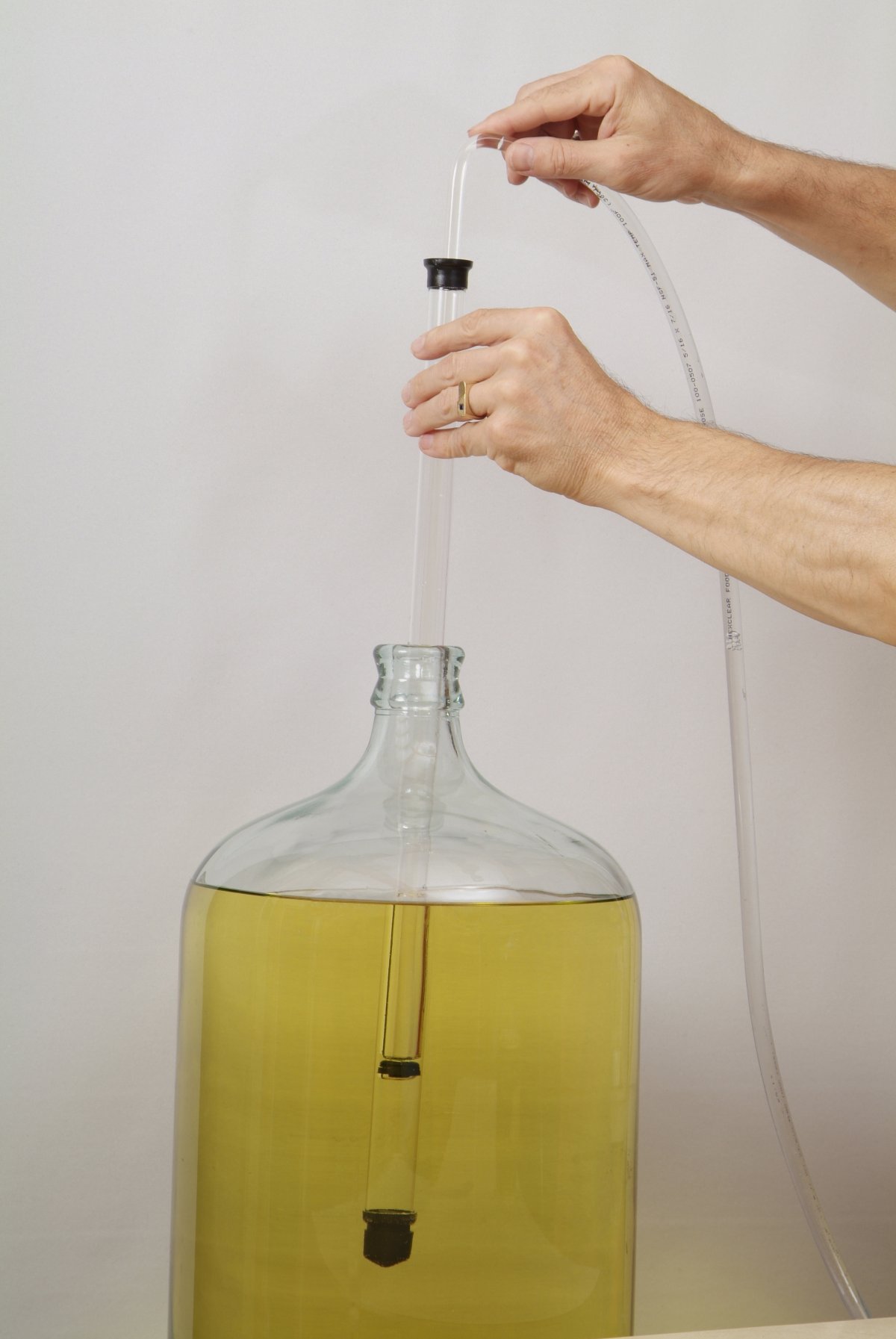 5. Auto-siphon ($25)
Racking wine can be messy. When wine leaves one container and moves to the next, it’s vulnerable to contamination. An auto siphon lets you rack cleanly. It lets you get your wine moving without having to use your mouth or anything else to prime the racking hose.
Simply put the end of the hose in the receiving vessel, insert the wand into the wine and pump the J-tube once or twice. The wine flows instantly without disturbing sediment. If you have to stop racking for any reason, simply lift it out of the fluid. You can get it going again with a few pumps in even a few inches of liquid. Auto-siphons are also ideal if you’re filling bottles manually with a bottle-filling wand. They are available in two hose sizes: 3⁄8” ID and 1⁄2” ID.
6. MiniJet Electric Wine Filter ($200)
If you use fining agents and let your wine sit long enough, it may fall bright on its own over a period of weeks or months. But to speed up the process — or for wines that don’t settle out easily, or for wines entered into competition — you may want to remove the yeast and any other haze-causing matter. For that you’ll need to filter. This is almost always true with whites. Filtering brings wine to a bright polish. The Buon Vino MiniJet is smaller than a toaster, designed for the multi, or single carboy winemaker. It is excellent for kit wines, but still works well for filtering full-bodied wines from grapes. It’s the economical way for a home winemaker to polish wine to commercial brilliance. It uses a self-prime motorized pump capable of filtering a carboy of wine in 15 minutes. One triple set of filter pads can clear 6 gallons (23 liters) at a time. I also have a much larger SuperJet filter system that I use for very large quantities of wine. But if I’m filtering anything up to four carboys in an afternoon, I still prefer to use my MiniJet. I’ve been using my filter machine for years and it still hums like a charm.7. Mechanical bottle brush ($25)
For every hobby there is a “worst job.” For home winemaking, it’s standing at a sink with a brush working the thing around the inside of the glass trying to remove scale, old sediment or hardened deposits. Thanks to the mechanical bottle brush, winemaking no longer has a “worst job.” The mechanical bottle brush is 21 inches (53 cm) long and easy to store. Simply squirt a bit of diversol or other cleaning substance into the bottle (as you would for regular brush cleaning), and rest the handle on the opening of the bottle. The bristles are nested within the handle. Then pump the spiralled shaft through the handle. The fine stainless steel bristles spin rapidly inside the bottle. The spinning action of the wire brush and the diversol, will clean scale and other solids off the sides of the bottle in a fraction of the time of a standard bottle brush. When you’re done, the bristles retract again back into the handle. When you’ve got cases of bottles to clean, this is the ticket.8. Enolmatic Vacuum Bottler ($395)
9. Capsule Shrinker ($200)
Shrink caps for homemade wine are made from plastic that shrinks around the neck of the bottle when heat or steam is applied. Tired of using the heating gun? Is your significant other always looking for their blow drier? The capsule shrinker is a protected heating coil. Simply put the cap on the bottle and slide the bottle neck into the heating coil hole and wait 2-seconds. The shrink cap instantly molds to the neck of the bottle. The beauty of it is, it shrinks the cap so fast, the neck of the bottle — and the wine in it — doesn’t have time to heat up, unlike slower heating methods.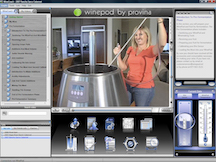 10. Winemaking software ($40/90-$4500)
To maximize the science of winemaking there are software programs for home winemakers. Programs range from very simple software to calculate acid, or SO2 (WineMaker offers a free online SO2 calculator), or software to work with extremely comprehensive variables. For under $100, some companies offer software that helps create and visualize the winemaking process from crush right through to bottling. After you enter the ºBrix, pH, acid and SO2 of your must, the program crunches the numbers and tells you how to adjust your must with sugar, or tartaric acid to achieve the best result and will calculate the potential alcohol. The results can be displayed as text, 2D or 3D graphs, and pie charts.
But wait, it doesn’t end at software. For the small apartment or condo dweller, now you can own your own computerized winery. For $4,500 the WinePod is a complete micro winery elegantly shaped like a stainless steel kettle the size of a regular dishwasher. The manufacturer sources the grapes from high-end vineyards from around the world and ships them to you with a detailed fruit analysis, so you can produce wine from the varietal of your choice all year.
The pod ferments your wine, and uses interactive software to communicates wirelessly with your computer, tracking all the vital statistics of fermentation like a professional winery. You can sit on your living room couch and monitor your winery with your laptop. Welcome to the new millenium, where your home winery can now be a kitchen appliance.