Determining Ageability, Wine Chemistry, Decanting Advice, and Knocking Down Rot
Q
I’ve got a red Bordeaux-style blend with the following stats: Aged 28 months in French and American oak, with these numbers: Alcohol — 13.8%; Free SO2 — 37 mg/L; Total SO2 — 250 mg/L; Molecular SO2 — 0.64 mg/L; Residual Sugar — 0.8 g/L; Malic Acid — 0 g/L; pH — 3.57; Titratable Acidity — 6.5 g/L, Volatile Acidity — 0.76 g/L. I’m wondering, what is the ageability of a wine like this? I also have a couple more follow up questions, what is Molecular SO2 and at what RS range is a wine considered dry?
Lee Dugas
Pleasant Hill, California
A
I’ll answer your last questions first and then give you my thoughts on the age-worthiness of your wine.
RS (residual sugar) “Dry” (no sugar remaining) is usually considered 0.2% or less (2 g/L), so your wine looks like it is classified as dry. For my wines, I usually look for 0.1% or less residual sugar to be double sure. You don’t want any opportunistic spoilage yeast or bacteria munching on any leftover sugar as the wine is aging or, heaven forbid, when it’s bottled. If a re-fermentation happens when you don’t want it to, you risk off-aromas, turbidity, and elevated carbon dioxide levels.

Molecular SO2, conceptually, is a way of interpreting the sulfur dioxide content of a wine using the wine’s pH as context. The more acidic a wine is (and the lower its pH), the more effective any sulfur dioxide addition is as an anti-microbial agent. Free SO2 has three distinct species: SO32- (sulfite ions), HSO2– (bisulfite ions), and molecular SO2. Molecular SO2 is the form that kills or inhibits microbes and the proportion of molecular SO2 for any given measurement of free SO2 rises as pH drops (more acidic). The more acidic your wine, the more effective any sulfur dioxide addition will be, and vice versa.
The molecular SO2 “gold standard” level, where scientists feel comfortable stating that “no microbes are going to live in this wine” is 0.8 mg/L (or ppm). If you know your wine’s pH and FSO2, you can look up the molecular SO2 in correlation charts on the internet. 0.8 mg/L is quite a high standard to meet, and to be honest, most winemakers I know never try to achieve it. Let me explain why: Your wine has a pH of 3.57, so to achieve 0.8 mg/L molecular SO2, you’d have to make sure your wine had about 47 ppm FSO2. That’s quite a lot, much higher than what I tend to see as the average for red wines, say, around 27–32 ppm FSO2 at bottling. Imagine how much FSO2 you’d have to add to your wine if you had a more typical red wine pH like 3.75–3.85, which isn’t uncommon in the popular ready-to-drink red wine styles made in the in the US today. To achieve 0.8 mg/L molecular SO2 at a pH of 3.80, you’d have to make sure you were measuring 79 ppm FSO2, which is so high that you’d be able to smell it in your wine – in fact, you’d probably be able to smell the SO2 as you approached the glass from across the room! This is why, with sulfur dioxide additions, most winemakers try to forge a balance between microbially “safe and sane” but also sensorially-acceptable. For a well-rounded approach to sulfur dioxide management and anti-microbial safety, try a combination of factors, including keeping pH’s reasonable (it’s OK to add tartaric acid in order to lower pH), exclude oxygen during aging, practice good sanitation, and keep FSO2 levels above 25 ppm but not excessively high.
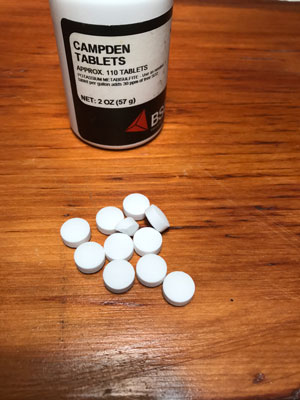
Looking at your provided numbers, it looks like your total SO2 is already very high. The commercial legal limit in the US is 350 mg/L and you’re at 250 mg/L already. At 250 mg/L, you could be at a point where that amount of SO2 will negatively impact the flavors and aromas. In lighter reds, like Pinot Noir, high levels of SO2 can actually start to bleach color. Your FSO2 is 37 mg/L, which I’d also call plenty high. My advice is to be careful with any further additions; you wouldn’t want to make an addition until or unless the wine dropped below 25 or even 20 (typical levels). If I were you, I’d bottle this wine up now since it’s already been in the barrel for 28 months and then would let it develop in bottle.
The ageability of red wines depends on so many things. It’s important to remember that when wines age, a number of chemical reactions happen over time. Oxygen present in the wine upon bottling will continue to interact with the wine’s components, oxidizing colors from blue and purple hues into reds and oranges. Aroma and flavor compounds in red wines will change over time, trending in general from fresh, fruitier flavors (like cherry, strawberry, and rhubarb on a Pinot Noir, for example) to what are called “bottle bouquet” or tertiary aromas and flavors like mushroom, tea, tobacco, and leather. Smaller tannin and polyphenolic molecules will condense together to form larger structures, which often fall out of solution to form the sediment common on the sides of older bottles. This is actually the reason that wine tends to taste smoother and less rough as it ages. Your tongue can actually sense the smaller particles very acutely; large polyphenolic complexes just don’t register on your tongue’s receptors in the same way because many of them are too big to bind.
Molecular SO2, conceptually, is a way of interpreting the sulfur dioxide content of a wine using the wine’s pH as context.
You list quite a few of the parameters (VA, pH, etc.), which can contribute to good ageability. It’s important the wine be dry so there is no danger of spontaneous fermentation in the bottle created by leaving a food source for bacteria and yeast. Having enough acid in the wine is critical as well as wines are more prone to oxidation and microbial degradation the higher the pH (lower acidity). Having enough alcohol is critical as well as it serves as a natural preservative in addition to being a key factor supporting the wine and its components after a lot of the primary “fresh” fruit flavors and aromas are gone or diminished. The tannin and color levels in the wine will also contribute to a longer lifespan for a wine. These elements are powerful natural antioxidants and as such, the more tannic and extracted your wine, the more “guts” it will have to see it through the long run. In your case, the pH and TA look good, you’ve got a dry wine and enough alcohol so I’d say unless it’s really orange and oxidized your prognosis should be good for peaking in 2 years, tasting great for the next 7 years or so. Not knowing any more details about how the wine was made and aged it’s impossible to predict perfectly, but if solid winemakering techniques were employed, it seems like you’re on the right track to an age-worthy Bordeaux-style blend.
Q
How do TA and pH Affect flavor and mouthfeel in wine? Can that change in the bottle over time? And is this data useful to the consumer when printed on a wine’s back label or sell sheet?
Kerry Kirkham
Oakland, California
A
In general, I think of how TA (titratable, or total acidity) and pH impact flavor and mouthfeel in this simple (and yes, perhaps simplistic) way: TA determines how tart or sour a wine tastes while pH points to how a wine feels in the mouth. TA and pH typically won’t change in the bottle over time, unless you had a lot of residual sugar or residual malic acid and then had a refermentation in the bottle. If the wine is unfiltered it’s technically possible that spoilage microbes could engage in enough metabolic activity where they might be consuming acids or sugars and excreting by-products. A great example of this would be if there was residual malic acid in a wine and then malolactic bacteria had a feral fermentation in the bottle. This would certainly raise the pH of the wine, as lactic acid is roughly half as “acidic” as malic acid.
It’s hard to say whether consumers really benefit from having a wine’s pH and TA listed on the back of wine labels (or on wine lists). I would wager that most consumers have A) no idea what TA and pH really mean, as they pertain to wine especially, and B) no basis for comparison from which to draw conclusions even if they were given those numbers. It’s not that I have a dim view of wine consumers, it’s just that I think consumers care more about the overall taste profile (I call it the ‘yum factor’) of wines rather than technical details like wine chemistry parameters. Any general-market wine that’s going to “fit” in a consumer category or on a wine shop shelf (which means it had to be vetted by a retail buyer) is most likely going to be within acceptable parameters anyway. Therefore pH and TA might be useful to detect a winemaking fluke (say, a Sauvignon Blanc at a pH of 3.80), but then winemakers who know what they’re doing would probably never put those wines in the bottle anyway.
Even as a winemaker with many brands and products under my belt, I only ever use TA and pH (and most wine chemistry parameters, for that matter) as distant guideposts. As long as I know that my wines are in a “safe” range of wine chemistry (pH’s 3.70 and under for reds, 3.60 and under for whites) I really don’t care whether the pH is 3.57 or 3.49. I make my moves by taste and balance from the vineyard to bottling, only making tweaks along the way as necessary. Each wine is its own unique complex chemistry soup and so trying to compare pH’s and TA’s, and to use them as a basis of wine judgement is really comparing apples to oranges. I go by traditional sensory analysis much more than chemical analysis and I think the trade and consumers are much better served if they can taste a wine instead of, or in addition to, reading numbers on a label. Am I happy to provide the TA and pH of any of my wine projects to anyone who asks? Sure, knowing more is not a bad thing per se. Though with every vintage and every wine its own unique animal, I’m not sure if these small differences are meaningful.
Q
Here’s my wine question, though I know it’s not technically about winemaking, it should be of interest to consumers and winemakers alike. When should wines be decanted to be enjoyed more and when will decanting make a wine worse?
Jolene Cortwright
Sonoma, California
A
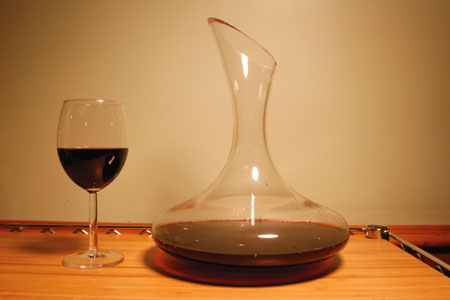
Those are a great couple of questions. Decanting, or the pouring of a wine out of its bottle into another, larger container (usually made of clear glass or crystal), is something that can be done with almost any wine. The aims of decanting are multifold and can include: To remove sediment from older, aged wines; to introduce air into and “open up” younger wines so they’re more approachable; and/or to present a wine in an attractive container at the table.
Sparkling wines, however, are never decanted because they would quickly lose their all-important bubbles. White wines are rarely decanted because they tend to be more sensitive to oxygen exposure than reds and often don’t benefit as much from the procedure. Furthermore, white wines are often kept chilled in a bottle cooler at the table. It’s difficult to keep a decanter chilled to the proper serving temperature as they tend to be much larger at the base than a standard wine bottle.
Can decanting ever make a wine worse? Indeed, the earlier examples come to mind, i.e. making a sparkling wine flat and forcing a white wine to warm up to room temperature too quickly. That being said, decanting doesn’t so much transform a wine in one step as cause it to evolve over time. It’s very much about the interaction of oxygen into the wine. Younger red wines can almost always benefit from decanting. Why not pour out a glass from a bottle and (I know this is hard) not drink it for an hour. Then pour out a second glass of the same wine and compare. If you like the wine that’s been “open” for an hour more than the glass you just poured out of the bottle, then that’s a good sign this wine should be decanted. In general, I believe that the more interesting and complex the wine, or the more young and tannic, the more it can benefit from the decanting process.
Q
What do you do when your fruit comes in with signs of rot from an unusually wet season?
Morris Carmichel
Thousand Oaks, California
A
That’s a great question as we approach the harvest season. Though I don’t expect 2019 harvest to be like 2011 or 1998, many of us all over the country, from Oregon to Pennsylvania, will have to deal with some kind of rot or Botrytis close to harvest time. When I’m potentially faced with it, I get my special cellar treatments ready to go. The below is an anti-Botrytis and rot protocol that I’ve used when Botrytis or rot is what I’d call “medium”, i.e. about 10–20% of clusters seem to be affected. In a situation like that you can usually pick, treat the must or juice, and salvage some good wine out of it. However, if you are buying the grapes, review your contract and parameters for rejecting fruit from growers.
My anti-Botrytis protocol:
- Reds and whites: Add a higher dose of SO2 at destemming or in the picking bins in the field (I recommend 50–70 ppm total SO2 addition).
- Whites only (assumes you’re destemming and pressing or just direct-pressing white grapes): Also add 0.20 g/L Lysozyme or Lactizyme mixed into juice tank after pressing (wait at least 1 hour after last SO2 addition to avoid inactivity/binding with SO2.) Hydrate it first in 10 times weight of water at ambient temperature.
- Whites only: After about 4 hours have elapsed since the Lysozyme/Lactizyme add, add 0.12 g/L PVPP and 0.12 g/L bentonite to the juice tank (the waiting period helps to avoid the bentonite binding w/ proteins in the enzyme).
- Reds only: 0.20 g/L Lysozyme/Lactizyme in the must at least one hour after SO2 was added to grapes at destemmer.
- Whites only: Settle the juice.
- Whites only: Rack clean, taking only light fluffy lees.
- Reds and whites: Inoculate with a strong yeast like EC-1118 (Prise de Mousse), in a higher than normal rate (~2.5–3.0 lbs./1,000 gal. or 1.1–1.4 g/gal or 0.3–0.4 g/L)
- Reds and whites: Feed fermentation well (target 300 ppm Yeast Available Nitrogen) but don’t overfeed — you don’t want to feed “bad guys.
Proceed as you would, keeping an eye out for stuck fermentations and elevated volatile acidity. You’ll have an elevated level of unwelcome microbes competing for micronutrients and resources, so keep a weather (pun intended) eye out!