Fining for Beginners
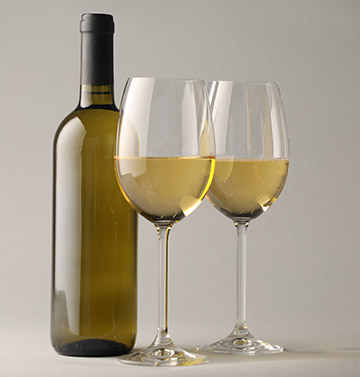
When presenting a homemade wine to new house guests, presentation means a lot. A wine’s appearance provides the first impression and can set the expectations for their tasting experience. As hobby winemakers, we strive to make wines that rival commercially-produced wine, so we need to make extra sure that ours offers the same quality presentation. If you are pouring a cloudy wine, it is going to signal to the taster that it was a sloppily made wine. Most wines will clear naturally over a long aging period, but certain wines will not.
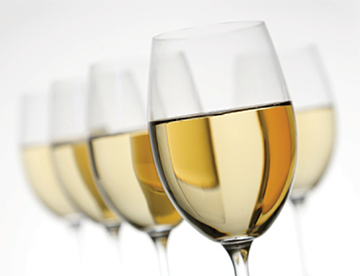
Fining is the process of adding a substance to your wine to allow natural settling or clearing of organic compounds to occur more quickly. This can be done either for appearance reasons or to remove undesirable compounds. For winemakers just starting out, the concept of adding finings can be a little daunting unless made clear in a set of instructions. Experienced winemakers often get locked into a fixed fining regimen and may not look around to see if there is something to troubleshoot a specific problem when one arises.
There are four principle types of fining agents: Electrostatic, ionic, absorbent, and enzymatic. Electrostatic uses natural charges found on certain particles to attract a cluster of opposite-charged particles to form, promoting faster settling. Most fining agents winemakers think of fall into the electrostatic category, and can be classified as positively- or negatively-charged. Winemakers will sometimes use ionic fining agents to bind with unwanted compounds. Ionic finings such as copper sulfate and polyvinylpolypyrolidone (or PVPP for short) are best used in conjunction with an electrostatic fining to help precipitate out these compounds. Absorbent finings are fairly rare, but activated charcoal and yeast finings are two additives that can soak up certain unwanted characteristics. Finally there are enzymatic finings like pectinase. Pectinase can help break down certain large carbohydrates that can cause haze in fruit wines.
Since electrostatic finings are the most prevalent among hobby winemakers, let’s focus on that category. Oftentimes, a positively-charged fining agent will be used in conjunction with a negative-charged fining agent to attack a broader range of compounds. Typically the negatively-charged fining agent will be added first, followed several days later with the positively-charged fining. Positively-charged fining agents are often used to clear the negatively-charged phenolics (and tannins) from wine that can cause astringency, as well as yeast and negatively-charged finings. Egg whites, gelatin, isinglass, casein, and Sparkolloid are a few such positively-charged fining agents. Negatively-charged fining agents will help remove any positively-charged particles in suspension such as proteins. Bentonite and kieselsol are two of the most popular negatively-charged fining agents. One thing to be aware of is the different approaches when making a red versus a white/blush wine. As mentioned a moment ago, tannins are negatively charged and are often prevalent in red wines. Since the tannins can naturally bind with the positively-charged proteins, red wines may not require a negatively-charged fining agent.

Fining agents can be used during fermentation or post-fermentation. Make sure to always follow manufacturer instructions on recommended dosing rates since over-fining your wine can cause color loss, stripping of valuable aromatics, and add unwanted flavors. Always start by adding less and move up towards the maximum recommended, if needed. Remember, extra aging will clear most haze so always err on the side of caution instead of trying to rush things. More information on specific fining agents can be found at: https://winemakermag.com/story26