Make Dry Berry Wines
Dry berry wines are built like fine, age-worthy reds, but — in my case as a commercial winemaker in New Hampshire — from the fruit New England actually wants to grow: Wild blueberries, blackberries, currants, and elderberries, as well as local honey. By treating these materials with the same seriousness as Pinot Noir or a Rhône blend, it is possible to make dry, complex, cellar-worthy “reds” that many tasters never guess are grape free.
Working With What Your Region Does Best
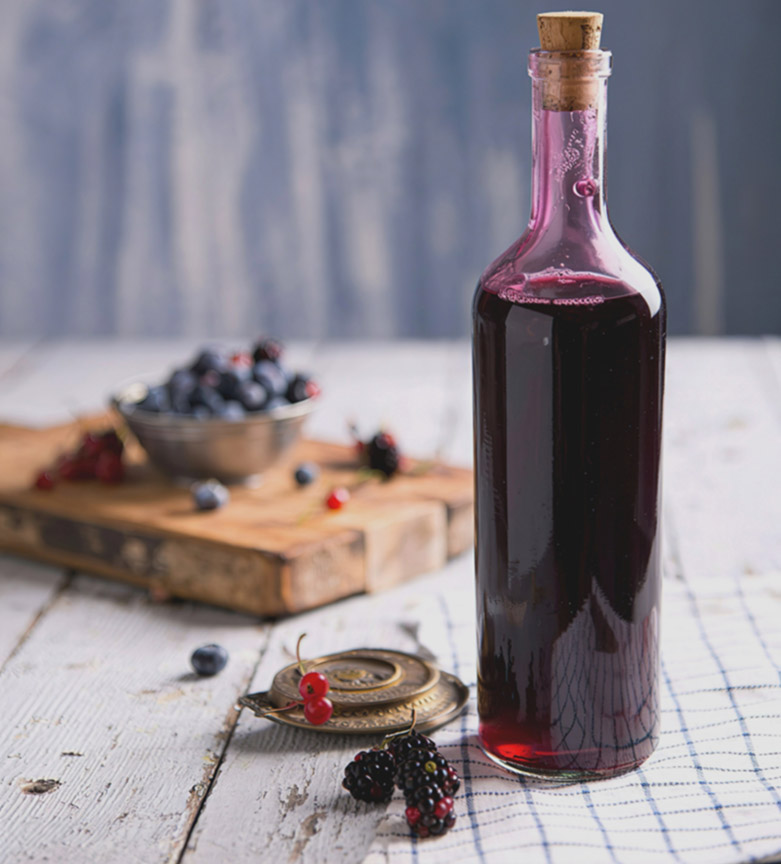
The starting point is philosophical as much as technical. In regions where vinifera grapes struggle to grow, the land often excels at other fruits — wild blueberries, blackberries, raspberries, cranberries, crabapples, and more — which can supply the key components needed for serious wine if treated with respect.
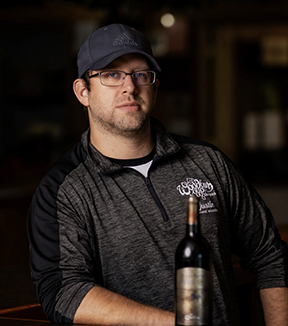
As the Winemaker at Hermit Woods in Meredith, New Hampshire, almost nothing is made from grapes. Instead, each wine is built by blending fruits and sometimes honey or other sugar sources to create a must with proper acidity, tannin, sugar levels, and aromatic potential. Rather than asking, “How do we grow Cabernet here?” the question becomes, “What does this landscape want to say if given the tools of fine winemaking?” Dry berry wines are one answer: Serious reds that borrow vinifera winemaking techniques such as cold soaks, extended maceration, barrel aging, and blending — as well as unique techniques such as staggered sugar additions — and then apply them to the berries and honey that flourish in New England’s fields and forests. The goal is not to imitate Pinot Noir or Cabernet Sauvignon, but to make wines that behave like them at the table: Dry, balanced, layered, and capable of aging. We have also crafted pleasing “whites” and “rosés,” relying on the light colored fruits and vegetables, such as rosehips, pears, apples, plums, tomatoes, peaches, cantaloupe, and rhubarb. However, for this article, we’re going to focus on darker berry wines.
Philosophy: Building a Wine in the Mind
Vinifera grapes are so celebrated because — when grown well — each grape carries the sugar, acid, tannin, aroma, and texture needed for complete wine. Most fruits, on the other hand, do not. Wild blueberries may provide color and acidity, but they have little tannin; elderberries offer fierce structure but need support; honey gives body and residual richness; crabapples bring acid and backbone. My approach is to “build a wine in the mind” by blending fruits, water, and fermentable sugars into a must that behaves like a great grape wine. Think of the must as a modular grape: By adjusting fruit blend, water, sugar, and tannin, you design the wine’s eventual role before fermentation begins. Key levers include:

Fruit selection and blending
Culls and seconds make cull-quality wine; fermentation magnifies flaws, so fruit must be pristine and at peak ripeness. Wild blueberries bring intense color, firm acidity, and pectic mouthfeel; blackberries and black raspberries add darker fruit, structure, and a different tannin profile; other fruits like elderberries, crabapples, or autumn berries can supply additional backbone. At the end of this article you’ll find recipes that use various approaches — Petite Blue relies entirely on wild Maine blueberries, while red wines such as Hermitage and Red Scare pull tannin and depth from blackberry, elderberry, or other highly phenolic fruits. We craft all of our wines like reds: Fermentations on skins, seeds, and sometimes stones (pits), even for blends that drink like whites or rosés, to maximize texture and complexity.
Water and sap
Because berries can be low juice or extremely intense, adding water (or juicy cantaloupe, cider, or maple sap) helps create a workable must while letting you set target Brix. This is treated as an opportunity rather than a compromise: You are not stuck with whatever sugar/juice ratio the berries give you. The amount of water added to our wines has been determined through hundreds of trials over the last 20 years and is different for every wine we make. Each fruit has some juice, but most berries are too intense for wine if not watered down. The amount is critical because it affects the resulting volume and how much fermentable sugar needs to be added to reach the target ABV. Often, we will hold back about 5–10% of the water that can be added post-fermentation if desired based on bench trials. Moreover, each fruit has a different level of intensity in general (and this varies with the harvest too); we have found black currants and elderberries are ideal at about 3 lbs. of fruit per resulting gallon of wine (360 g/L), whereas wild blueberries are best at about 6 pounds/gallon (720 g/L) and blackberries at 8 pounds/gallon (960 g/L).
Sugar sources
Most berries enter the fermenter between 8–14 °Brix — far below the level needed to produce stable, age-worthy dry wine. Additional fermentable sugar is required for our target 12–14% ABV, so we typically shoot for 23–25 °Brix as a theoretical target.
To achieve this, we primarily use:
• Dextrose, when neutral alcohol and precise control are desired.

• Honey, when both alcohol and aromatic or textural contribution are beneficial. The honey varietal you choose plays a role in aroma and flavor.
Rather than adding sugar all at once, our key strategy has been staggered additions during fermentation; this reduces osmotic stress, moderates fermentation kinetics, extends maceration, and improves mouthfeel — critical for when the wine finishes completely dry. Because the fermentable sugars are added in portions during the fermentation, we never actually read a true initial specific gravity. Typically, the sugar is added in two to three portions, each at about one-third to half sugar depletion (generally 2 to 3 days apart), along with an appropriate portion of the nutrient each time.
Acidity
Berries often possess excellent natural acidity, with pH values commonly between 3.1–3.5. This provides longevity and freshness, but must be balanced by sufficient structure and texture.
Blending complementary fruits, allowing malolactic fermentation where appropriate, and aging on fine lees can help integrate acidity without relying on residual sweetness. Acidity is not a flaw. It is structural strength.
Tannin and structure
Berries tend to be thin-skinned and low in tannin compared to red wine grapes. Instead of adding tannin products, structure can be built via extended skin contact, press fractions, barrel aging, or blending in more tannic fruits such as elderberries, autumn berries, or even oak contact.
For new wine blend formulation, we often make separate varietal wines and then do bench trials to see what proportions work best. Once we have a feel for the target ratios of fruit, we co-ferment the main batch with small portions of varietal wines in case we need to slightly adjust the wine post-fermentation. Structure must be developed intentionally through:
• Full fruit fermentation on the skins and seeds.
• Extended maceration (typically 10–18 days).
• Firm press fractions to increase the wine’s backbone.
•Blending in fruits higher in phenols, such as elderberry or black currant
• Aging in neutral oak barrels for gradual integration.
Press fractions are particularly important. Free-run wine provides aromatics and brightness, while press wine contributes mid-palate weight and longevity.
Cellar Practices for Structure and Ageability
Many of Hermit Woods’ wines are built to age, so the cellar work mirrors what one might expect in a serious red program, adapted to non-grape materials. Extended macerations — often 10–18 days including cold soak — allow thin-skinned berries to contribute all their phenolics and pectic mouthfeel, compensating for the fruit’s inherently low tannin.
Core practices include:
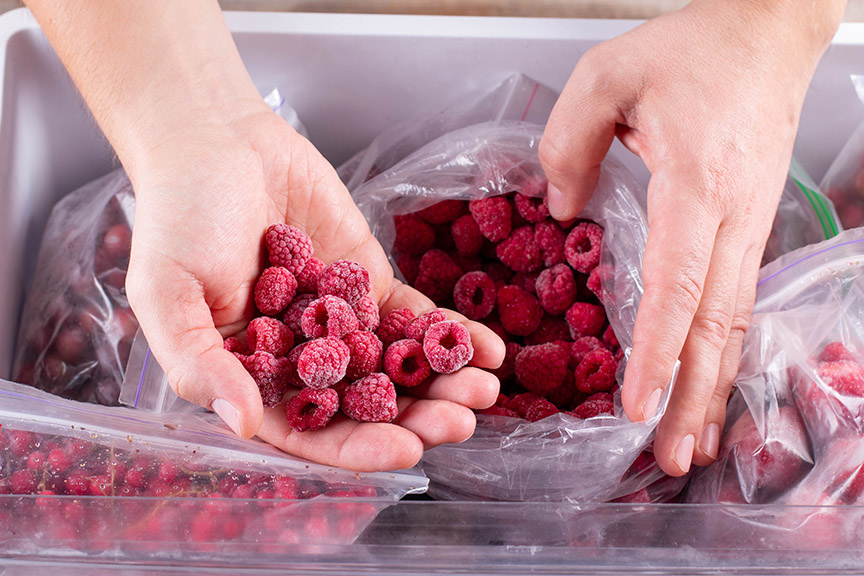
• Fermentation management. Twice daily punchdowns or pumpovers, often with small amounts of frozen fruit added during peak activity for flavor layering and temperature control.
• Careful yeast selection and nutrition, typically targeting ~200 ppm YAN (yeast assimilable nitrogen) with staggered nutrient additions to support clean, dry ferments in relatively low-nutrient fruit musts. (Some ferments really benefit from the autochthonous microbes, such as those on apples and strawberries, for example).
• Blending barrel and tank portions: French oak (neutral to off neutral) for structure and slow evolution and restricting potentially overpowering oak aromas; stainless for freshness and lift.
• Minimal oxygen after primary, except where controlled oxidative aging is part of the style, with SO2held around 0.8 molecular to protect high-acid berry wines.
Bench trials, sometimes with dozens of micro lots per vintage, are used to tune the final blend, often with small doses of varietal elderberry or black currant wine to deepen the mid palate.
Check out the following recipes, taken from the books of my own wines, to learn more about how I use ingredients and the steps I take to craft dry berry wine.
Three Dry Berry Recipes
Petite Blue (Dry Wild Blueberry Red)
(5 gallons/19 L)
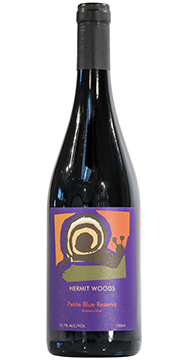
Petite Blue is the flagship dry wild blueberry red wine at Hermit Woods, faintly reminiscent of Pinot Noir or Beaujolais, but built entirely from wild low-bush blueberries to result in a wine with its own unique and engaging bouquet. A full commercial batch uses roughly 6 lbs. of berries per finished gallon (720 g/L), staggered dextrose additions, and extended skin contact to extract tannin and pectic body; this 5-gallon (19-L) recipe maintains that loading and logic.
Targets
Style: Dry, medium-bodied blueberry red, lightly oaked
ABV: ~13%
Starting gravity: ~1.090–1.095 (21.5–22.7 °Brix)
Final gravity: ~0.995–0.998 (-1.3 to -0.5 °Brix)
pH: ~3.2–3.4
Ingredients
30 lbs. (13.6 kg) wild low-bush blueberries (frozen, then thawed)
~2 gallons (7.5 L) water (chlorine free), adjusted so pressing and top ups yield 5 gallons (19 L) finished wine
8.5 lbs. (3.8 kg) dextrose (corn sugar) split into three additions
5 g Lalvin D254 yeast
6 g Go-Ferm
38 g Fermaid K (or similar), split into three additions
Pectic enzyme (e.g., Scottzyme PEC5L and Pectic HC) (about 1.5 mL each)
~1.5 g potassium metabisulfite for ~30–40 ppm free SO₂ during aging
Light/medium toast French oak cubes/staves for subtle barrel influence (optional)
4–7 g/L cane sugar for softening, with sorbate, if a slight off dry finish is desired (optional)
Step by step
1. Fruit prep and cold soak
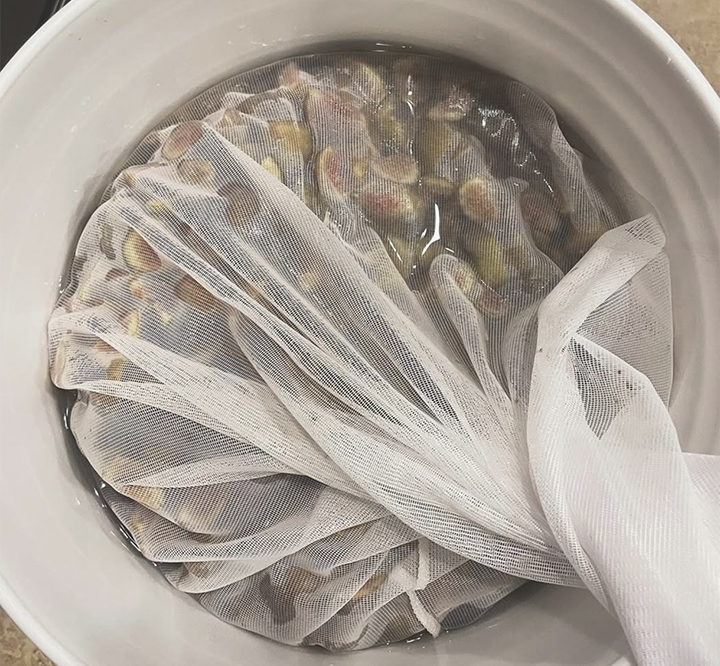
Thaw berries in the fermenter, catching juice; add pectic enzyme and KMBS to ~30 ppm free SO₂; cold soak 12–24 hours. If desired, hold back 10–20% of the frozen blueberries and add these a few times during peak fermentation activity for flavor layering and temperature control.
2. Build must and start fermentation
Add water to form a thick must; measure Brix, which is typically 2–4 at this point if the wild blueberries come in with a Brix of about 12 (but this will change as the berries slowly release their sugars and then decrease due to fermentation).
Rehydrate yeast with Go-Ferm and pitch with the must at ~59 °F (15 °C); let fermentation progress on fruit sugars alone for 1–2 days. Record the Brix and temperature of the must twice daily along with the punchdowns.
3. Staggered sugar/nutrient additions
Add ~2.5 lbs. (1.1 kg) dextrose and 10 g nutrient early in active fermentation or even just before pitching yeast. (Watch for foaming when adding sugar to an active ferment; we have had success adding a very small amount of the sugar and waiting for the fermentation to acclimate, then slowly adding the remainder.)
Add ~3.5 lbs. (1.6 kg) dextrose and 20 g nutrient around day 4–5.
Add final ~2 lbs. (0.9 kg) dextrose and last 8 g nutrient at about ~10 °Brix (typically a few days after the previous addition).
4. Maceration, press, and elevage
Maintain fermentation temperature of 60–66 °F (16–19 °C); punch down gently twice daily. Total skin contact is 10–14 days; press when tannin and fruit are in balance, blending free-run and press fractions.
Rack off gross lees, hold free SO₂ at ~30–40 ppm, and age 6–9 months on the fine lees in glass or stainless with optional oak. With mostly quinic and citric acid in wild blueberries, no need to worry about MLF, although with some malic present you can convert it to lactic if desired.
5. Finishing
Fine or filter, if desired; trial small backsweetening levels. When happy with the taste, bottle and, ideally, cellar several months before drinking.
Hermitage (Dry Multi-Berry “Rhône-Style” Red)
(5 gallons/19 L)
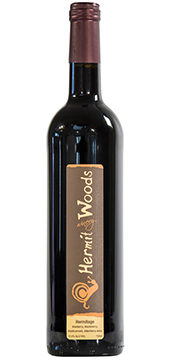
Hermitage is a deep, dry red wine built from the dark berries that grow best in the region: Wild blueberries, blackberries, elderberries, and black currants, all fermented dry and barrel aged to emulate a Rhône blend in structure and complexity. Typically, approximately equal parts blueberry and blackberry form the core, with smaller but potent proportions of elderberry and currant, plus a mix of honey and dextrose during fermentation only for alcohol and mouthfeel.
Targets
Style: Dry, full-bodied, Rhône-like berry blend
ABV: ~13.5%
Starting gravity: ~1.095–1.10 (22.7–23.8 °Brix)
Final gravity: ~0.995–0.998 (-1.3 to -0.5 °Brix)
pH: ~3.3–3.5
Ingredients
20 lbs. (9.1 kg) wild blueberries
20 lbs. (9.1 kg) blackberries
4 lbs. (1.8 kg) elderberries
2 lbs. (0.9 kg) black currants
1.5 gallons (5.7 L) water (total through ferment and top ups, to finish at 5 gallons/19 L)
3 lbs. (1.4 kg) wildflower honey
7 lbs. (3.2 kg) dextrose
5 g Lalvin D254 or GRE yeast
6 g Go-Ferm
38 g Fermaid K (or similar), split into three additions
Pectic enzyme (e.g., Scottzyme PEC5L and Pectic HC) (about 1.5 mL each)
~1.5 g potassium metabisulfite for ~30–40 ppm free SO₂ during aging
Light/medium toast French oak cubes/staves for subtle barrel influence (optional)
Step by step
1. Fruit prep and cold soak
Freeze all of the fruit fully and then thaw berries in the fermenter, under CO₂ if possible, adding pectic enzymes so they work as the fruit thaws; cold soak 12–48 hours to build color and texture.
Add most of the water, reserving some to rinse honey.
2. Yeast and early fermentation
Rehydrate yeast with Go-Ferm and pitch at ~59 °F (15 °C). Record the Brix and temperature of the must twice daily along with the punchdowns.
3. Honey and sugar schedule
After a couple of days, add all the honey plus ~10 g nutrient.
Several days later, add the first half of dextrose with a second, 20-g nutrient charge.
Near ~10 °Brix, add final half dextrose with the final nutrient addition; maintain 64–70 °F (18–21 °C).
4. Press, elevage, and bottling
Aim for 12–18 days total skin contact; press when tannins, color, and fruit feel integrated, pressing to ~40 PSI.
Rack off gross lees, split between oak influenced and neutral vessels, encourage MLF (for the higher malic from blackberries) and after, maintain 30–40 ppm free SO₂, and age 18–30 months.
Blend oak-aged and unoaked portions to taste, polish filter if desired, and bottle dry as a serious table red.
Red Scare (Dry Berry-Honey Red Melomel)
(5 gallons/19 L)
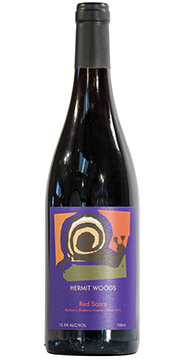
Red Scare began as a backyard co-fermentation of honey, blackberries, blueberries, and black raspberries, and has evolved into a complex, barrel-influenced dry red that many tasters compare to Burgundy. It is technically a melomel — fruit and honey wine — but drinks very much like a dry, aromatic Pinot Noir or Grenache-based red.
Targets
Style: Dry, aromatic, medium plus bodied red; briar fruit and floral notes
ABV: ~13–13.5%
Starting gravity: ~1.095–1.100 (22.7–23.8 °Brix)
Final gravity: ~1.000 (0 °Brix), with honey-derived richness
Ingredients
13 lbs. (5.9 kg) wild blueberries
13 lbs. (5.9 kg) blackberries
2.5 lbs. (1.1 kg) black raspberries
~2 gallons (7.6 L) water (chlorine free), adjusted so pressing and top ups yield 5 gallons (19 L) finished wine
11.5 lbs. (5.2 kg) wildflower honey
2 lbs. (0.9 kg) dextrose, split into two additions
5 g Lalvin D254 or GRE yeast
6 g Go-Ferm
38 g Fermaid K (or similar), split into three additions
~1.5 mL liquid equivalents pectic enzyme
~1.5 g potassium metabisulfite for ~30–40 ppm free SO₂ during aging
Light/medium toast French oak cubes/staves for subtle barrel influence (optional)
Step by step
1. Fruit and must
Thaw berries under CO₂, adding pectic enzymes as fruit goes in; add most of the water to create a workable must.
2. Yeast and early fermentation
Rehydrate yeast with Go-Ferm and pitch with must at ~59 °F (15 °C); allow yeast to work on fruit sugars for a few days, punching down twice daily and record the Brix and temperature.
3. Honey and dextrose schedule
Add half of the honey after a few days of active fermentation or just before pitch, along with roughly one-third of the nutrient (~15 g).
Once the ferment is vigorous and the cap stiff, add final half of the honey and a second nutrient charge of about 10 g to the must.
A few days later, add the dextrose with the remaining 8 g of nutrient, targeting 10–14 days total on skins.
4. Press, aging, and bottling
Press at or near dryness, collecting both free-run and press fractions; (commercially we rack into neutral French oak for roughly two thirds of the volume and stainless/glass for the rest, but a single glass carboy with some oak cubes works well at the home scale.)
Allow malolactic fermentation to initiate naturally or encourage it if desired, these fruits do have some malic acid, although they are more dominated by citric and quinic.
After MLF is complete, maintain free SO₂ at ~30–40 ppm, age 12–18 months, then blend and bottle dry as a long aging table wine. Cellar several months before drinking.
Dry Berry Wines as Serious Reds
Dry berry wines like Petite Blue, Hermitage, and Red Scare represent a third path between traditional grape wine and the sweet, simple fruit wines of the past. They apply the full toolkit of fine red winemaking — careful fruit selection, extended maceration, staggered sugar additions, barrel/tank blending, and patient elevage — to the fruits that best express New England or any other region they are grown.
For home and commercial makers alike, the message is both technical and philosophical: If one is willing to “build a wine” from wild blueberries, blackberries, elderberries, currants, (or any other berries that grow in your region) and honey — and to treat those ingredients with the same respect given to Cabernet or Pinot Noir — there is almost no limit to the dry, complex, age-worthy wines that can be made from local fruit.
And like their fine red grape counterparts, these wines fit perfectly at the dinner table or sipping with friends and family.