Pressing Matters
Mention winemaking, and it’s hard not to picture grapes being pressed — the iconic image of crushed fruit and juice running free. While the reality today is a bit less romantic (and a lot cleaner), that moment remains central to the process. Pressing separates juice or wine from skins, seeds, and pulp, directly influencing extraction and wine composition. Understanding when and how to press is a critical skill with a direct impact on wine quality.
At a more advanced level, pressing is not simply about extracting liquid — it is about managing the extraction of phenolic compounds, tannins, color, and other structural elements that influence mouthfeel, stability, and aging potential. Pressure, duration, and fraction separation all influence the final wine style. Mastering these variables allows the winemaker to move beyond basic production and begin shaping style with precision.
Wine Presses: Turning Grapes into Juice (and Wine)
While pressing is often seen as a single step, its role and timing vary depending on wine style.
In white winemaking, pressing is typically one of the very first steps. Grapes are crushed — or sometimes left as whole clusters — and pressed to extract juice before fermentation begins. This early separation limits the contact between juice and skins and pickup of phenolics, helping preserve freshness, delicacy, and color. Pressing whole clusters can yield a purer, more delicate juice with lower phenolic extraction, though it typically comes at the cost of reduced overall yield compared to pressing crushed fruit.

In red winemaking, grapes are first destemmed and crushed, then fermented together with their skins, allowing color, tannins, and flavor compounds to be extracted during fermentation. Pressing comes later in the process — either late in fermentation or once it is complete — to separate the wine from the spent skins and seeds.
In rosé winemaking, pressing plays a more flexible role. Some styles are made by allowing a short period of skin contact before pressing, giving the juice just enough time to pick up color and flavor. Others are made by pressing immediately — particularly when working with richly colored varieties where even a short maceration would result in excessively deep color. In both cases, the timing of pressing is what determines the final color and structure.
Across all of these styles, the press serves the same essential purpose: To efficiently separate liquid from solids while giving the winemaker control over how much is extracted. Whether you’re working with grapes or other fruits, understanding how and when to press — and choosing the right equipment — can make a significant difference in both yield and quality.
Another important factor worth considering is whether to include or remove grape stems. In most cases, stems are removed before crushing — though the order may vary — as they can contribute harsh, green tannins and unwanted vegetal flavors. Stems also contain significant amounts of potassium, which can raise the pH of the juice or must — reducing freshness and making color in red wines less stable over time. For these reasons, grapes are typically destemmed before processing, unless a specific style calls for whole-cluster pressing or fermentation.
What a Wine Press Does (and When You Need One)
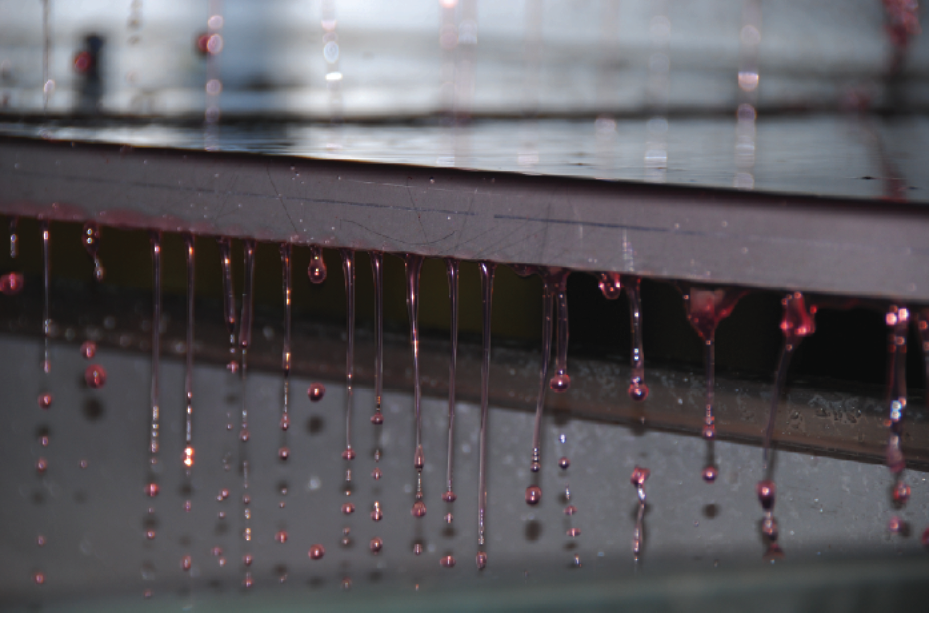
At its most basic, a wine press applies controlled pressure to fruit or fermented material to extract liquid that would otherwise remain locked within the skins, pulp, and cellular structure. While some juice or wine will drain on its own —referred to as the free-run fraction — a significant portion remains trapped and can only be recovered through pressing.

In practical terms, pressing serves two key purposes. First, it increases yield by recovering liquid that gravity alone cannot release. Second, it gives you control over how extraction occurs. Gentle pressing yields cleaner, more delicate juice or wine, while increased pressure draws out additional compounds from skins and seeds that can impact structure, body, and, at times, astringency. That liquid is referred to as the press-run fraction.
In addition to mechanical pressure, yield can also be improved through the use of pressing enzymes. These enzymes break down cell structure, releasing more liquid with less effort — particularly useful with difficult-to-press grapes or pulpy fruits. When used appropriately, pressing enzymes can increase yield while also improving juice clarity and ease of extraction (read more about the impact of these enzymes in this “Wine Wizard” column).
You’ll need a press whenever you are working with solid fruit material and want to recover liquid efficiently and with control. This applies whether you are pressing freshly crushed grapes, partially fermented must, or fully fermented pomace.
The role of the press becomes especially clear as free-run flow slows. What drains easily at first soon gives way to diminishing returns, with much of the remaining liquid held within the fruit. Applying pressure allows you to recover that remaining portion, while also deciding how far to push extraction based on your quality goals.
This is particularly important when making fruit wines. Many fruits break down into dense pulp that resists drainage. In these cases, pressing becomes essential not only for improving yield but also for producing a cleaner, more manageable juice or wine.
In short, pressing allows you to recover more of what you’ve created while giving you control over the balance between yield and quality — an essential part of shaping the final result.
Types of Wine Presses
For home winemakers, wine presses generally fall into two main categories: Traditional basket presses and more modern bladder presses. While both are designed to accomplish the same task of separating liquid from solids, they do so in different ways, and each offers its own advantages depending on batch size, preferred working style, and budget.
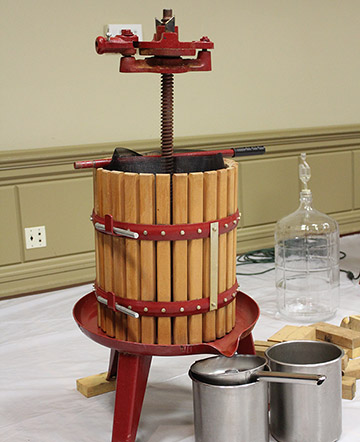
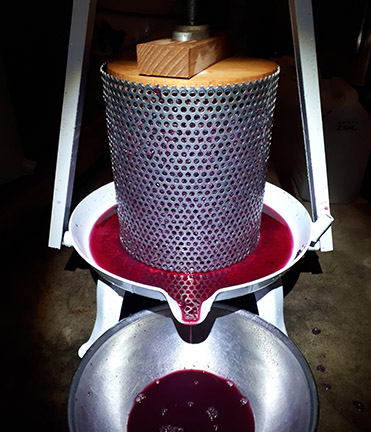
The basket press, sometimes called a ratchet press, is the classic design that many winemakers picture. It consists of a cylindrical basket made of wood or stainless steel, into which crushed fruit or fermented grapes are loaded. Pressure is applied from above using a screw or ratchet mechanism, forcing juice or wine out through the sides of the basket. Basket presses operate in stages: Pressure is applied gradually, then released, allowing juice to flow before tightening again. This stepwise process gives the winemaker a high degree of control but requires patience and effort.
In contrast, the bladder press uses internal pressure to achieve the same result with less manual effort. A flexible bladder mounted inside the press is inflated to apply even pressure outward against the fruit. Depending on the model, the bladder is expanded using either water pressure (hydropress) or air pressure, both of which provide a more uniform and continuous pressing cycle. This gentler, evenly distributed pressure can improve extraction efficiency and reduce the risk of over-extracting harsh compounds from skins and seeds. Bladder presses are typically faster and easier to operate, though they come at a higher cost and require access to water or air pressure.
Both types of presses can produce excellent results when used properly. The choice between them ultimately comes down to how much fruit you plan to process, how hands-on you want the operation to be, and how much value you place on efficiency versus simplicity. Many home winemakers start with a basket press and upgrade over time as their production increases and their process evolves.
Choosing the Right Size
Selecting the right size press is one of the more important decisions a home winemaker will make. A press that is too small can turn pressing day into a long, repetitive process, while one that is too large may be inefficient for smaller volumes and harder to use effectively.
When choosing a press, focus on the typical volume of fruit you expect to process in a single batch, rather than your current needs alone. Many home winemakers find their production increases over time, so it often makes sense to select a press with slightly more capacity than you initially require to avoid the need to upgrade too soon.
It’s also important to consider how the press fits into your overall workflow. Larger presses reduce the number of loads but require more space and handling effort, while smaller presses are easier to manage and clean but may require multiple pressing cycles.
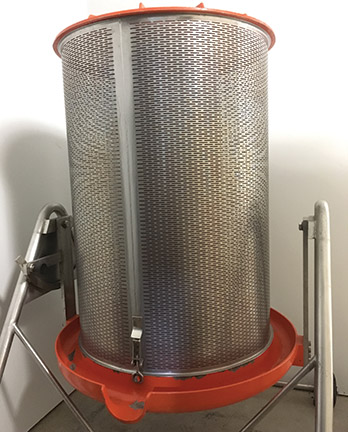
A small 2.5-gallon (10‑L) stainless steel basket press (such as the one shown below) can easily handle 50 lbs. or 25 kg of crushed, fermented fruit. At the other end of the scale, a 25-gallon (90‑L) bladder press or #45 basket press can each handle roughly 300 lbs. (140 kg) of crushed fruit, making them well-suited for larger batches.
Loading the Press: Set Yourself Up for Success
How you load the press has a surprisingly large impact on how well it performs. Even the best press will struggle if fruit is packed unevenly, while careful loading improves performance and saves effort later.
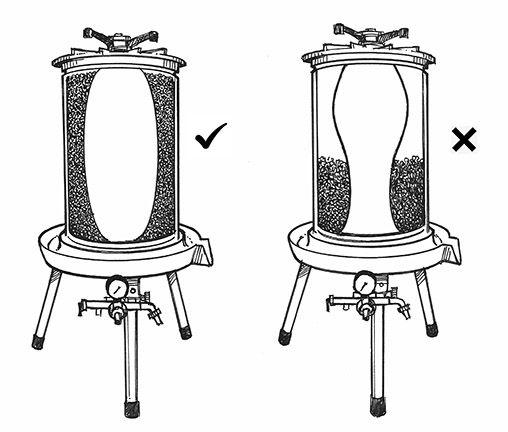
The first priority is to load the press evenly. Whether you’re working with crushed grapes, fermented pomace, or fruit pulp, the material should be distributed as uniformly as possible throughout the basket. An uneven load leads to uneven pressure, which can reduce juice flow and make the press harder to operate. It may also cause liquid to channel through certain areas while leaving other portions under-extracted. This is particularly important when using a bladder press. If the press is only partially filled and the load is concentrated toward the bottom, the bladder can expand unevenly as pressure increases, placing excessive stress on the unsupported portion of the bladder and potentially causing damage and shortening its life. Figure 1 illustrates the correct and incorrect loading of a bladder press.
It’s equally important to avoid overfilling the press. Leaving some space at the top allows you to position pressure plates or blocks properly and ensures that pressure is applied gradually and effectively. Overfilling can make it difficult to assemble the press, limit movement of the pressure mechanism, and reduce overall efficiency.
For many fruit wines — and even some slip-skin grape varieties such as Niagara and Muscat — drainage can be a challenge. These fruits tend to break down into a dense pulp that restricts juice flow and can lead to clogging in the press. To improve extraction, it can be helpful to contain the material in a mesh bag or liner, which keeps solids in place while allowing liquid to flow more freely and simplifies cleanup.
To further improve drainage, you can add a small amount of stems back into the crushed grapes as you load the press, though care must be taken to avoid extracting harsh tannins. A more controlled approach is to use rice hulls at a rate of about 1:100 (for example, 1 lb. per 100 lbs. of fruit, or 1 kg per 100 kg of fruit). Sprinkled evenly over the fruit during loading, rice hulls help maintain a looser structure within the press and allow juice to flow more efficiently while contributing no flavor.
Finally, think of loading as part of your overall workflow. Have your collection vessels in place, ensure the press is stable, and be ready to begin pressing as soon as the fruit is loaded. A well-prepared setup keeps everything moving smoothly and minimizes unnecessary handling or delays once juice starts to flow.
How to Press (Without Hurting Your Wine)
Pressing is not about applying maximum pressure, but the right pressure at the right time. A gradual approach improves both ease and wine quality, while rushing the process often leads to harsher results.
The process begins with a light application of pressure to release free-run juice or wine. This initial fraction flows relatively easily and is typically the most delicate and clean. Rather than tightening the press aggressively, it is best to apply gentle pressure and allow the liquid to drain naturally.
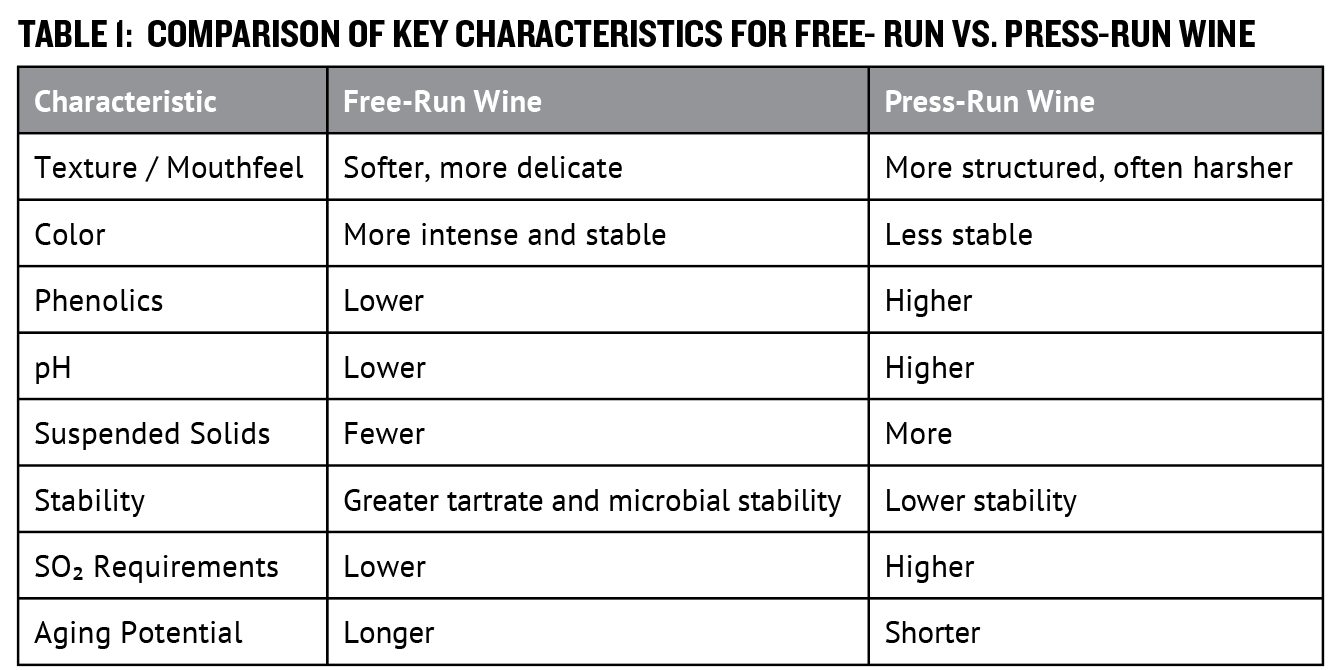
Free-run wine is typically softer, with more intense and stable color, lower pH, and fewer suspended solids. This lower pH contributes to greater tartrate stability, improved protection against microbial spoilage, and reduced sulfur dioxide requirements.
Press-run wine, by contrast, is more phenolic and structured but often harsher and with higher pH due to increased potassium extraction, which can reduce color and microbial stability and limit aging potential.
From there, pressing should proceed in stages. After each adjustment of the pressure mechanism, pause and give the juice time to flow before tightening again. This rhythm — press, wait, press — allows the structure of the grape skins or fruit pulp to settle and reconfigure, improving drainage and making the next pressing step more effective.
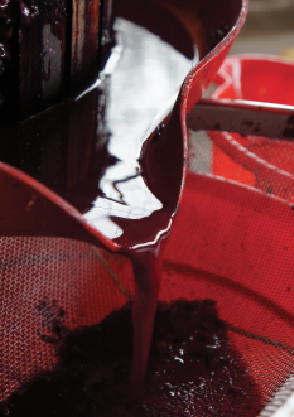
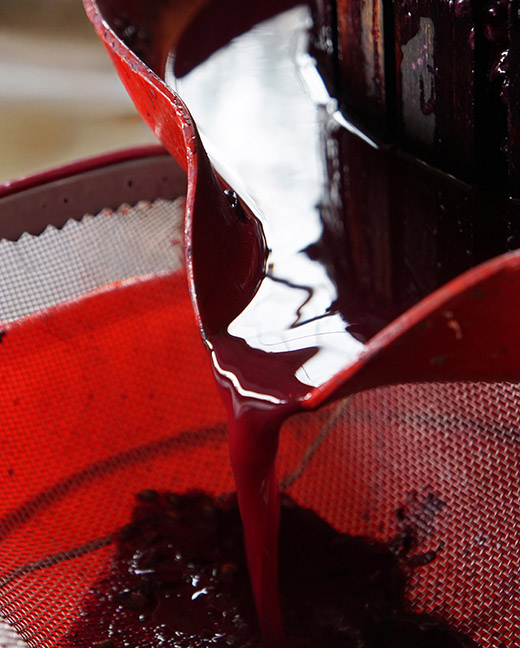
As juice or wine begins to flow, it’s also a good idea to place a sieve or colander under the press spout to catch any stray solids that may escape during pressing. Even with careful loading, small amounts of skins, seeds, or pulp can make their way out with the liquid, particularly at higher pressures. Straining the outflow at this stage helps keep your juice or wine cleaner, reduces the amount of sediment to manage later, and simplifies handling during transfer to your fermenter or storage vessel.
As pressure increases, additional liquid is extracted from within the skins and pulp. This later fraction often contributes more body and structure, but it can also introduce greater amounts of phenolic compounds, including tannins. For this reason, it’s important to avoid pushing the press to extremes. When resistance becomes significant and flow slows to a trickle, further pressing may yield diminishing returns and lower-quality liquid.
Throughout the process, pay attention to how the press is behaving. Juice should flow steadily, not spray or force its way out unevenly. If liquid begins to channel from one side or stops flowing despite increased pressure, it’s often a sign that the load needs time to settle or that too much pressure has been applied too quickly. With bladder presses, it may also be helpful to place a splash guard bag over the basket to contain spray and prevent a mess; most models come with one for this purpose.
Finally, consider whether to separate press fractions. Many winemakers choose to collect early and later pressings separately, giving them the option to blend later based on taste and structure. This adds a layer of control and allows you to fine-tune the final wine.
In the end, successful pressing is about patience and observation. Let the press do the work, guide it gradually, and resist the urge to force the process. The quality of what you collect will reflect the care you put into how you press.
Table 1 summarizes the key differences in the chemistry of free-run and press-run wine fractions.
A Practical Tip for Smooth Workdays
Pressing can quickly become hectic once juice or wine starts flowing, so preparation goes a long way. Before you begin, stage your workspace so everything is within easy reach — collection pails under the spout, funnels or strainers ready, and clean, sanitized receiving vessels positioned for easy transfer.
Think a step ahead. As juice collects, you may need to empty containers quickly. Having spare vessels ready and a clear plan prevents delays and spills. Working methodically reduces the amount of time your juice or wine is exposed to air, helping preserve quality.
Keep your work area organized. Pressing involves lifting, transferring, and cleaning, so a tidy space improves efficiency and safety. A well-prepared setup turns a messy operation into a smooth, controlled process — and makes pressing day more enjoyable.
Common Pressing Mistakes to Avoid
Even small adjustments in technique can make a big difference in pressing efficiency and wine quality. Keep these common pitfalls in mind:
Pressing too fast or too hard
Applying excessive pressure too quickly compacts the fruit, restricts flow, and can extract harsh, undesirable compounds.
Overfilling the press
An overloaded basket prevents even pressure distribution and reduces extraction efficiency.
Skipping pauses between pressings
Pressing works best in stages — tighten, wait, then tighten again. Rushing traps liquid and reduces yield.
Ignoring fruit type differences
Dense, pulpy fruits and slip-skin varieties require gentler handling and may benefit from mesh bags or structural aids like rice hulls.
Not separating press fractions
Free-run and press-run portions differ in quality and structure. Keeping them separate gives more control through blending.
Poor preparation and setup
Not having containers, funnels, or a workflow plan ready can lead to delays, mess, and unnecessary exposure to air.
The Takeaway
A wine press isn’t just a piece of equipment — it’s where your wine begins to take shape in a tangible way.
Choose the right type, take your time with the process, and treat pressing as a controlled extraction rather than a forceful squeeze. The care you put in at this stage is reflected directly in the quality of the wine in your glass.
Further Reading
Are press cuts scientific or subjective? Learn more about making press cuts from two professional winemakers.