Pinotage: A medley of dark fruit and spice
In my years of consulting and helping to open wineries, many clients came with the same request, “I want my portfolio to be different than all of the rest.” I would always support this idea very much but as time went on, many clients stuck to the classic varieties such as Cabernet Sauvignon, Chardonnay, or Pinot Grigio as they were “safe sellers” the guests would be familiar with and we all knew they would move. But then you meet the rare wine entrepreneur who remains committed to the idea of unique and different and it was such a pleasure to jump into a more adventurous or less known variety of grapes. Enter Pinotage.
In recent years, Pinotage has gained more traction amongst wine consumers, appearing on wine lists, and being promoted by educated wine sellers. I’ve been lucky enough to be able to work with fresh South African Pinotage as well as Pinotage grown in California a few times in my career. This grape yields such an interesting wine with unique flavor compounds infrequently seen in other varieties. It was an excellent choice for something unique that would entice experienced wine drinkers, with approachable fruit and tannin levels that would embrace newer wine enthusiasts.
In 1925, Pinotage was developed in South Africa by Abraham Izak Perold, an agroscientist at Stellenbosch University. Perold created a genetic cross of Pinot Noir and Cinsault (also known as Hermitage), by dusting the pollen of one variety against the flowers of another, and this generated seeds (within fruit) that he later planted in his home garden. This cross-pollination evolved a new variety that he dubbed “Pinotage” and began grafting vines of the Pinotage onto various rootstocks in 1935. He desired the delicate fruit and herb notes of the Pinot Noir with the fuller body, heavier tannins, and natural disease-resistance of Cinsault.
While Perold is credited with inventing the variety, nobody would know of Pinotage today if not for the efforts of a former co-worker. After planting the new variety, Perold took a different job and had to relocate, leaving his grapevines behind at his former residence. A former colleague from the University of Stellenbosch remembered the experimental vines and saved them from obscurity. The first bottles of Pinotage were produced in 1941 in South Africa and the variety grew with popularity amongst farmers before wine drinkers. The plants’ vigor, low pest intervention, and good yields were a great investment for farmers, but the flavors with Pinotage, not typical of other red vinifera, were not always well received among wine drinkers. That began to change around the time Pinotage won the Cape Wine Show in 1959 and people started to take note of Pinotage as a good table wine. In 1991, the first South African winemaker won the International Wine and Spirit Competition and Pinotage began gaining cultural interest as a fine wine. It has since risen from a unique wine, perhaps sold as a feature, to a mainstay upon any international wine list.

In the Vineyard
While Pinotage has greatly risen in popularity over the past few decades and become an immense point of pride of the people of South Africa, it still only accounts for about 7% of plantings in South African vineyards (Chenin Blanc is the most widely grown winegrape and Cabernet Sauvignon is the most popular red grape). Aside from South Africa, Pinotage can be found growing in New Zealand, the U.S. (California), Israel, Australia, Canada, Brazil, and Zimbabwe. Its natural disease resistance and adaptation to warm, arid climates has made it a popular choice in growing regions with those conditions.
The vines are known to have a low susceptibility to powdery and downy mildews and Botrytis, which I would attribute to dry climates and loosely formed bunches. While it does have good resistance to fungal infections, it has been known to be more susceptible to viral infections. In South Africa, they utilize the “bush vine” training system, quite possibly one of the oldest methods of growing grapevines in the world. Similar to the goblet style seen in France, this bush vine system allows for vertical growth without the typical trellis. It is cheaper to implement than a trellising system, but more importantly, the thicker canopy can shield grapes from the hot sun of arid climates. Some vineyards I have visited in California have trained their Pinotage on a vertical shoot positioning trellis or a double Guyot system, most likely to accommodate large equipment.
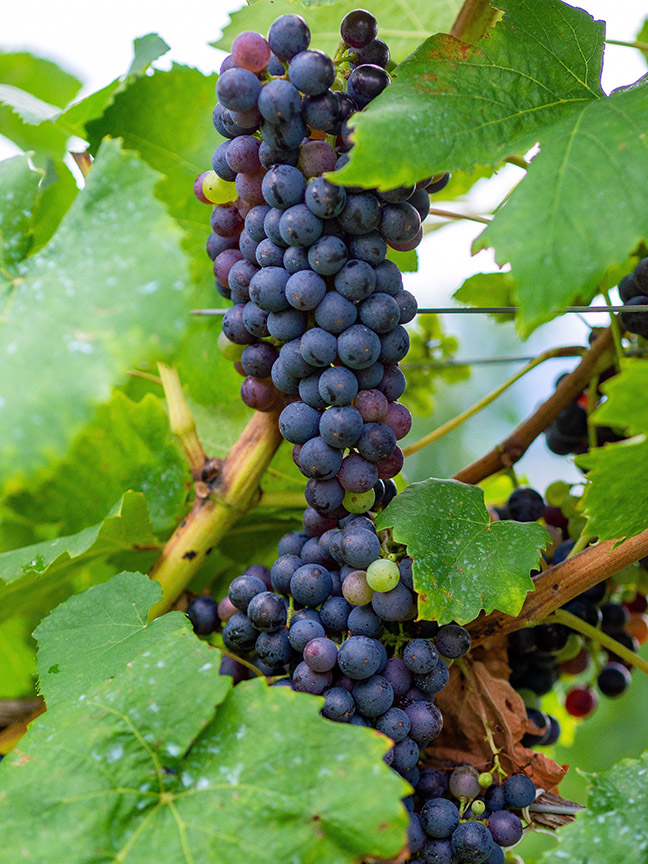
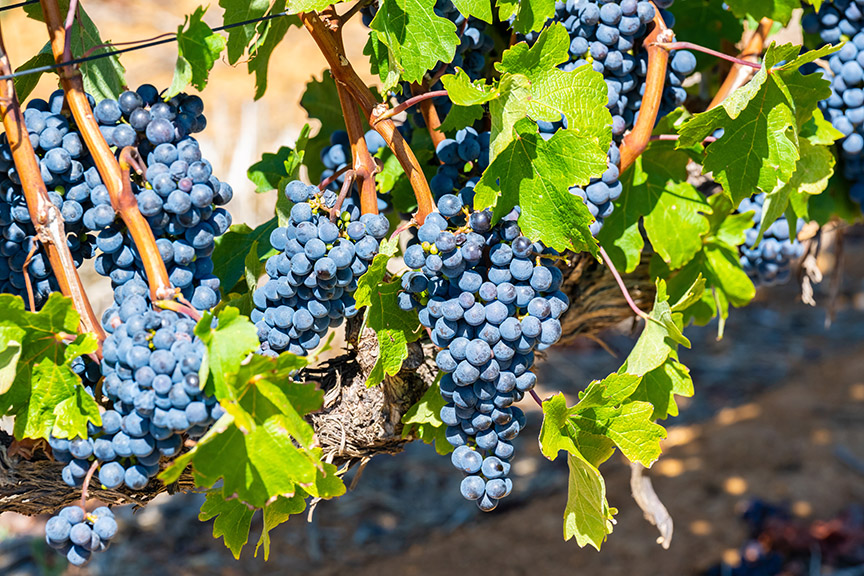
Pinotage isn’t overly selective on the soil composition, but selective on soil percolation. It shows a proclivity to arid climates and well-drained soils. With those two predilections, farmers are inclined to use drip irrigation to provide some water to the vines before it drains away or evaporates. The vines do have a cold tolerance up to -4 °F (-20 °C), making them suitable for the sometimes-severe temperature shifts of desert climates. The vine has medium vigor, with some leaf pulling required, depending on the training method employed by the grower. The leaves are deeply lobed, with five separate lobes. The clusters are medium in size and very loose, which helps to stave off any Botrytis. Pinotage berries are small and oval shaped with a beautiful dark blue-black, thick skin and colorless interior.
The growing season for Pinotage is approximately 160–180 days from budbreak to harvest. The vigor of the vine is moderate, which requires less intervention on behalf of the viticulturist. As the grapes ripen, they tend to spike in sugar concentration and lose their acidity rather quickly, making acidulation of the must an often-necessary step in the winemaking process. Vines can yield anywhere from 2.5–6.8 tons/acre (it is on the lower end in more premium vineyards).
In the Winery
The slow rise in popularity of Pinotage amongst drinkers was in part due to lack of understanding of the winemaking styles needed to create this beautiful wine. Pinotage is a variety that benefits from warm fermentation temperatures to release some of the esters that can produce fruity aromas and lock in color. It is recommended that fermentation be able to reach at least 85 °F (29 °C), but no higher than 90 °F (32 °C). Certain yeast strains such as BM 4×4, Alchemy 4, ICV D80, RP15, or T73 can all be favorable for this variety as they have a higher heat tolerance and help to promote dark fruit character and aid with structure and mouthfeel. If the fermentation temperature gets too high, isoamyl acetate can begin to form along with volatile acidity. Isoamyl acetate was often found in Pinotage wines of years ago, as the winemakers did not yet understand temperatures effect on the flavor compounds. Small amounts of isoamyl acetate can give banana, pear, and fruity notes, whereas larger concentrations can yield acetone or paint-like aromas that are off-putting. In addition to hot fermentations, isoamyl acetate formation can also be influenced by yeast strain selection, nitrogen management, and overall fermentation stress.

Newer clones of the Pinotage vine have shown less production of isoamyl acetate in their resulting wines. More understanding and experience with the variety also has led to the practice of harvesting the grapes a bit early, preserving some of the acid and fresh fruit character. Acidulation is a frequent practice when vinifying Pinotage. It often will have higher Brix numbers at harvest, so it is important to make sure that your yeast and malolactic bacteria strains have a higher alcohol tolerance. Fermentation oak as well as aging oak should be used to help preserve the deep garnet color in the wine. By adding oak dust at fermentation, along with powdered tannins, color as well as grape skin-based tannin (condensed tannins) will be preserved from dropout in the aging process.
If a medley of dark fruits and spices appeals to you, then Pinotage is a wine you should familiarize yourself with if you have not already. With delicious dark fruit flavors of blackberry, plum, black cherry, and unique hints of banana, Pinotage can be incredibly fruit-forward. It does have a savory finish, showcasing more herbal notes of lavender and mint, along with coffee, earth, and smoky notes. Oak aging is very typical for Pinotage with some of the herbal and savory notes being greatly complemented by the benefits of French or American oak aging. The coffee nuances of the wine will mingle beautifully with vanilla or cocoa attributes contributed by the oak. If the vintner enjoys a smoky flavor profile, the natural smoke and earthy flavors can be enhanced by a heavily toasted oak, creating aromas of barbecue and grilled meats along with leather and cedar. Liquid oak tannins can also be a great finishing treatment to add a little extra oak character or flavor to the wine. I’ve had great success with the vanilla and mocha liquid oak products sold by RahrBSG and find them easy to work with. As with all oak additions, bench trials should be conducted to determine the proper dosage.
Dare to be different! In a world of Cabernet and Merlot dominance, look to the New World winemaking regions for inspiring alternative choices. Pinotage is the gem of South Africa winemaking, acting as cultural ambassador on wine lists and hopefully within your own wine glass. This summer I will be hosting a braai (a traditional South African barbecue) themed wine dinner at my home, and I’m extremely excited to showcase the delicious Pinotage as an accompaniment to grilled meats and toasties, laughter, and friends.
Pinotage Recipe (5 gallons/19 L)
Ingredients
125 lbs. (57 kg) Pinotage grapes
Sanitizing solution of potassium metabisulfite (KMBS)
KMBS powder and citric acid powder
5 g yeast (BM4x4, Alchemy 4, ICV D80, RP15, or T73)
Liquid pectic enzyme
7.5 g Go-Ferm Sterol Flash
7.5 g Fermaid O
5 g Fermaid K
5 g Opti-Red (optional, but helps)
5 g Booster Rouge (optional, but helps)
5 g oak dust, French medium+ toast
MLF bacteria (Wyeast liquid cultures)
Distilled water
American or French medium oak chips, cubes, or other barrel alternative
Equipment
Crusher/destemmer
Wine press
15-gallon (57-L) fermentation bucket
5-gallon (19-L) carboy
Airlock and bung
Auto-siphon and tubing
Stir paddle
Spray bottle
Punchdown tool
pH meter
Hydrometer
Thermometer (digital preferred)
Glass marbles (optional)
Step by step
1. Ensure all your equipment is clean and in proper working order. Make a fresh batch of KMBS sanitizing solution using 1 Tbsp. of KMBS powder and 1 Tbsp. of citric acid mixed into 1 gallon (3.8 L) of clean water. Fill a spray bottle with the KMBS/citric acid solution and spray down your processing equipment, but ensure there is no pooling of sanitizer in bins or press basins.
2. Crush and destem grapes and transfer immediately into a sanitized 15-gallon (57-L) fermenter bucket.
3. Add 50 ppm of KMBS to kill off natural yeast. Utilize the sulfite calculator to assist in your calculations. Throw a cover on the must bucket and allow to sit overnight in a cool area to kill negative microbes and allow the must to come to a temperature of 60 °F (16 °C).
4. The next morning (at least 12 hours after the addition of KMBS), add five drops of pectic enzyme per gallon (3.8 L) of must and stir well. Add the oak dust and stir well.
5. Take measurements of your juice, including volume, Brix, pH, and TA. Adjust the juice to have a starting Brix of at least 24, a pH of ~3.5, and TA of 6–7 g/L. Utilize tartaric acid if needed to increase acidity. www.wineadds.com has helpful calculators for adjusting acidity in must.
6. To prepare the yeast, warm up 50 mL of distilled water to 60 °F (16 °C) and add to the mixing bowl. Then add the Go-Ferm Sterol Flash. Stir well. Then add five grams of yeast and stir well. Allow to sit for 15 minutes. Then mix in thoroughly to the must with a sanitized stir paddle.
7. Place a lid loosely on the fermentation pail and wait 24 hours to observe yeast activity. Take Brix measurements twice daily to ensure the start of fermentation and take daily temperature measurements. Try to keep the fermentation temperature between 80–85 °F (27–29 °C) to help secure color but also avoid off-aromas.
8. Be sure to punch down the cap and aerate the must three times a day at a minimum to help avoid reductive characters. Adding the yeast nutrients at their appropriate times will also help to avoid reductive characters.
9. After one or two days of fermentation, check the Brix and if it has dropped by one or two degrees, it will be time to add some nutrients. Add 100 mL of distilled water to a mixing bowl and add 7.5 g Fermaid O and the Opti-Red and Booster Rouge if you choose to use those items. Mix well to create a slurry and then stir into the fermenting juice with a sanitized stir paddle.
10. When the Brix has declined to between 15–11°Brix, add the Fermaid K in the same way you added the Fermaid O.
11. When the temperature is around 80 °F (27 °C) and the alcoholic fermentation is well underway, add the Wyeast MLF packet of bacteria and stir to punch down the skins and incorporate the bacterial cultures.
12. Continue to ferment as close to 80 °F (27 °C) as possible until the wine has fermented to dryness (-1 to -2 °Brix). This may take 7–21 days.
13. When the wine has achieved dryness, press out the wine in a sanitized press and pour all of the wine into a 5- or 6-gallon (19- or 23-L) carboy with an airlock to complete MLF.
14. After 2–3 days, rack off the lees into a clean, sanitized carboy. Affix bung and airlock and allow to sit for a month. If you have an air gap after racking, either top off with a complementary wine such as commercially made Pinotage or Pinot Noir, or add sanitized glass marbles to displace the headspace.
15. Monitor the MLF via paper chromatography or measure the reduction of malic acid via a meter to track the progression of the fermentation. When the MLF is complete, rack the wine and add 50 ppm of KMBS.
16. One month after the initial racking and addition of KMBS, rack it again into a sanitized carboy and add another 50 ppm KMBS. Consider degassing at this point, briskly stirring with a wine whip during a racking session. Always be careful when using this tool in a glass carboy. Consider racking it into a food-grade bucket and degassing in that. Never put a glass carboy under suction or negative pressure
17. While the wine is aging, consider the addition of oak chips, cubes, or staves to add a bit of oak to enhance the wine. Run bench trials to determine the proper dosage of oak. Taste often to not over-oak the wine.
18. Allow the wine to sit and age, maintaining a free SO2 level appropriate for the pH. WineMaker’s sulfite calculator will help you determine the proper dosage given the parameters of pH and volume. You can filter the wine after eight months of aging if you choose. At this point, it should have been racked four times and have completed its oak aging.
19. Consider cold stabilizing or acquiring a cold stabilizing product such as Zenith Color.
20. Once cold stability has been achieved, taste the wine and consider if it is ready to bottle. Fining agents such as Super Kleer or mouthfeel enhancers such as gum arabic may help improve mouthfeel and clarity.
21. Bottle once you are content with the flavor and stability of the wine. Always add a small amount of sulfite before bottling, 10 ppm beyond the sulfite calculator’s recommended value, to account for oxygen uptake during the bottling process.
Related Reading
Buying grapes from a supplier allows access to varieties from regions of the world that would otherwise be inaccessible to home winemakers, including South African Pinotage in the northern hemisphere spring. Check out our article on sourcing grapes from grape suppliers, where we lay out seven critical points to consider before making your purchase.
More Pinotage
Want more background on the Pinotage grape variety? Say no more. Enjoy these articles.