Swamp Donkey Vineyards: Growing Grapes in New England
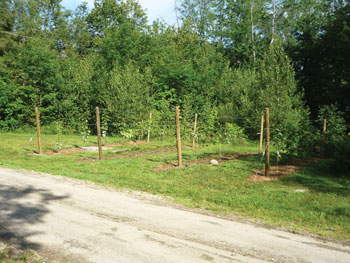
My New Hampshire vineyard is right now unnamed, but I have been contemplating calling it “Swamp Donkey Vineyards,” as “Swamp Donkey” is the term that us New Hampshire people use for moose. I only live 11⁄2 miles away from a marsh, so lots of moose come through the vineyard all the time. That name, however, has unfortunately not been well received in certain focus groups (namely, by my wife), hence the as yet unnamed situation.
I planted my grapevines almost two years ago, the first ones being Marquette, followed by Landot Noir and Léon Millot. It is a very small vineyard with only 20 vines total. The growing region up here is admittedly kind of short so having a somewhat fast ripening cultivar is nice. I also live up on a hill, which tends to be a little bit chillier than most areas around me. I’m in between zones 4 and 5.
I chose to plant Marquette because it was something new and it is also hardy to zone 3, so I don’t have to worry about it wintering over. Due to Marquette’s high acidity, however, I decided that I would need something to balance it out, so I put in a couple of more rows of lower acidity grapes. I decided to go with Léon Millot and Landot Noir, which, while very nice wines by themselves, I will likely end up using as blenders with the Marquette.
I have been making my own wine for about four years, so this is all kind of new to me. I started out by making fruit wines, including blueberry and clementine, while I researched grape varieties that would thrive in this climate and while I got the vineyard in the ground. The clementine wine, specifically, was such a big hit among my family members that I am currently in the process of fermenting 15 more gallons for this coming season.
Planting a vineyard in New England has had some ups and downs, but I think the biggest challenge so far has been battling Japanese Beetles. After the first year when I planted the Marquette I had such a terrible beetle infestation that I thought I would have to start the vineyard all over from year one all over again. Thankfully I have found some ways to control them.
The best part about having my own vineyard, however, is the satisfaction! It is great to wake up in the morning, make a cup of coffee and walk out to the vineyard to check on the vines, training any off shoots as I go along. For me, this day-to-day interaction is the most enjoyable part of having the vineyard.
I have thought of planting another row or two sometime in the future, depending on the wine resulting from the current vines, and what new flavors I might be interested in incorporating in the future. My vines are still pretty young, however, and I’m still getting the hang of being a vineyard manager, so I’m looking forward to what happens when they mature before I plant anything else.

For more photos of Dan’s vineyard, visit www.winemakermag.com/photos/category/7