When Life Gives You Lemons: Making wine from an invasive plant
There is a fruit-bearing exotic ornamental species found in the African nation of Kenya that can be deadly to livestock. Animals feed on the fruit of this particular invasive plant and little spines found on the skin of the fruit can lead to an infection of the mouth, tongue, eyes, stomach, and throat. The infection can further lead to blindness and even death. The plant has killed thousands of livestock.The pastoralists living in Dol Dol villages of Laikipia County in northern Kenya were desperate to find a solution to eradicate the plant, scientifically known as Opuntia stricta, a large species of cactus that can grow up to 6.6 ft. (2 m) tall.
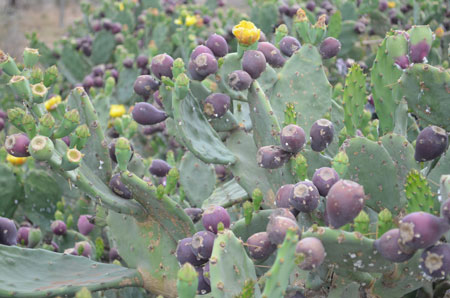
Opuntia stricta was ranked in the top 100 of the world’s worst invasive alien species, according to plants expert Francis Maina. The plant is believed to have originated from the Americas, and is common in semi-arid, sub-tropical and tropical regions such as Australia, Africa, and parts of Asia. It is also common in woodlands, rangeland, pasture, and waterways. The northern Laikipia is classified as semi-arid.
“It propagates by seeds and also vegetative through its fleshy stem fragments. They spread by becoming attached to animals, footwear, and waste,” Maina said.
He said that animals — monkeys, elephants, and birds eat the fruit. These too cause the spread of the plant when the animals drop its seeds as waste.

The wine project has created jobs for the youth and provides a source of income to the community who supply Opuntia fruits for processing the wine.
But after 80 years of this plant’s blight on their land, Joseph Lentunyoi, 40, has begun saving these communities by using the plant’s fruits for making wine, juice, and jam. The fruits’ seeds are also squeezed to produce oil for making cosmetics — mainly soap and creams. Joseph, a teacher and permaculture consultant at the Laikipia Permaculture Centre, was trained at the Permaculture Research Institute in New South Wales, Australia.
“Maasai, Turkana, Samburu, and Pokot pastoralists living here have lost livestock worth thousands of dollars. Scientists found no solution to eradicate the spread of the plant. It is when I decided to research on how to make Opuntia a source of income to benefit the affected people,” Joseph said.
Joseph took five years researching how to turn the plant from a curse to a benefit. That is when he came up with the winemaking idea. The wine made from Opuntia juice tastes like the altar (sacramental) wine. It is red like the fruits of the plant.
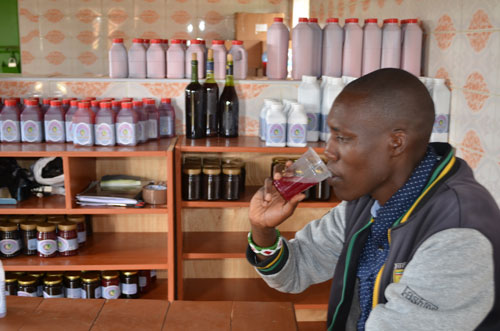
Villagers are happy with the discovery, because they cannot afford modern beer or wine. They have relied on traditional brews, which are now prohibited by the Kenyan government. Why the prohibition? Some brewers have mixed their products with unsafe chemicals. Many Kenyans have died while others have been left blind from consumption of tainted traditional brews.

Joseph launched his project in July 2016. The wine, known as Naishamu Red Cactus Wine, is packaged in 1.5-L (1.6-qts.) magnum wine bottles offered at $14, while 750-mL (0.8-qt.) standard wine bottles are $7. The juice, jams, and other products attract different prices. All Opuntia products have been certified by the Kenya Bureau of Standards as safe for public consumption. The current production capacity is 100 L (26 gallons) of wine per week and the same quantity for the unfermented juice. Villagers are paid $10 per 25 kg (55 lbs.) of fruits delivered. The wine project has created jobs for the youth and provides a source of income to the community who supply Opuntia fruits for processing the wine.