When and Why We Blend
Today’s topic focuses on the many reasons we can use blending in the winemaking process. Like an artist’s palette, blending gives winemakers a versatile tool for creating consistency and enhancing quality. Blending is one of the most creative and instructive parts of winemaking, helping improve the overall quality of wines.
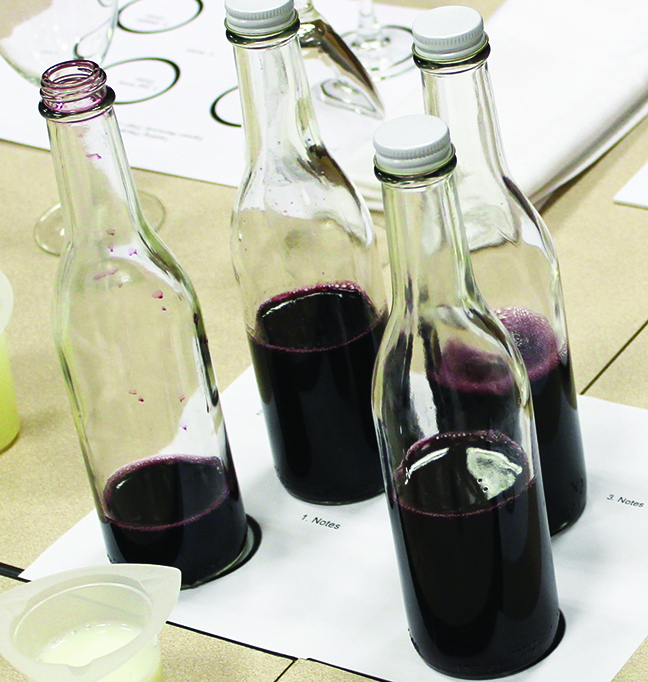
The art of blending is the process of combining two or more components to create a finished wine that is more balanced, complex, or consistent from vintage to vintage than any single component could be on its own. The goal is to achieve a finished product that is better than the individual parts.
Although some wine regions emphasize a single grape variety from one vineyard, I find that approach restrictive and impractical in areas with variable terroir. Blending helps balance natural characteristics and vintage-to-vintage inconsistencies without forcing one variety or site to achieve perfection or relying on additives to correct weaknesses. Exceptional single-variety, single-vineyard wines are possible when conditions align, but those circumstances are rare and cannot be expected every vintage.
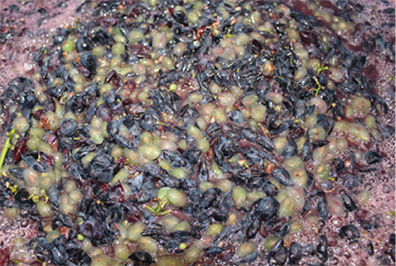
A field blend — in which different grape varieties are harvested, processed, and fermented together — is one way to apply this technique. Winemakers may use field blends to fill a fermentation vessel, improve color development and stability through co-pigmentation, such as fermenting red and white grapes together as they do in the Rhône Valley. Another reason may be to strengthen phenolic structure by combining hybrid grape varieties with high levels of color but limited tannins with vinifera grapes that have higher phenolic structure. They may also balance high-acid grape varieties with low-acid varieties or a mixture of ripe and underripe fruit during fermentation.

Learning Through Blending
Although field blending offers several benefits, more knowledge can be gained (and more exact results achieved) by keeping varieties and lots separate and blending them together post-fermentation. There are countless ways we can use blending, but I think one of the most important reasons is learning the impacts on finished wine when small changes are made.
By keeping individual lots separate until after fermentation, we can learn many aspects about the starting ingredients and resulting wines. Keeping grape varieties — or even the same varieties but lots grown with different trellising, clones, cover crops, and vineyard site locations — separate is a great way to learn about the impact each will have on the resulting wine. In the 1990s, for example, we tested different cover crops in a Merlot vineyard on a Geneva Double Curtain (GDC) trellis and were surprised by how different rye and alfalfa cover crops affected the resulting wines.
As a commercial winemaker, I used blending to maintain consistent style and quality; goals that also apply to small-scale producers but with more room to learn and experiment. Keeping grape sources separate until after fermentation creates more opportunities to learn and refine the final blend. Although this approach requires extra work and fermenters, it can significantly improve both knowledge and wine quality. To make the best wine possible, embrace the added harvest work; you get only one opportunity each year.
During my 23 years of winemaking with the same winery in a young wine region, grape sources and varieties changed continually as we learned which grapes performed best in which location. Every year I made a red and white wine blend that was branded as an approachable, easy-drinking, food-friendly wine. As our regional knowledge grew, the varieties and vineyard sources evolved, making a consistent style difficult to maintain. Post-fermentation blending helped preserve that style despite the changing grape varieties used in the blend.
During that period, changes to equipment, including the crusher/destemmer, press, and fermentation vessels, were evolving as we grew, requiring us to revise both pre- and post-fermentation protocols.

Treating lots separately lets you test techniques, assess results for future vintages, and build complexity through blending when carried out post-fermentation. It also allows you space to try different processes without committing the entire lot and adds layers to the final product. Experimenting with carbonic maceration, partial malolactic fermentation, different yeast selections, or sources of oak allows you to experiment and learn from the process. Winemaking is not a recipe, and a method that suits one grape variety may not suit another. When trying five unique approaches to making wine from a single grape, you may find one works best, that a blend of a few approaches is best, or even what not to do (in which case, that wine may not make its way into your final blend).
Explore and learn how elements such as oak barrels, cubes, and chips affect your wine. Leave one portion unoaked, then trial different oak sources or toast levels and blend the lots after evaluating each one. This approach builds complexity and guides decisions for the future vintages when deciding on the oak source that makes the most sense for your vision.
Before blending, evaluate each lot separately and correct sulfide odors, bitterness, excessive acidity, or other faults. Every potential component should be sound and represent the best version of that wine on its own. Treating individual lots is preferable to treating the finished blend because post-fermentation additions may solve a problem at the expense of aroma, body, or stability. Always run trials to identify the smallest effective addition with the fewest side effects, then run blending trials to achieve balance.
Blending Press Fractions
Separating press fractions from red must can greatly improve wine quality. Results depend on timing, how the must is transferred to the press, press operations, and the resulting wine at maximum pressure. Taste the wine at several pressure levels to see how extraction changes. The more pressure applied to squeeze out juice near the end of the press cycle, the more bitterness is extracted. I recommend combining the free-run with the lightly pressed fraction in one carboy and collecting the heavy-press fraction separately in a smaller carboy. Evaluate both before blending; this gives you the option to treat the heavy-press wine before reintroducing it into the blend, or to blend only part — or none — of it into the main volume. Keeping them separate gives you the option to learn about your equipment and make final decisions about the final product.
Blending for Complexity
Colorado Riesling offers a useful example of blending to improve the overall quality of the wine. Growing Riesling in the Grand Valley AVA, at 4,500–4,900 feet (1,375–1,500 m) elevation, has a longer, warmer growing season and less nighttime cooling, while the Riesling grown in the West Elks AVA, at 5,000–6,000 feet (1,525– 1,825 m), has a shorter, cooler season and greater day-to-night temperature shifts. For a couple of decades, I sourced fruit from both regions, fermented the lots separately, and blended them afterward. What I learned by keeping them separate was that Grand Valley Riesling contributed ripe peach, apricot, floral, and honey notes but had little malic acid and low overall acidity at harvest. West Elks Riesling added a strong acidity structure, good malic acid levels, spice, citrus, and green apple flavors. Most of the harvests occurred two to four weeks apart. By doing trials with blending each of the individual lots together, it created a Riesling with layered aromas and flavors balanced by refreshing acidity and highlighted the strengths of the vintage.
I used fruit from both AVAs for varieties beyond Riesling, and the technique worked especially well with Chardonnay and Sauvignon Blanc as well. Chardonnay from the West Elks AVA let me maximize malolactic fermentation to create viscosity, then blend back in the riper tropical notes of Grand Valley fruit. This made a very complex Chardonnay that could have been a bit one-dimensional and lacked aromatics in the nose if I had not blended percentages of each together.
For Sauvignon Blanc, the two regions produced distinct varietal characteristic differences, allowing me to make a New Zealand-style Sauvignon Blanc with the herbaceous components and ripe tropical, citrusy components from fully ripe grapes. Prior to having this grape in both AVAs, we only had Sauvignon Blanc in the Grand Valley. This meant making two passes when picking the grapes to get different ripeness levels and different characteristics to be blended post-fermentation.
While the West Elks AVA has perfect growing conditions for white grape varieties, the season is a bit short for red varieties, excluding Pinot Noir. We learned this by trying to grow different varieties in the area; Pinot Noir does well,
but Cabernet Franc did not have a long enough season to ripen. However, those grapes became a useful substitute for acidity and eliminated the need to add large doses of tartaric acid to the Grand Valley fruit. We were able to use the high-acid/low-pH Cabernet Franc from the West Elks AVA and blend it with our low-acid/high-pH Cabernet Franc from the Grand Valley.
Even without multiple vineyard sites for the same variety, you can build complexity by blending separate fermentations.
Dividing the same must or juice among 2–3 vessels creates subtle differences, even when the same yeast is used, because no two fermentations develop exactly alike. Different yeasts can further distinguish the lots of the same grape variety through varied aromas, flavors, body, and structure. Blending them afterward adds depth and layers to a wine that might otherwise seem one-dimensional. This process is also a great way to learn differences in yeast, helping you narrow down the best choice for your needs in future vintages.
Troubleshooting Through Blending
Blending can also be used to correct mistakes. Once — or perhaps twice — I over-acidulated Merlot by calculating the addition from total volume instead of liquid volume. Merlot was usually the first red to arrive after starting with several white varieties, and with calculations of tartaric acid additions, I had gotten into a routine of using the total volume. Of course, with red must, you need to make calculations based on the liquid volume. I would document the error and reduce the acid addition for the next lot of Merlot and after blending the two, the resulting acid level would be correct.
Likewise, high-acid hybrid wines can be balanced after fermentation by blending them with wines that have lower acidity. Balance is reached through blending, and the quality of the wine is better than it would be if we had to use potassium carbonate to deacidify the entire lot of high-acid wine.
Some grape varieties are especially valuable for blending because even a small amount can improve another wine. Cabernet Franc was my favorite: It added appealing aromas, flavors, body, and complexity without dominating the blend, even at just 5 percent. The more blending trials you conduct, the better you will understand which varieties complement others and which can overpower a wine’s aroma and structure at very low percentages.
In Conclusion
Although small-scale fermentations can be challenging, the knowledge gained is worth the effort. You do not need to try everything in the first year; begin with two grape varieties, two yeasts, or two separate lots. Blending them afterward can add complexity to the finished wine. Document each step so you can apply what you learn to future decisions.
I enjoyed experimenting with small-scale fermentations in the college lab because it allowed me to explore new approaches without the pressures of commercial production. There, I tried natural, non-inoculated fermentation, which produced excellent results and became one of my favorite methods. Give yourself the freedom to experiment and build your own practical winemaking toolkit.
Further Reading . . .
• Now you know why to blend wine. Next, let’s look at exactly how to do bench trials so you can start making wine blends.