Vino Cotto
In the quiet kitchens of central and southern Italy, long before stainless steel vats and temperature-controlled fermentation, winemaking began with fire, patience, and a deep respect for the land. Vino cotto (literally “cooked wine”) is not a wine in the conventional sense, but a rich, syrupy elixir born from simmered white or red grape must. It carries the memory of harvests past, of grandparents stirring copper pots with wooden spoons, of autumn air thick with the scent of caramelizing fruit. This tradition, rooted in Italian regions like Abruzzo, Marche, and Puglia, was never about commercial production. It was about preservation, celebration, and family.
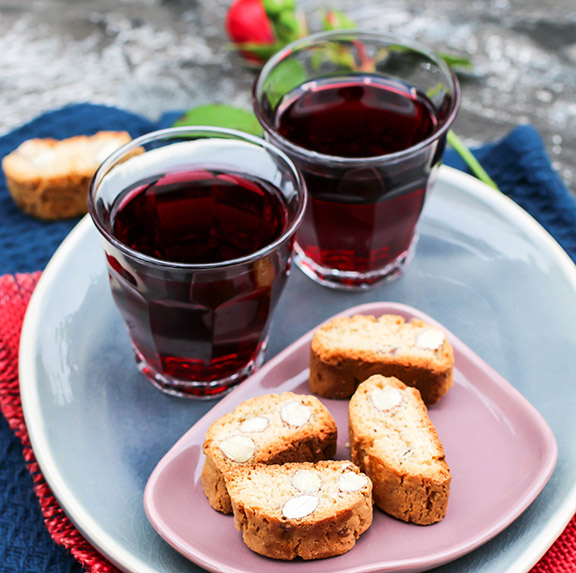
Unlike the wines that fill bottles and cellars, vino cotto was often made in small batches, and tucked away in pantries or gifted during holidays. It was poured sparingly on special occasions, over desserts, or into the hands of guests as a gesture of warmth. Its flavor, deep and complex, told stories of the soil and the seasons.
Today, as more home winemakers seek to reconnect with ancestral techniques, vino cotto offers a chance to revive a ritual that is as much about heritage as it is about taste. In this article, we’ll explore how to bring this ancient practice into your own kitchen, one simmering pot at a time.
What is Vino Cotto?
Vino cotto is one of those rare culinary traditions that defies easy categorization. It’s not quite wine, not quite syrup, and certainly not vinegar, though it shares traits with all three. Vino cotto is a sweet, concentrated liquid made by slowly simmering freshly pressed grape must until it reduces into a thick, ruby-colored (if made from red grapes) or amber-colored (from white grapes) elixir. Fresh juice is then added to the cooked portion. The name translates to “cooked wine,” but that’s a bit misleading: “Regular” wine is created through alcoholic fermentation of grape juice whose composition has not been altered by heat treatment. Vino cotto does go through some fermentation, though that takes place after an initial heating phase of a large portion of the must. Overall, the process can be regarded as a preservation method that dates back centuries, born from necessity and sustained by ritual.

Vino cotto was traditionally made after the grape harvest, often using leftover or imperfect fruit that wouldn’t be used for table wine. Families would gather around large copper pots, stirring the must over open flames for hours. The result was a deeply flavored, shelf-stable liquid that could be stored for years and used in countless ways, from celebratory sips to festive desserts. Each village, and often each household, had its own variation. Some added walnuts or citrus peel, others aged it in terracotta jugs tucked into cool cellars.
Vino cotto, in its purest form, is simply reduced grape must: No additives, no shortcuts. Its flavor is rich and layered, with notes of dried fruit, caramel, and a subtle tang.
Ingredients and Equipment
To make vino cotto in your own kitchen, you’ll need surprisingly few ingredients, but each one carries weight in both flavor and tradition. The process begins with fresh grapes, ideally harvested at peak ripeness. Families often used Montepulciano, Sangiovese, or other local varieties, though any grape with good sugar content will do. What matters most is that the grapes are clean, juicy, and full of character. My family traditionally uses Moscato Bianco for its sweet, aromatic, and fruity flavor.
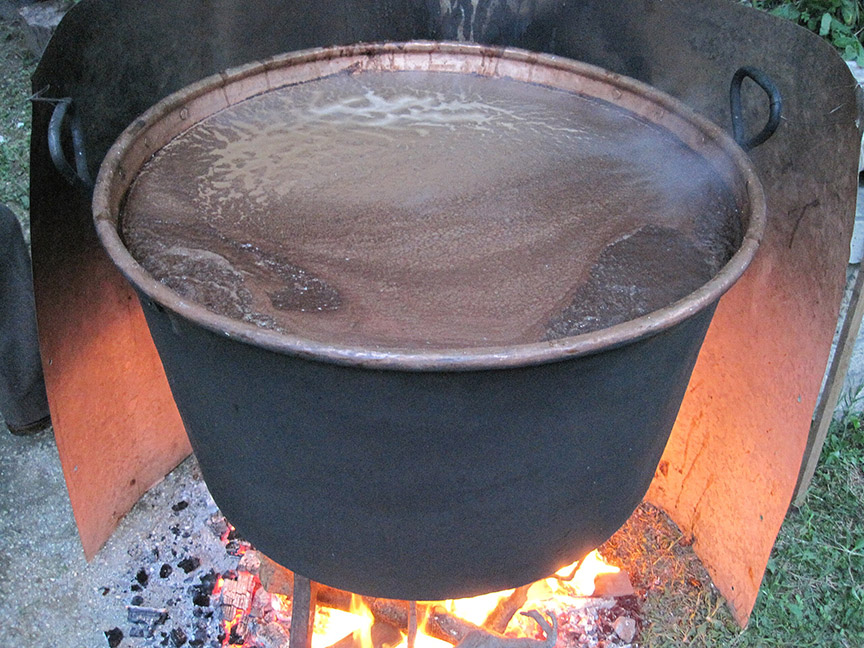
You’ll need a large pot, traditionally made of copper, though stainless steel works well for modern kitchens. Copper pots are used because of their exceptional thermal conductivity, which allows for fast and even heat distribution. This prevents hot spots that could burn the must, making them ideal for delicate and long cooking processes. Additionally, when properly lined with tin or stainless steel, copper is safe for cooking and its historical use has made it a symbol of professional and quality cookware. When making vino cotto in an old copper pot, a piece of iron is sometimes added to the boiling must. This practice acts as a chemical sacrifice: Because the must’s acidity can react with the copper, the more reactive iron rusts and dissolves instead, protecting the pot and preventing metallic flavors from transferring to the liquid. This is a traditional method that uses a basic electrochemical principle to ensure the purity of the wine. The pot should be wide enough to allow for slow evaporation and deep enough to hold several quarts/liters of must. A wooden spoon is ideal for stirring, not just for its heat resistance but for the tactile connection it offers to the process.
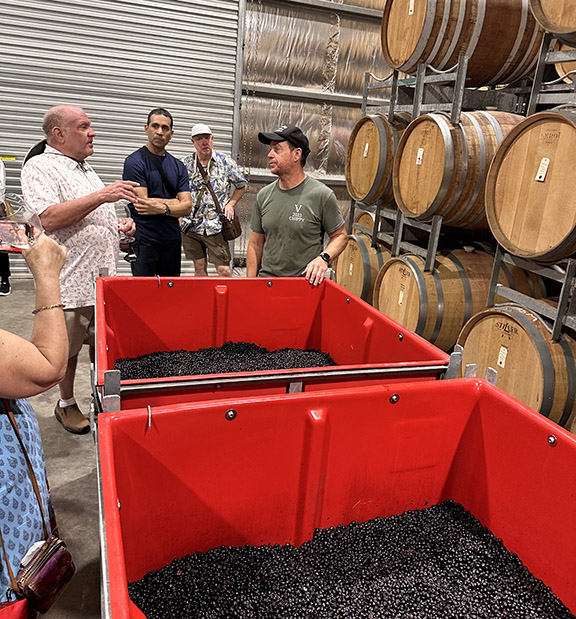
You’ll also need a fine mesh strainer to remove skins and seeds after crushing, and glass bottles or jars for storage once the syrup has cooled. A funnel helps with clean bottling, and if you plan to age your vino cotto, consider using dark glass or storing it in a cool place out of direct sunline to preserve its flavor. At home, we use a large glass demijohn with a cork stopper, along with a series of chestnut or oak barrels for aging. The process also requires an intermediate vessel to allow the freshly flame-treated must to rest and cool. I use a large HDPE thermoplastic container.

While the ingredients are simple, the process is anything but rushed. Making vino cotto is a slow, deliberate act, one that invites you to step into a rhythm shaped by generations
before you.
Step-by-Step Process
Making vino cotto begins with the grapes: These are crushed to release their juice, either by hand or with a press, depending on your setup. The resulting must, rich with sugars and natural flavor, is then strained to remove skins, seeds, and stems. What remains is a clean, vibrant juice ready for transformation.
The juice is poured into a large pot, and this is where patience becomes essential. The juice must simmer gently for hours, often six to twelve, depending on the quantity and desired thickness. I usually pour 26 gallons (100 L) of must into the cauldron, letting it simmer over a medium flame until it reduces to about 10.5 gallons (40 L) of liquid. This equates to a final volume 40% of what I began with. Stirring occasionally prevents scorching and helps the liquid reduce evenly. As it cooks, the color darkens and the aroma shifts from fruity to caramelized, filling the kitchen with a scent that feels both ancient and comforting.
Once the must has reduced to the desired volume — at least half of its original volume — it’s removed from the heat and allowed to cool naturally in the HDPE container. At this stage, the syrup is thick but still pourable (something like molasses), with a glossy sheen and a complex flavor profile. It’s then funneled into a demijohn with an airlock attached and combined with about one-third of its volume of fresh juice. It can be useful to filter the liquid again during racking to eliminate any remaining impurities. In my own making of vino cotto, I have 10.5 gallons (40 L) of thickened, boiled juice, and add about 3.3 gallons (12.5 L) of uncooked must to the demijohn to start the native fermentation. After the process of fermentation is complete, vino cotto should be stored in a cool, dark place. Some families age their vino cotto for months or even years, allowing the flavors to mellow and deepen. Others enjoy it fresh, appreciating the brightness of its youth.
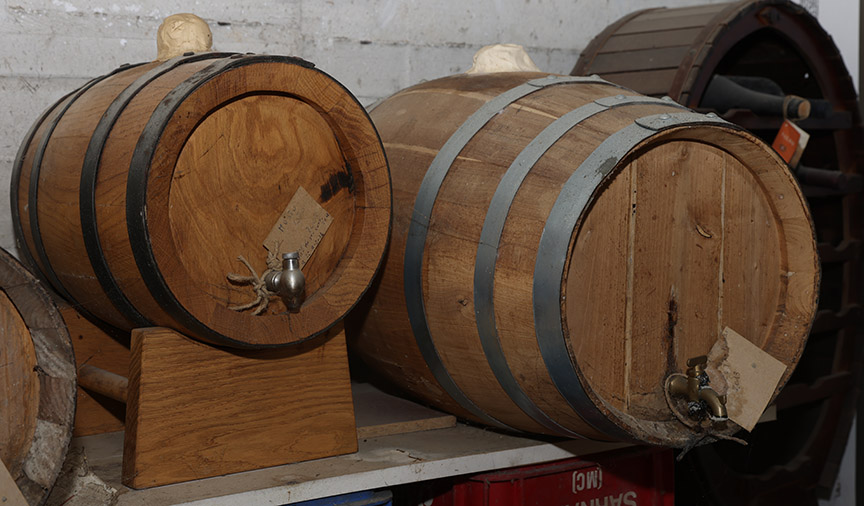
In my own making, after fermentation I transfer the contents of the demijohn into small barrels (about 5 gallons/19 L each) using a funnel. The barrels age in the cellar, and each year their contents are refreshed with newly produced vino cotto. For this reason, my family consistently buys the same Moscato must from a local farmer. Vino cotto is traditionally stored and aged in either chestnut or oak barrels because these woods are both porous and durable, which are essential qualities for its maturation. The porosity allows for micro-oxygenation. Furthermore, as some liquid evaporates, the remaining flavors become more concentrated and intense. At home, I keep a glass bottle for everyday use, which I periodically refill from one of the barrels.
Throughout the process, cleanliness and care are key. Because vino cotto isn’t preserved with a significant amount of alcohol, it relies on reduction and proper storage to remain shelf-stable. A well-made batch can last for decades, developing subtle changes in flavor over time.
A Tradition Worth Bottling
Vino cotto offers a flavor that is both ancient and surprisingly versatile. Taste and flavor are influenced by many factors, including the type of must and any added aromas. For example, white must yields a more delicate taste, while red must results in a more intense character. The first impression is often one of deep sweetness (like dried figs or molasses) but it quickly unfolds into more complex notes with hints of caramel and roasted nuts. Depending on the grape variety and cooking time, it may carry undertones of spice, earth, or even a whisper of smoke.
Traditionally sipped in small amounts as a digestif (after dinner and dessert), it also finds its way into a wide range of culinary applications. A drizzle over aged cheese or fresh ricotta adds depth and contrast. Stirred into doughs for holiday pastries it lends both sweetness and a touch of nostalgia. Some use it to glaze roasted meats, others pour it over gelato or panna cotta, letting its warmth play against cold creaminess. Even a small spoonful can transform a dish, and because it’s so concentrated, a little goes a long way.
Vino cotto is more than a recipe — it’s a quiet act of preservation, a way of bottling not just flavor, but memory. In every simmering batch, there’s a thread that connects the present to generations past. Making it today is not about replicating a product found on shelves; it’s about reviving a tradition that once thrived in the kitchens and cellars of rural Italy, where nothing was wasted and everything
had meaning.
For home winemakers, vino cotto offers a rare opportunity to engage with grapes in a way that’s tactile, slow, and deeply personal. It doesn’t require fermentation charts or precision instruments — just time, care, and a willingness to listen to the process. In return, it gives you something enduring: A syrup that can be aged, gifted, or savored drop by drop. That’s a tradition worth bottling.