Pre-Fermentation Actions
The time from when you decide to pull the trigger on harvest until you pitch your yeast isn’t long, but it is critical. Whether performing a cold soak or adjusting your juice to meet your goals, don’t overlook this period. Two pros share how they spend the short period from harvest through early fermentation.
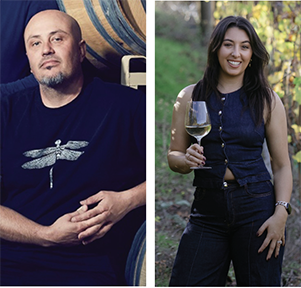
We apply a cold soak to our estate reds, which include Cabernet Sauvignon, Syrah, and our field blend of Merlot, Malbec, and Petit Verdot. Sometimes we also do cold soaks on our Mourvedré and even our Pinot Noir based on the flavor we’re looking for. Times we would not cold soak would be if the variety has shown an overly tannic development in the past or if the grapes show signs of bacterial growth.
We start by adding 30–40 ppm of sulfite (up to 50 ppm if the fruit is at high risk) and then bring the temperature down below 48 °F (9 °C) using dry ice. We’ll leave it at this temperature for 24–48 hours. This process extracts more color and makes the wines a bit inkier, which customers really like. It also allows for continuity in overall fermentation chemistry, gives a clearer picture of the Brix (which may increase from the original crush numbers as the grapes soak), and makes it easy to begin the fermentation at exactly 60 °F (16 °C), which is ideal so they don’t get too hot during fermentation and run off on you. Dry ice is a great tool for home winemakers when they need to keep fruit at a steady lower temperature because it helps minimize the chance of spontaneous fermentation and oxidation.
After the cold soak, we’ll pump over and pull samples to run labs; measuring Brix, titratable acidity (TA), pH, and temperature before we inoculate.

Always give the ferment time to homogenize — a minimum of 24 hours after crush — before doing or adding anything other than sulfites at crush, and mix well before ever taking a sample. Get your pH in a safe window for fermentation after your cold soak, but don’t try to nail it perfectly, as it will drift on you until after malolactic fermentation is complete. That’s when you focus your additions for perfection.
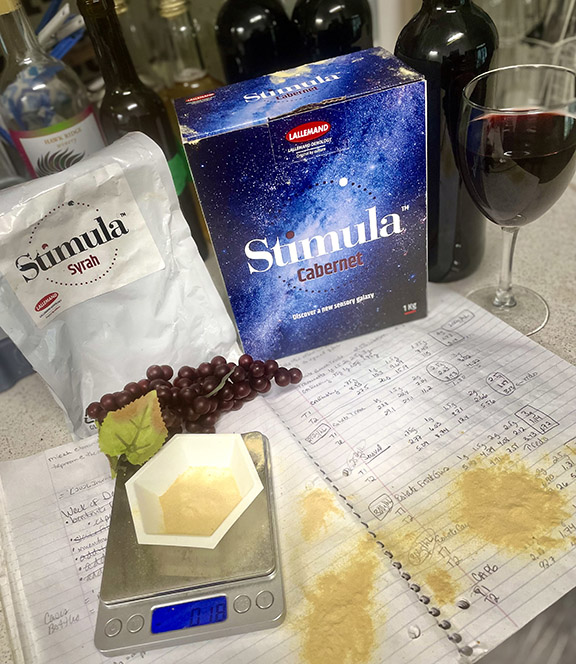
The results will be better for home winemakers who harvest based on phenolic ripeness over chemistry if they don’t have tools to measure everything. Crush a bucket of grapes and assess color extraction. Scrape the inside of the skins with your nail; if you get color and your seeds are not encapsulated, you’re in the right general window. Add a moderate amount of nutrients for YAN (Yeast Assimilable Nitrogen). I’d also stress the importance of timing your YAN nutrient additions as a tool to heat your fermentation if it’s sluggish or not warm enough. Never add them before the lag phase is clearly over nor after two-thirds sugar depletion. One will affect the cell walls, and the other cannot be absorbed and will feed volatile acidity (VA) in aging. Knowing your exact YAN and implementing an additive to ensure your ferment stays focused and clean until the end is one of the most important things to producing clean ferments without stress, but also, and maybe even more important, is not leaving excess YAN after primary fermentation is complete, as it can feed VA during the aging process. If I could give any hobby winemaker one piece of advice, it’s to study nutrient demand until you’ve mastered it. Scott Labs and Vinquiry have a lot of great research on nutrient demand.
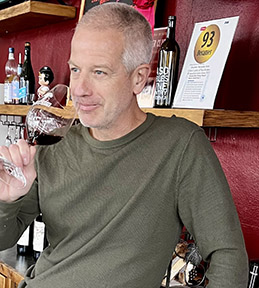
I do a cold soak to help with color extraction and stabilization, which helps our Cabernet Franc by producing more consistent color and flavor. I don’t cold soak my other red varieties because I do not feel color stabilization contributes much to a grape like Cabernet Sauvignon.
After harvest, we gently crush and destem the Cab Franc. The grapes are nearly whole in the cold soak. I target 30 ppm sulfite to keep any unwanted microbes from starting the fermentation. If the fruit is severely damaged I will go up to 50 ppm. Then we chill the cold soak down to 40–50 °F (4–10 °C) with dry ice and tank chilling. I’ll leave the grapes in that range for 36–48 hours before inoculation of the yeast.
I keep a close eye on pH, TA, Brix, and YAN during cold soak, making my own adjustments as required based on a predicted fermentation volume.

The most common adjustments we have to make are with Brix, pH, and TA in our hotter climate. Some vineyards require much less than others. I make all adjustments prior to fermentation because I want the wine to continue to evolve and adjustments during fermentation can be inaccurate due to the continuation of fermenting must.
For Cab Franc, my Brix range is between 24–25. I target a pH of 3.6 and a TA of 0.55. pH drives microbial stability and TA drives flavor. I have adjusted my must with both acid additions and by adding small amounts of other grape varieties to achieve my final chemistry profile. These decisions are both a science and an art, where both elements come together and are guided by experience gained over years of making wine in your own style.
These tests require some investment in equipment or sending samples to a lab, but if you are serious about the wine you make, spend some money on analytical equipment and standards. It will pay for itself in a few vintages.
The other big thing winemakers should be doing during this time is keeping great notes. Log everything you do, and why you are doing it. The next year, look back at your notes to continue learning.
Further Reading . . .
Want to learn more about cold soaking? We lay out how to do it, the benefits, and risks.