The Lighter Shade of Red
It is generally observed that wine is not much of a thirst quencher. This is why winemakers drink a lot of beer. Yet as the world turns, interest in lower-alcohol, easy-drinking reds is emerging. Let’s explore a variety of methods for producing this most civilized of quaffs.
In commercial wineries, several technologies such as reverse osmosis, spinning cone, alcohol perstraction, electrodialysis, ion exchange, micro-oxygenation, and sterile filtration are employed to transform standard wines into light, more quaffable reds. In this article, I’m assuming you don’t have access to any of these.
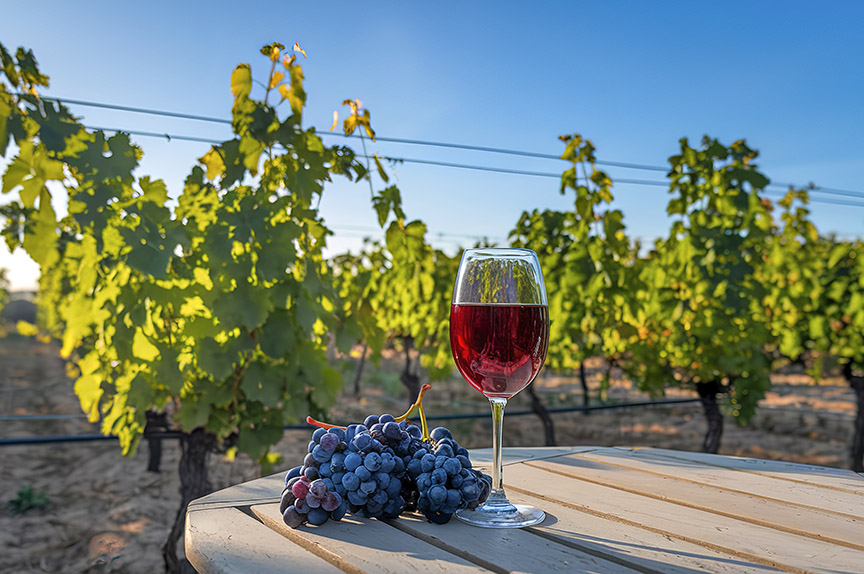
We can date the consumption of light wines back to the ancient Greeks. The word “symposium,” cognate to “sip,” referred to an all-day gathering of philosophical banter lubricated by wine. To prevent excessive lubrication, the wine was watered three-to-one — just enough to kill off any diseases the water might contain and to promote conversation. The ancients considered consumption of undiluted (“neat”) wine to be a barbaric, uncivilized, and dangerous practice. The Romans followed suit. Since they didn’t use sulfites, one consideration for this practice may have been to dilute the resulting vinegar taste.
Second Wines
If you wish to continue your barbaric practice of drinking wine straight up (I know I do), the most expedient and economical way to add a quaffing alternative to your cellar is to make second wine. This allows you to get the most out of those skins and completely control the alcohol level. Second wine has always appealed to my “everything but the squeal” no waste mentality. Commercial second wines are known as piquette.

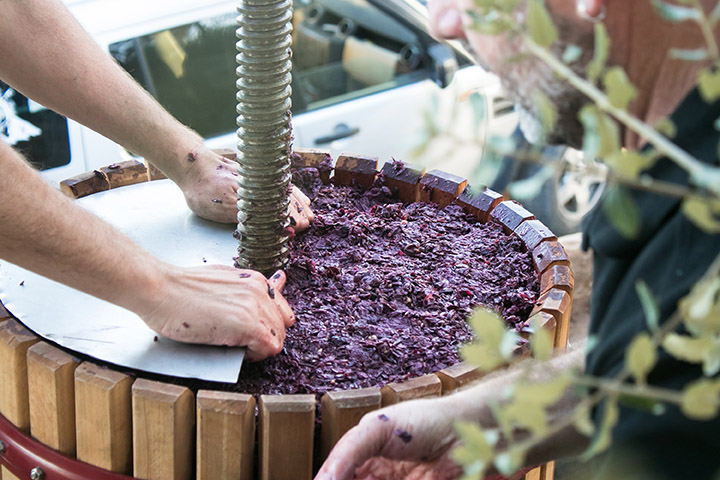
If you are unfamiliar with the process, it begins by making a red as usual, but only lightly pressing it. To the sloppy skins, you add back water to replace whatever percentage of the original juice volume you choose along with a few grams per liter of acid (I use citric) and however much table sugar is required for the ABV you want, figuring 60% will convert to alcohol. For example, to a gallon of water, 1 pound of sugar (or 120 g/L) will give you 6.4% ABV.
Along with the water, you will want to add some acid. It’s a tricky business as it doesn’t take much. If you want to mimic the blend in grapes, you can go with 3 g/L of tartaric and 2 g/L of malic. Of course, this means you’ll need to be concerned about malolactic fermentation (MLF). But remember that the synthetic dl-malic acid you buy only contains 50% of the l-malic form that is biologically active, so when MLF completes, you’ll still be left with 1 g/L of d-malic (which will still show up on your paper chromatograph) along with 0.67 g/L of lactic. And since you’ll have only a little potassium from the skins and any potassium metabisulfite (KMBS) you add, you won’t get much if any bitartrate precipitation.
An alternative is to simply acidify with 5 g/L of citric acid. This is cheap, dissolves quite readily, and in my experience is more or less biologically inert. The literature contains claims that citric acid can be converted to acetic acid by ML bacteria, but in 50 years of winemaking, I’ve never seen it happen. Since my company, Vinovation, Inc., made use of my patented reverse osmosis/anion exchange process to remove acetic acid from over 35,000 wines over the 17 years I was there, I do think I would have seen at least one instance.
I can see how this rumor got started. The Krebs Cycle, also known as the Citric Acid Cycle, is the Grand Central Station for energy metabolism and amino acid base synthesis. While acetic acid is involved, the role of the cycle is to break it down to two molecules of carbon dioxide rather than to manufacture it. While there is no doubt that Acetobacter can convert citric to acetic, it can only do this in the presence of oxygen. Malolactic metabolism by Oenococcus oeni or Lactobacillus species is entirely different and does not require oxygen. While some academic theoreticians propose this mechanism, in practice I think you can rest easy.
Coming back to second wines, several options can be employed to add flavor while adding little or no alcohol. The most obvious is the inclusion of berries such as blueberries, blackberries, cherries, and so forth. At ripeness, these are already properly balanced in Brix and pH for a second wine. Alternatively, various wood products can be used to add flavor and body. Of particular interest are the aromatic exotic woods. A gram per liter of TN Coopers cherrywood chips adds a nice fruity note and the same addition of Vivelys SC100 oak chips adds body and mouthfeel.

If you intend to get good extraction into your second wine, choose a rich red like Cabernet Sauvignon, Petit Verdot, Norton, or Petite Pearl, the skins of which will retain plenty of extractables when the primary fermentation is complete. This way you get the best of both worlds: A robust red for your steaks and chops as well as a summertime quaff for your hot dogs and nachos at practically zero cost. It’s up to you to decide how much water to add depending on the color and flavor that remains in the skins.
One way to assure that plenty of extractives remain after your first wine is made is to use carbonic maceration for your primary fermentation. It’s a reliable way to limit extraction, and it’s fairly inefficient from an alcohol conversion perspective. This will not, however, give you a big robust red for your steaks, though it will leave more behind for your second wine.
First Wine Options
For a richer light quaff, you may elect to make one from scratch. For this you should choose a lighter red that develops good flavor at early maturity such as Pinot Noir or Chambourcin. Picking around 18 °Brix will still give you close to 11% alcohol and perhaps more acid than you want. You can fix both problems with a 20% water addition to lower both the alcohol and the acidity. It’s then up to you whether to encourage or discourage malolactic fermentation. Suppressing it will give you a fruitier wine with crisp acidity. An extreme example of this style would be Frontenac, which has great color and fruitiness but searing acidity, which may require as much as a 1:1 dilution. Thus, you can pick at a higher Brix for richer flavor and color.
Humidity is your friend when looking for grapes to turn into low-alcohol wines. In dry climates like California and Colorado, the low humidity causes evaporation from the berry. The result is that flavors don’t mature until the Brix is as high as 25 degrees, resulting in excessive alcohol in the wine. Lower-alcohol reds come from areas with high humidity. An Iowa Crimson Pearl or an Alabama Black Muscadine can reach full maturity at 17 °Brix, resulting in 10% ABV.
A little colloid chemistry is in order here. By this point, many of you may be freaking out that these massive water additions will result in poor extraction and diluted flavors. It turns out that the opposite is true. For one thing, alcohol actually inhibits the extraction of anthocyanins and many other phenolic-based flavor components. This is because these compounds aren’t alcohol-soluble, so they need to be extracted into copigmentation colloids. These are microscopic apolar beads that form through the stacking of the six-membered rings that compose phenolics. These beads are held together and stabilized by water activity.
Think of the water molecules like cowboys herding the phenolics into corrals. If the water activity is low, as in high-Brix fermentations, the fencing of the corral is broken down by alcohol and the phenolics run off like wild horses, never to be seen again. The strange take-home message is that in many cases, dilution actually promotes extraction, particularly if you have provided a co-factor such as untoasted wood or high-tannin white skins. For a more in-depth explanation, refer to my previous article “Chemistry of Must Correction.”
Two other factors are at play here. One is that a lot of the volatiles in wine (esters, terpenes, thiols, and such) are hydrophobic. The higher the alcohol, the more soluble they are. Some of the most aromatic wines in the world are German Rieslings at 8% alcohol. Consequently, dilution actually enhances the aromas of many wines. You can prove this yourself by adding water to a Zinfandel or Cabernet that’s, say, 15.5% ABV or more.
The other reason this works is that the heat of alcohol stimulates the trigeminal nerve in your nose, triggering a pain sensation that masks aromatic perception.
Another odd fact about wine chemistry is that dilution, while it does proportionately lower titratable acidity, has no effect on pH. This is because pH measures the ratio of the wine’s acids and their corresponding deprotonated conjugate bases. As long as your water is pure, diluting wine or must doesn’t alter this ratio. Weird, huh? Try it yourself and see.
Fruit Wines
So far, we have been fighting the grape’s natural tendency to make bigger, higher-alcohol wines than are suitable for a thirst-quenching quaff. The real problem is the grape itself.
Grapes have by far the highest sugar content of any fruit. Tree fruits such as cherries and bush berries like blueberries and blackberries mature at half the Brix we see in grapes. For all berries, the sugar and fruity flavors surrounding the seed are there to entice animals to consume the fruit, later defecating the seed in a pile of nutrient-rich manure. Most berries rely on ground level animals (deer, bears, raccoons, turkeys) to spread their seeds.
Vitis species evolved as a sun-seeking tree climber with an entirely different procreation strategy. What’s different about grapes is that the target vector is a bird.
Grapes use tendrils to fasten to tree branches as they climb to the top of the canopy. Once they are no longer shaded, sunlight stimulates the production of berry primordia, converting the tendril into the rachis of a grape cluster. Once fertilized, the berries need time to mature their seeds, so as a delaying tactic, they remain invisibly green, hard, low in flavor and high in acid and harsh tannin in order to temporarily to repel birds while masking the buildup of considerable sugar. Then once the seeds are viable, veraison takes about six weeks to transform the berry into a colorful, soft, highly nutritious, low-acid, tasty treat. This gets the attention of avian vectors that consume the fruit, later depositing it in a white plop of fertilizer miles away.
For ground-dwelling berries, reproduction is far simpler. Pollenated flowers produce in a few days berries ready for animals to snack on. These red and blue fruits are ideal for full-flavored, attractively colored wines low in alcohol and tannin. It’s wise to add a co-pigmentation tannin such as untoasted, well-cured oak chips or a bit of tannic fruit such as quince to stabilize color.
You may choose to work with 100% fresh fruit. What grows locally? Chances are when it is in season you can find a good deal. This will make the richest wine but may require corrective measures. You can also make a fruit infusion, similar to second wine, where you can completely control alcohol and acid and the fruit is just for flavor. There is also the option to ferment pure juice such as cherry nectar, thus avoiding the hassle of dealing with pomace cap management and pressing. No muss, no fuss, but be sure the nectar hasn’t been stabilized with sorbate.
Learn more about making berry wines in the article “Make Dry Berry Wines.”
I will share a couple tips that are truly for the amateur winemakers. Among the many blessings home winemakers enjoy is the opportunity to employ practices that are, for commercial wineries, impractical or even illegal. Sure, pros have access to more technologies, but they often choose to play it safe, whereas home practitioners are free to experiment because your career is not at stake.
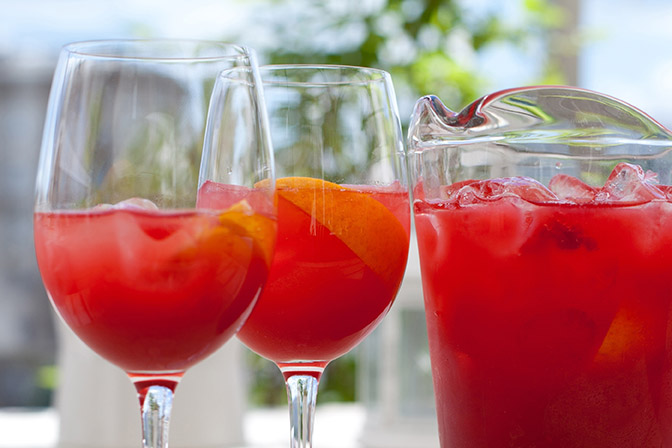
Often fruit wines taken to dryness can be harsh, sour, and bitter. Rather than to sweeten before bottling and stabilize with sorbate, you can take advantage of your regulation-free status and simply add sugar at the time of consumption. Simply figure out ahead of time what amount and type of sugar suits your palate, then add it to a pitcher of your dry fruit wine and keep it in the fridge. It’s best to allow the sweetened wine to sit overnight to allow the monosaccharide stereo-isomers (don’t ask, just do it) to equilibrate, changing the perceived sweetness. If you’re a low-carb diabetic like me, you’d be amazed at what a drop or two of Stevia can do.
Final Thoughts
How long will your low-alcohol quaff last? Strangely enough, possibly a good long while. Alcohol actually is the enemy of aging. Those 8% ABV Mosel Rieslings can go 30 years. I recently opened an experimental bottle of de-alcoholized White Zinfandel from 1992 and guess what? It was still quite good. Time and again we see that it’s the high-alcohol wines that fall apart in the cellar. Go figure.