Crafting Bold, Blockbuster Red Wines
For many home winemakers, crafting a big, bold red wine is the ultimate goal. There’s something deeply satisfying about producing a wine with intense color, rich flavors, firm structure, and the ability to age gracefully. These are the wines that fill the glass — and the room — with presence.
But making a powerful red wine isn’t simply about pushing everything to the maximum. Bigger isn’t always better. The real objective is to create a wine that is concentrated yet balanced, structured yet drinkable.
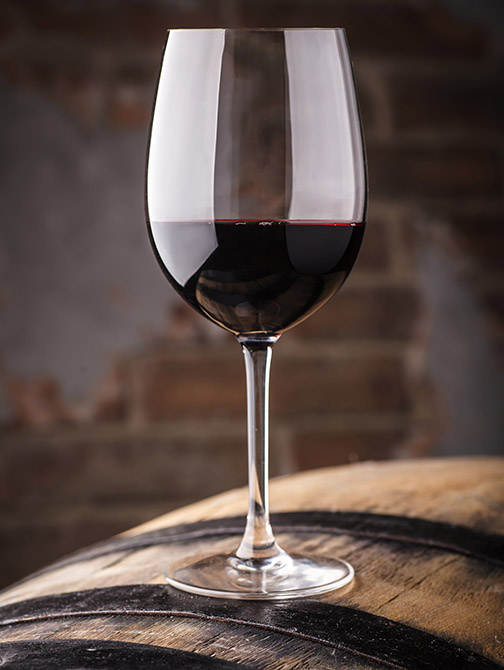
In this article, we’ll walk through the key decisions and techniques from fruit selection through maturation that you can adapt into your red winemaking protocol to consistently produce deeply colored, full-bodied wines with polished tannins and long aging potential.
Start With the Right Fruit
Great wine always begins with the best fruit — and this is especially true for bold reds. The most important factors that directly impact boldness in the resulting wine are variety, ripeness, yield, and concentration.

Some grape varieties are naturally better suited to producing big wines. If you’re buying grapes or processed must, accessible classic Vitis vinifera varieties include Cabernet Sauvignon, Syrah (Shiraz), Petit Verdot, Zinfandel, Petite Sirah, and Merlot from warmer climates. These varieties tend to have thicker skins, higher tannin potential, and greater color intensity. If you’re working with non-vinifera grapes, Maréchal Foch, Marquette, Norton, and Frontenac can also produce impressively bold wines.
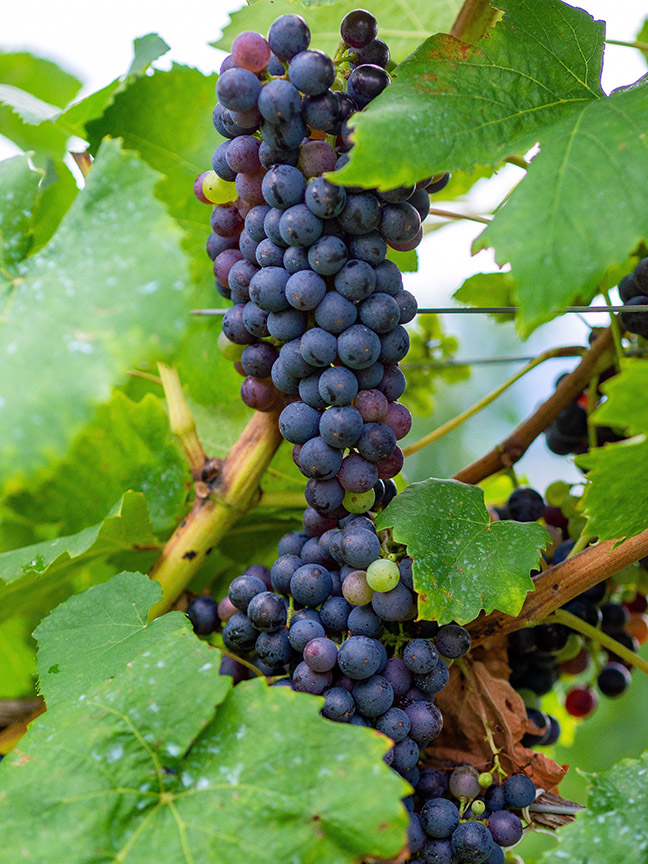
A common mistake is chasing high sugar (and therefore high alcohol) at the expense of balance. Overripe fruit may deliver sugar and body, but often sacrifices acidity and aromatic precision. What you really want is phenolic ripeness: Fully developed tannins, soft and deeply colored skins, brown (not green) and nutty seeds, and ripe (not vegetal) fruit flavors. Underripe fruit, particularly with Cabernet-related varieties, can result in excessive pyrazines — compounds responsible for green bell pepper aromas that can overshadow fruit character.
If you’re working with your own grapes, harvest timing is critical for phenolic ripeness. Aim for lower yields for higher concentration, and smaller berries for greater skin contact and greater phenolic extraction. Berries that are larger than normal may indicate a rainy vintage or over-irrigation and therefore diluted grape composition.
An excellent alternative is to source pails of frozen must (crushed grapes and juice). The freezing and thawing process helps break down grape cell walls and release more color pigments (anthocyanins).
As for grape and juice chemistry, target total acidity (TA) in the range of 4–7 g/L and a balanced pH of 3.3–3.6. Higher pH compromises color extraction and stability, whereas lower pH can jeopardize malolactic fermentation (MLF). And there should be absolutely no damaged or rotten fruit, which could otherwise compromise quality.

Ideal sugar density should be in the range of 24–27 °Brix, translating to approximately 13.5–15.5% ABV. But don’t rely on sugar alone — taste the fruit. If the tannins are harsh or green, the wine will be too.
Pre-Fermentation: Setting Up for Extraction
At the crusher, thorough destemming is important. Stems can add structure, but unless they are fully lignified (brown and woody), they tend to contribute green, bitter tannins. You can also opt to double-crush (passing the grapes through the crusher a second time) to hasten color extraction.
To further concentrate color, tannins, aromas, and flavors, you can run off a small portion of juice — say 10–15% — and process it as a white or saignée rosé, depending on how much color has already been extracted.
Add a moderate dose of SO2 at crush, typically 30–50 ppm, to control spoilage organisms and protect color and aromatics. Avoid exceeding 50 ppm, as this can stress lactic acid bacteria and stall MLF. Bold red fermentations are often warm — even hot — and long, so microbial control is essential. With high-pH grapes, vigilance and strict sanitation are critical with low SO2 doses.
Add “sacrificial tannins” to protect the juice against enzymatic oxidation and to bind and precipitate naturally occurring proteins that could otherwise cause haze. Use a fermentation tannin product recommended for this purpose, or granular oak, which contains strong protein-binding ellagitannins. Refer to “The Power of Tannins” in the April-May 2026 issue for more on this subject.
Use pectinase or macerating enzymes to break down grape skin pectin. Be sure to mix in thoroughly as these are usually added in small amounts.
You can start impacting mouthfeel and tannin structure right from crush and during fermentation using specific inactivated yeast products such as Opti-Red, Noblesse, REDStyle, or PowerLees Rouge. These contribute polysaccharides and peptides that enhance body, mouthfeel, perceived sweetness, tannin smoothness, and color stability.
If you’re equipped with the proper refrigeration equipment — or alternatively, using frozen water jugs or dry ice — you can perform a pre-fermentation cold soak by holding crushed grapes down to as close as 40 °F (5 °C) for 3–7 days. This can improve color extraction and enhance fruit character. Perform daily punchdowns or pumpovers (once daily is sufficient) to minimize microbial risk. If using dry ice, add 1.5 lbs. per 25 gallons (700 g per 100 L) of must for every 2 °F (1 °C) drop in temperature, mixing thoroughly and replenishing as needed.
Another practical technique for small batches worth exploring is accentuated cut edges (ACE). It involves fragmenting crushed grape skins (for example, using an immersion blender in small batches), taking care not to damage the seeds or overprocess the must, and then keeping the cap submerged as much as possible through frequent punchdowns during maceration and fermentation. ACE maceration increases skin surface area and has been shown to enhance fruity character and significantly improve phenolic extraction and composition. This technique is best suited to well-ripened fruit with good phenolic potential. It is generally not recommended for underripe fruit, thin-skinned varieties, or batches already high in seed tannins, where the risk of excessive astringency may outweigh the benefits.
Fermentation: Where Structure is Built
Fermentation is where you shape the wine’s body, tannin profile, and color. A key decision is selecting an appropriate yeast strain to match the grape variety and desired style. Online tools and vendor fermentation handbooks can help narrow the options.
Temperature is one of your most powerful tools. Contrary to the idea that cooler fermentations preserve aromas, bold red wines benefit from warmer fermentations in the range of 78–86 °F (26–30 °C) to maximize extraction. As fermentation accelerates, temperature can rise quickly — be prepared with cooling strategies. Avoid exceeding 90 °F (32 °C), which can lead to harshness, hydrogen sulfide (H2S) production, or a stuck fermentation.
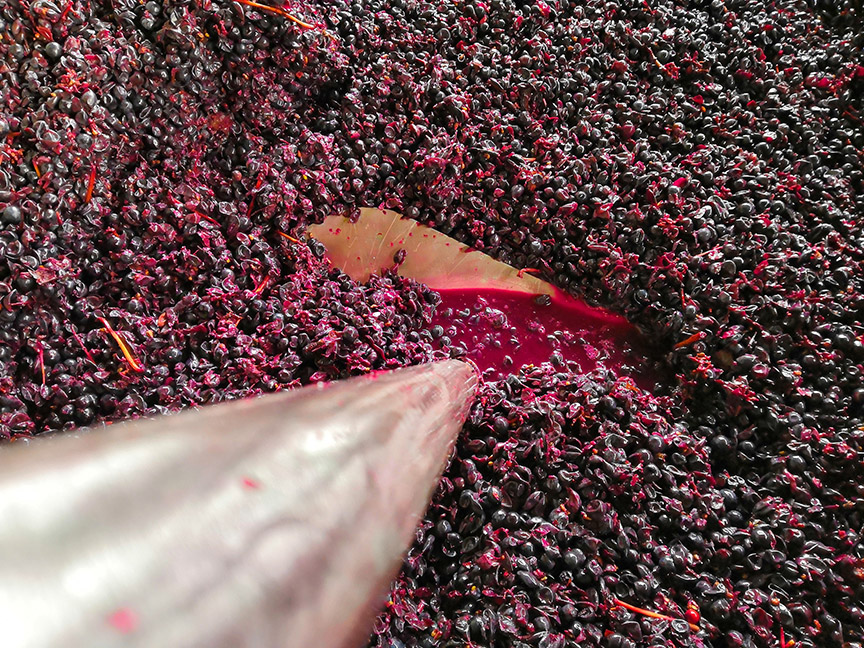
As fermentation begins, skins rise to form a cap. Managing this cap is critical for extraction. Manual punchdowns are the most common approach for small batches. For larger volumes, pumpovers using an impeller pump and adequately sized hoses allow you to recirculate juice over the cap. Perform 2–4 punchdowns or pumpovers during peak fermentation, and down to 1–2 toward the end.
Rack-and-return (délestage) is a more advanced technique that can soften tannins and improve oxygen integration to produce a bold wine that is more approachable in its youth. It involves draining the fermenting juice completely from a tank or vat into another vessel while removing as many seeds as possible, then returning the juice over the cap. This can be done once or twice daily. Refer to “Delestage Fermentation: Techniques” for more on this technique.
When density drops by about one-third (approximately 5–7 °Brix), add grape tannins and mix thoroughly to start stabilizing color. Toward the end of fermentation, once color extraction peaks, add anthocyanin-binding fermentation tannins (e.g., Tan’Cor Grand Cru or Vinitannin Multi-Extra) to “lock in” color.
With Native American varieties and hybrids, extended maceration and fermentation can lead to off-aromas or loss of fruit character. Monitor closely and press earlier if needed.
Pressing: Some Critical Decisions
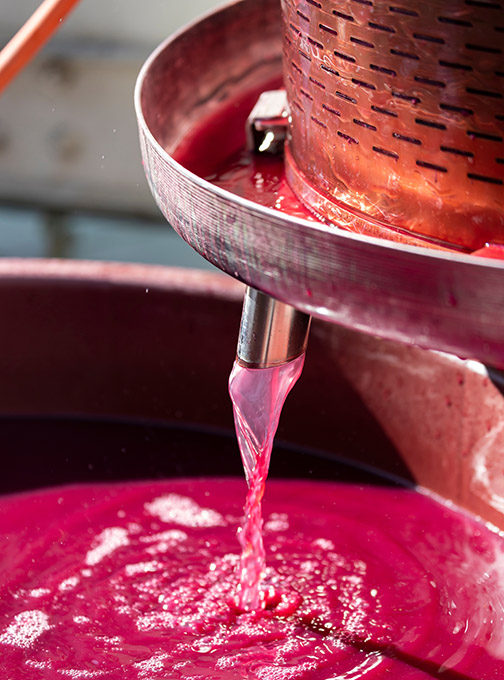
Pressing timing has a major impact. Early pressing (before full dryness; Brix above -1.5) produces softer wines, while late pressing increases structure but also risk. Taste daily near dryness — when tannins are firm but not harsh, it’s time.
It’s best to keep free-run and press fractions separate. Free-run wines are typically softer, more stable in color, lower in pH, richer in glutathione (a naturally occurring antioxidant), and contain fewer dissolved solids. Press fractions tend to be harsher, higher in pH, and lower in color intensity. Elevated pH increases risks of tartrate and microbial instability.
Malolactic Fermentation: Softening Acidity
Reds are almost always put through MLF, converting sharper malic acid into softer lactic acid while adding complexity. A key decision is whether to conduct MLF concurrently with alcoholic fermentation or sequentially afterward. Each approach has pros and cons and practical considerations, although not in the context of making big, bold reds. For more details on this subject, consult “Modern Malolactic.”
Managing Tannins: Power Without Harshness
Tannins define bold reds — but can also detract if mishandled. Skin tannins are generally more desirable than harsher seed tannins.
Avoid crushing seeds and excessive agitation late in fermentation. Over-extraction leads to astringency that aging cannot fully resolve.
At the end of fermentation, you can experiment doing a cold maceration by leaving the wine on the skins 5–10 days, or even up to three weeks, down as close to 40 °F (5 °C) as you can if you are equipped to refrigerate the batch and protect it all from the elements and microbes. Although winemakers have reported mixed results, the theory is that a post-fermentation cold maceration helps polymerize tannins, deepen structure, and improve mouthfeel. If tannins are already strong, extended maceration can be detrimental.
Color Stability: Keeping that Deep Red
Color stability depends on anthocyanin–tannin balance and interactions. Insufficient tannin can cause premature color loss, so ensure adequate extraction or supplement with cellaring tannins if needed (see “The Power of Tannins” in the April-May 2026 issue for more information).
Co-fermentation with flavonol-rich varieties, such as Viognier, by adding up to 5% Viognier to Syrah at crush can enhance color through copigmentation — a phenomenon where anthocyanins self-link and interact with colorless compounds too. These colorless compounds include naturally occurring polyphenols called flavonols, and which are found abundantly in Viognier; quercetin is a familiar example of a common flavonol found in grapes.
Small amounts of oxygen early on help stabilize color through polymerization, as it does during barrel aging. But oxygen should be avoided post-fermentation, with the exception being micro-oxygenation in barrels, as it causes oxidation and dulls fruit. Always opt for equipment and techniques that favor gentle treatment of wine that minimize oxygen absorption.
SO2 management during maturation is also critical. Excess sulfite will bind with anthocyanins and bleach color. Add potassium metabisulfite (KMS) to maintain an adequate free SO2 (FSO2) level based on pH and molecular SO2 (MSO2). Use WineMaker’s sulfite calculator to guide your KMS additions and FSO2 adjustments. Since we are dealing with big, bold, tannic reds here, you can go with 0.2 ppm MSO2 if pH is in normal range, and up to 0.5 ppm for higher pH. You need a higher MSO2 at higher pH where microbes thrive.
Balance: That’s What it’s All About
As renowned French enologist Émile Peynaud noted in his authoritative book The Taste of Wine, acidity, bitterness, and astringency reinforce one another, and that high-acid wines intensify tannin bitterness and astringency; therefore, highly tannic wines should have lower acidity, and high-acid wines should have lower tannin levels.
High acidity or high bitterness is best balanced by higher alcohol. Avoid combining low acidity and low tannins with high alcohol, or high acidity and high tannins with low alcohol. High alcohol adds body but must be balanced — excess leads to a hot, unbalanced wine.
Monitor TA and pH throughout and adjust as needed. Make larger adjustments pre-fermentation and fine-tune after.
Oak Aging: Building Complexity
Medium-toasted (MT) or MT-plus (MT+) oak is almost essential for bold reds, contributing structure, vanilla aromas and flavors, spice, toast notes, and perceived sweetness. Heavy toast (HT) can overwhelm fruit character and flavors.
New barrels are ideal, but oak alternatives (e.g., cubes, chips, staves) are effective too and require much less contact time given their greater surface area exposed to wine. Barrels offer the added benefit of slow oxygen ingress, aiding anthocyanin–tannin polymerization and complexity.
Typical aging:
New barrels: 12–24 months
Oak alternatives: 1–12 months
Taste regularly to avoid over-oaking — integration is the goal.
Aging and Integration
Big wines need time. During aging, tannins soften, flavors integrate, and aromas evolve toward greater complexity. Don’t rush bottling — wait until the wine feels cohesive.
Common Pitfalls to Avoid
• Over-extracting tannins
• Over-oaking
• High-pH musts
• Excessive alcohol
• Poor temperature control
• Ignoring acid balance
• Bottling too early
Troubleshooting Big, Bold Reds
Even with careful techniques, bold reds can present challenges. Here are a few common issues and how to address them:
Wine is too astringent or harsh:
Likely due to over-extraction, especially from seeds or excessive cap management. In future batches, reduce punchdowns or pumpovers late in fermentation and press earlier. Aging and oak can help soften tannins over time.
Color is lighter than expected:
This can result from low phenolic extraction, high pH, or insufficient tannin. Improve extraction through better cap management, consider cold soaking, and ensure adequate tannin levels for color stabilization.
Wine tastes hot (high alcohol):
Often caused by overripe fruit or excessive sugar. Balance can sometimes be improved with careful acid adjustment and longer aging to help integration.
Wine lacks structure:
Insufficient tannin extraction or low initial phenolics may be the cause. Consider using fermentation tannins, extending maceration (with caution), or incorporating oak earlier in the aging process.
These adjustments, combined with careful observation and tasting throughout the process, will help you refine your approach and consistently produce more structured, balanced wines.
A Practical Protocol for a 6-Gallon (23-L) Batch
To bring all these concepts together, following is a practical protocol you can adapt for crafting a bold red wine at the 6-gallon (23-L) scale.
Target parameters:
Sugar density: 24–27 °Brix
pH: 3.3–3.6
TA: 4–7 g/L
Adjust must chemistry as needed before fermentation, making any significant acid additions at this stage.
At crush:
Destem thoroughly; avoid including unripe stems
Add 30–50 ppm SO2 and mix well
Add sacrificial tannins or granular oak
Add pectic enzymes
Optional: Add inactivated yeast products (e.g., Opti-Red–type products)
If desired, perform a cold soak at 40 °F (5 °C) for 3–7 days, with one gentle punchdown or pumpover daily.
Fermentation:
Inoculate with a suitable yeast strain
Maintain temperature between 78–86 °F (26–30 °C)
Perform 2–4 punchdowns or pumpovers daily during peak fermentation
At approximately one-third sugar depletion (when it has dropped about 5–7 °Brix), add fermentation tannins and mix thoroughly.
Toward the end of fermentation, once color extraction is maximized, add anthocyanin-binding tannins to help stabilize color.
Pressing:
Monitor closely as dryness approaches
Press when tannins are firm but not harsh (typically near dryness; –1.5 °Brix)
Separate free-run and press fractions
Malolactic fermentation:
Inoculate promptly (sequential or co-inoculation)
Maintain appropriate temperature to ensure completion
Confirm MLF completion
Post-fermentation:
Rack off gross lees
Adjust SO2 based on pH
Begin oak aging using cubes, staves, or barrels
Aging:
Age for 3–12 months (longer if using barrels)
Taste regularly and adjust oak as needed
Rack periodically to clarify and manage oxygen exposure
Before bottling:
Adjust SO2 to target levels
Fine or filter if desired
Bottle only when the wine is stable and well-integrated
Final Thoughts
Making a bold red wine at home is both an art and a technical challenge. It requires attention to detail, patience, and a willingness to taste and adjust at every step.
The goal isn’t just power — it’s controlled power. A great bold red should be intense, but also smooth, balanced, and enjoyable from first sip to last.
Master that balance, and you’ll produce wines that rival top commercial examples — right from your own cellar.