Your Recommended Reading List
I was a high school English teacher for two years in the early ‘90s. The kids drove me to drink and I went pro. I have no regrets, except for the innumerable young people I could have influenced by my main maxim in language education: “Smart people read. Dumb people don’t.”
Can it really be that easy? I had parents complain about my oft-spoken mantra. I stood by my conviction: I don’t care if it’s the sports page, or James Joyce’s Ulysses, Reddit, or even People Magazine; exercising our brains, having our intellect and beliefs challenged, even if it’s just about what some movie star is wearing/saying, keeps those hamsters spinning in our brainy wheel. Like everything in the human body, organs and muscles only last as long as we use them and challenge them.
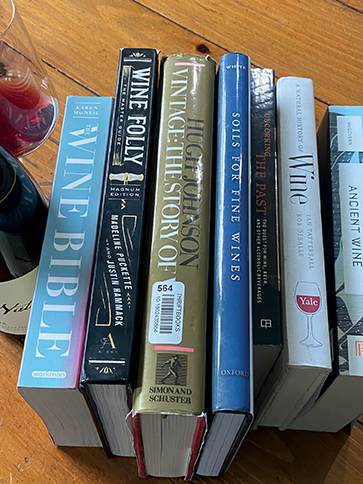
But isn’t this article about growing better wine? Of course it is! Over the last 25 years writing “Backyard Vines,” I’ve given you the tools to be a successful viticulturist. It’s now my turn to do something conspicuously selfless (I know, I’m surprised as well!); suggest other books and authors to absorb, take notes, and use to further your grape-growing knowledge and farming plans. I’ve also thrown in a few wine and grape history books to make you a properly well-rounded vinophile. To know where we are, we have to know where we have been (and how lucky we are to have modern equipment and resources).
But before we get to the annotated bibliography, my nostalgia for academia (nostalgia might not be the right word, as I’ve been teaching Wine and Food Pairing at the local community college for more than 20 years), I recall the very wise words of my favorite college professor (and wine lover) Dr. Bill McDonald. In one of our undergrad British literature classes, we were given a stack of books two feet high for a 16-week semester. Almost a book a week! A brave student asked, “Are we really meant to read all of these books in a single semester?” Dr. Bill responded, like Gandalf with chalk instead of a staff, “Every word? Likely not. You have other classes. But you are responsible to discuss the readings in class and produce essays on their themes. What I’ve really given you is a reading list for life.”

A reading list for life. I still have a watercolor of Dr. Bill in my office behind me. Is it fitting that many of the same books that were assigned to me that semester are still on the shelves under Bill’s watchful eyes? That their pages have become worn with poring, and inked with notes? I have to say his honest description of our jobs as readers that day in 1988 was prescient.
I expect you are sufficiently goaded into being a better reader in the coming year, so let’s look at some of my favorite books on wine and grape growing, organized into categories to help you find what you need.
The Context: The History of Grapes and Wine, Science, and Culture
I don’t admit this often, but my secret to wine education and being a passionate presenter is my deep knowledge
of wine history. Here’s the rub: Most wine sales folks don’t see that discussions of wine history sell wine. They go on about barrels and malolactic fermentations, about soil and the aspect of their vineyard rows. But to me, they all sound the same, and tell the same stories:
• Wine is made in the vineyard.
• Our soil and grape varieties are perfectly suited to make world-class wine.

• The family that owns the winery/vineyard is committed to expressing a time and place in their bottles.
• Our wine is aged in X barrels, made by hand in a small French village.
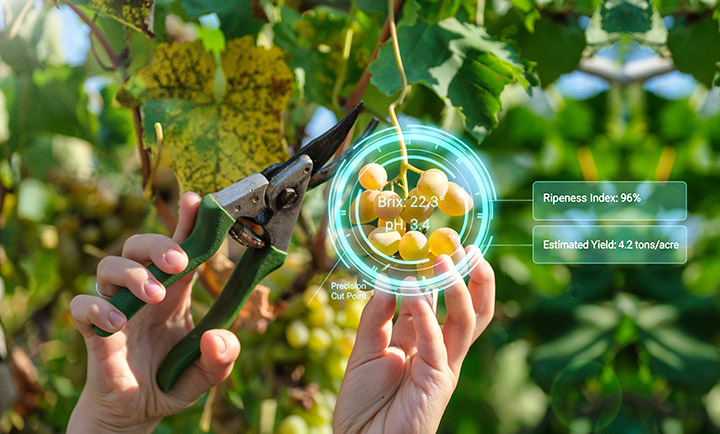
• The Brix at harvest was 23.8 and the pH was 3.55.
If you’d never been to a wine class or a pairing dinner, these factoids may resonate. And even though I might be jaded, as I’ve gone to hundreds, if not thousands, of these sales pitches, I hear the same talking points repeatedly. But what the diners or seminar attendees really want is delicious wine and great stories.
And this is where wine history comes in to fill the gaps in your wine education. Where did the first grapevine evolve? When was it domesticated? How long have humans/hominids been consuming fermented fruit, and when was wine first pressed off the skins on purpose? Did you know there was a defined wine industry and vineyard classification system in North Africa (ancient Egypt) before wine became widely planted in Western Europe?
The first kind of wine education lets us know what’s in our glass. The second kind transports us back thousands of years to taste how wine has been made possible, and if presented correctly, should make the wine you are drinking a bona fide miracle.
OK, now let’s get to the books on wine history:
Studies in Fermentation Louis Pasteur, 1878
The subtitle of this book is one of my favorites: “The Diseases of Beer, Their Causes, and the Means of Preventing Them.” Even though this book was intended to fundamentally change how beer was made in Europe (and did!), Studies in Fermentation is the Old Testament of yeast science. This was Darwin-level brilliance in using the compound microscope and genius experimentation with air and yeast to understand the truths of how fermentations created good (and bad) flavors. And just like Darwin, Pasteur stole a bit of the religious fervor from our history. Before Pasteur, it was believed that fermentations were magical gifts from God, and after Pasteur they could be understood as scientific principles that could be replicated in the laboratory or the brewery.
Ancient Wine and Uncorking the Past Patrick McGovern, 2003 and 2009
Ancient Wine is the book that got me hooked on wine and grape history, and led to a ten-year friendship with Dr. Pat, which I relished until his passing last year. Dr. Pat had a serious academic title: Scientific Director of the Biomolecular Archaeology Project for Cuisine, Fermented Beverages, and Health at the University of Pennsylvania Museum of Archaeology and Anthropology. It actually fit on his business card!
Ancient Wine is a scholarly book, but a surprisingly quick read. It details the prehistory, history, and scientific origins of viniculture. (Viniculture covers both grape growing and winemaking, while viticulture is usually restricted only to grape growing.) Methods employed focus on molecular archaeology, which in this case is focused on studying the residues in ancient pottery from the Middle East, Caucases, and Mediterranean, that were thought to contain wine. The book also details the evidence of the ancient history of wine, from the Chalcolithic and Neolithic periods, and speculation on earlier times before pottery was fired and filled with wine.
Uncorking the Past is McGovern’s attempt to make his research and findings more accessible to a reading audience. With less footnotes and a more narrative focus, McGovern succeeds in producing a book that widens the readership in understanding the brilliant story of how man invented wine, or how wine invented man, depending on your perspective.
Vintage: The Story of Wine Hugh Johnson, 1989 (Most recently updated in 2020)
Simply put, the most brilliant narrative-based book ever written on wine. Johnson is a rare combination of intellectual, academic, and storyteller. I won’t ruin a single word of this book. Just buy it, and you’ll likely read it every year of your life. “From Noah to Napa” is a deft subtitle, as is “Pompeii to Prohibition to Pomerol.” Enjoy as the author recommends: As an adventure story with a glass of wine in a comfy armchair.
The Natural History of Wine DeSalle and Tattersall, 2015
If Hugh Johnson’s The Story of Wine is an adventure book, DeSalle and Tattersall provide the hard science of growing grapes and (mostly) making wine in The Natural History of Wine. I was lucky enough to interview the pair during the COVID pandemic, and they are both serious scientists and serious lovers of wine. Slight warning: I am not a trained scientist, and some of the concepts are challenging to follow without a degree in organic chemistry, but the authors do a great job breaking down the science into understandable, bite-sized chunks. These guys are brilliant, fun, and don’t skip details on a journey to understand what happens in the vineyard and what happens in the fermenter. (They also have an equally fascinating book The Natural History of Beer.)
Growing Grapes: Books to Motivate, Educate, and Improve Your Homegrown Wine
For a reading list aimed specifically at small-vineyard growers who want to make better wine — not simply grow more grapes, I built the list around four complementary books: One broad viticulture text, one canopy-management classic, one soil book, and one practical production manual. That gives you a surprisingly complete education without turning the list into that university syllabus.
Sunlight Into Wine: A Handbook for Winegrape Canopy Management Richard Smart, 1991
This is the book I would put at the top of the stack. The central insight — that we can manipulate the vineyard’s architecture to manage sunlight, shading, airflow, fruit exposure, and vine balance — remains foundational decades after its 1991 publication. It is remarkably short, but don’t mistake brevity for simplicity. For the small grower, this book changes the way you look at every vine. Suddenly, shoot positioning, leaf removal, trellis design, and fruit-zone management become tools for making wine rather than merely chores on a vineyard calendar. Few books offer more quality per page.
Understanding Vineyard Soils, 2nd Edition Robert E. White, 2015
White’s book is the one I would hand to the grower who tells me, “I had the soil tested, and everything looks fine.” The point is that vineyard soil is not merely a list of nutrient numbers; it is a living, physical system that governs roots, water availability, nutrition, vine vigor, and ultimately grape and wine character. The second edition updates the discussion of soil variability, water management, rootstocks, sustainability, and soil health while keeping the science accessible. For small vineyards, where every vine matters, learning to read the soil — and not simply fertilize it — is one of the highest-return investments a grower can make.
Master of Wine, Viticulture: An Introduction to Commercial Grape Growing for Wine Production Stephen Skelton, 2026
If Smart teaches us to see the canopy and White teaches us to see the soil, Stephen Skelton gives us the broader viticultural map. His book is deliberately written for serious students, wine professionals, and people contemplating vineyard ownership, which makes it particularly useful for the small commercial or serious amateur grower. It covers the fundamentals without disappearing into the academic weeds: Vine biology, site selection, vineyard establishment, pruning, training, and the major considerations involved in producing quality wine grapes. I particularly like it as a reference because it helps connect individual vineyard decisions to the larger biological system. Read this one before you start believing that any single vineyard trick is a universal answer.
Wine Grape Production Guide for Eastern North America Tony K. Wolf, editor, 2008
This is the workhorse of the list. Originally assembled by Tony Wolf and a large team of viticulturists, extension specialists, and researchers, it is extraordinarily comprehensive: Site preparation, trellising, pruning, nutrition, irrigation, pest and disease management, harvesting, economics, and more. Despite its regional title, much of the viticultural thinking is broadly applicable, and the book’s practical orientation makes it especially valuable when you’re standing in the vineyard with an actual problem rather than sitting in an armchair contemplating terroir. Cornell University also identifies it as a comprehensive resource covering everything from site selection through pest management and harvest. Think of it as the vineyard owner’s field manual, but focused on the East Coast.
I have provided these four books to collectively move the reader from “How do I grow grapes?” to “How do I manipulate a living vineyard to produce better wine?” That seems to me to be the real distinction between keeping the vines alive and viticulture focused on making balanced and delicious wines.
Well, there you have it — a reading list for life. Eight books split between where we’ve been, how it all works, and how to use that knowledge to move our craft forward.