Shaping Body and Mouthfeel in Wine
You’re all psyched up. Bottling day is just days away for that amazing full-bodied red you’ve been nurturing for what feels like an eternity. You do a final taste — anticipation running high — to confirm that all is as good, if not better, than during your last tasting several months ago.
And then . . . argh! Something’s not quite right. The wine has lost some of its body and mouthfeel. That luscious oomph, the mid-palate structure that once made it sing, now feels muted. Instead of a full-bodied powerhouse, it tastes like a medium-bodied red with less harmony. What happened?
Assuming nothing else has changed in the wine’s chemistry — acidity, pH, volatile acidity (VA), or alcohol — what you’re likely seeing is tannins polymerizing (and possibly settling) faster than you expected.
So, you reluctantly postpone bottling, dive back into your tasting notes and wine logs, and start strategizing how to restore that luscious, full-bodied character.

On the flip side, some batches may stubbornly resist softening. Tannins remain bitter, just a notch too aggressive for your taste.
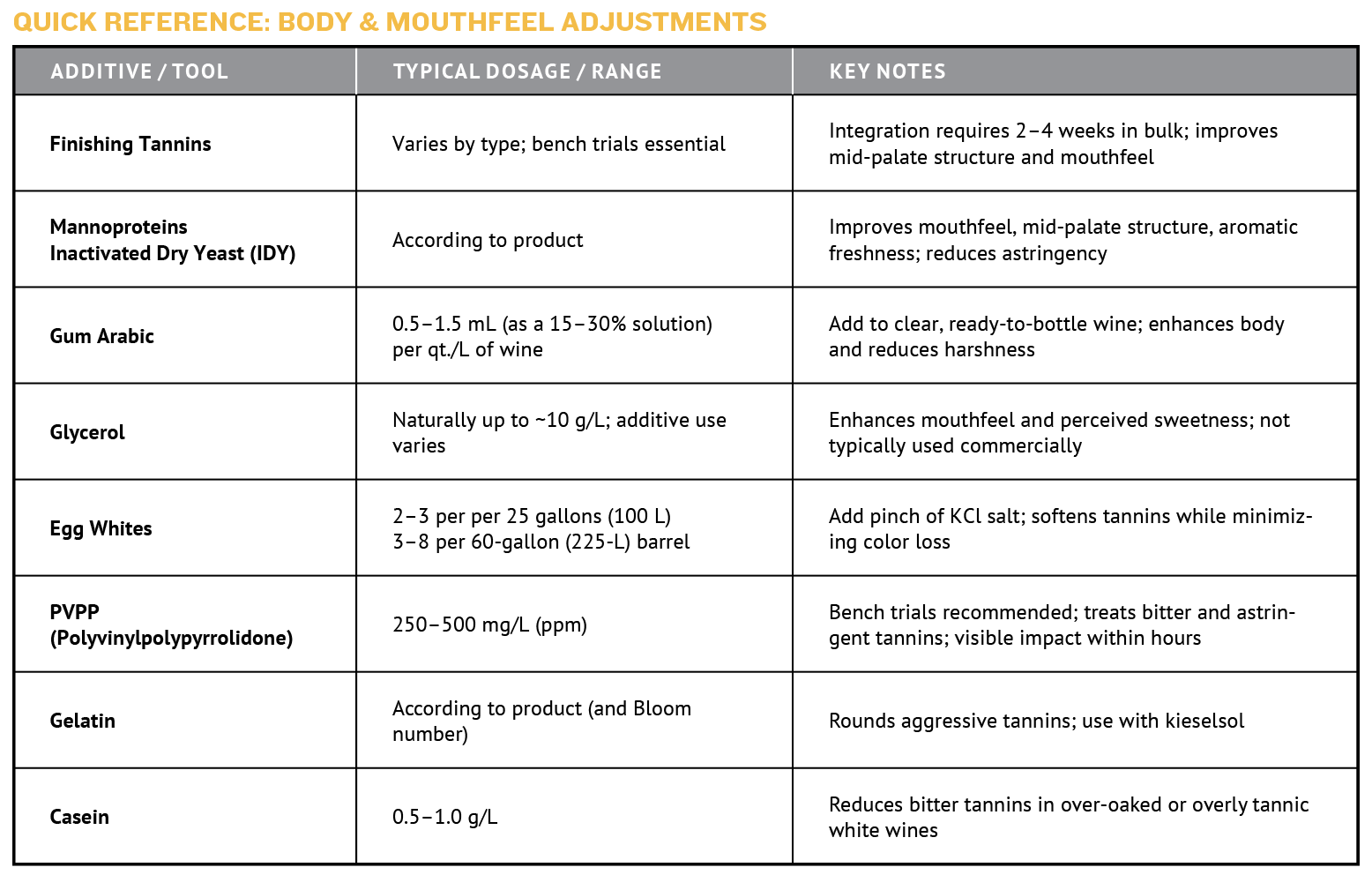
Thankfully, winemakers have a toolkit full of solutions to restore balance, enhance body and mouthfeel, or tame aggressive tannins. Tannins, mannoproteins, inactivated dry yeast, gum arabic, glycerol, and fining agents can all help — and sometimes in combination.
Start with the Basics: Assess Before You Adjust
When a wine tastes unbalanced, start by confirming as many tangibles as possible. Review acidity (TA and pH) and alcohol (% ABV) measurements. Conduct a thorough tasting. And if possible, get a second — or third — opinion from trusted enophiles. Only then can you figure out what needs adjusting, and which tool — or combination of tools — will address the issue without compromising the wine’s quality.
TANNINS
There is a plethora of specialized finishing tannins derived from grape skins or exotic woods to fine-tune body and mouthfeel, develop mid-palate structure, and add layers of complexities. Tannins and oak compounds, if barrel aging, can even enhance aging potential and subtly increase perceived sweetness.
Dosages vary widely depending on the type of tannins and product. Bench trials at different rates are essential. Some products may require filtering before addition. While taste and mouthfeel adjustments are almost immediate, full integration requires bulk-aging contact of two to four weeks, perhaps more, after which the wine can be racked and bottled.

Refer to the “Advanced Winemaking” column “The Power of Tannins” for additional details and specific practical guidance.
THE MAGIC OF MANNOPROTEINS
Mannoproteins are large protein substances released enzymatically from yeast lees during alcoholic fermentation, and even more during post-fermentation yeast autolysis. Extended aging on the lees — especially with the help of specialized enological enzymes known as β-glucanases —amplifies their effect.
Mannoproteins are like multitasking superheroes for wine. They add body, boost mouthfeel, reduce astringency, and even improve protein and tartrate stability, reducing the need for bentonite or cold stabilization. Given their high antioxidant power, they also readily consume dissolved oxygen, providing additional protection against wine oxidation.
During sur-lie aging (from the French, meaning “aging on the lees”), dead yeast cells undergo autolysis and release mannoproteins, peptides (short chains of amino acids that form proteins), and other compounds that increase creaminess, complexity, and even a hint of sweetness. The amounts released depend on the volume of lees and contact time with the wine, the use of β-glucanases, and the frequency of lees stirring, or what is called bâtonnage in French — a technique widely used in crafting creamy, buttery, full-bodied whites, Chardonnay being the most popular.
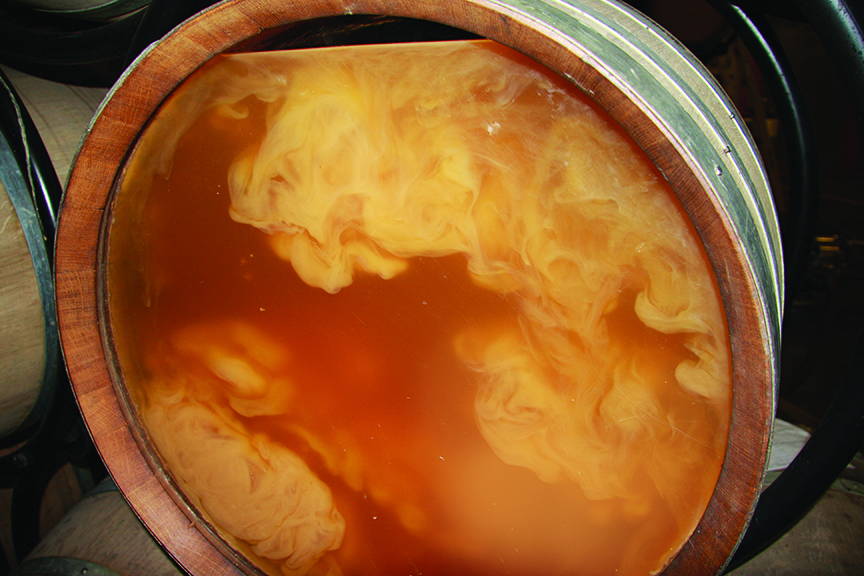
Bâtonnage is less popular in reds, certainly in big reds given their robust flavors and greater organoleptic complexity, but it can be beneficial in turning that medium-bodied, slightly thin wine into a fuller-bodied style. Wines aged in oak barrels benefit further from sur-lie aging and bâtonnage as mannoproteins bind to wood ellagitannins and other tannins for a softer mouthfeel.
For sur-lie aging to be effective, lees must be stirred back into suspension to not only release all those wonderful substances from dead yeast cells but also to avoid reductive conditions that can produce stinky sulfides. If you have ever smelled an off-putting, rotten-egg odor in wine, you’ve experienced reductive conditions. The culprit is volatile sulfur compounds (VSCs), the main one being hydrogen sulfide (H2S), which yeast can produce quite abundantly in the absence of oxygen.
Wine can be aged on the lees for as long as needed to achieve a desired style; it can be weeks, months, or several months up to a year or more, as the autolytic enzymes can remain active for many months.
The frequency of stirring depends on the type of vessel the wine is aging in, the surface area of wine exposed to air when the vessel is opened for stirring, and cellar temperature. It is recommended to stir every other day for the first couple of weeks, and to stir well and thoroughly to provide some oxygen to the lees to avoid reductive conditions, especially if the lees are voluminous. Then lees can be stirred once a week if aging in inert vessels, and, if in barrels, at every topping — for example, every two weeks or once a month. The frequency can be reduced if cellar temperature is warmer than 55 °F (13 °C). The wine should be tasted regularly to ensure it is progressing according to your taste and that no VSCs are forming, then it can be racked when your desired style is achieved.
Even with their antioxidant power, mannoproteins only provide protection against chemical oxidation, not microbial protection; this means that you can go with a lower molecular SO2 (MSO2), the active form of sulfur dioxide (SO2) that keeps microbes in check. But be sure to maintain proper free sulfur dioxide (FSO2) levels according to pH during the aging period; the higher the pH, the higher the microbial spoilage risks, and therefore, the more SO2 is needed. WineMaker’s sulfite calculator can be a great help here. For example, if you typically use 0.5 mg/L (ppm) MSO2 for reds, you can go down to 0.3 mg/L or even 0.2 mg/L in full-bodied, tannic reds. However, if barrel aging, maintain a minimum of 0.5–0.6 mg/L, as acetic acid bacteria can still thrive above the headspace at lower MSO2 levels and produce acetic acid and increase VA in the presence of air. For white wines, 0.8 mg/L MSO2 is still best, but you can go down to 0.5 mg/L in barrel-aged whites, especially those aged on the lees.
INACTIVATED DRY YEAST
Inactivated dry yeast (IDY) products like Oenolees (formerly Biolees, by Laffort) can complement the effects of sur-lie aging. IDYs enhance mouthfeel, increase aromatic intensity and freshness, reduce bitter, astringent tannins, improve color stability in reds, inhibit premature oxidation and browning phenomena, and reduce production of undesirable VSCs such as H2S. These products may also contain other inactivated yeast substances, such as peptides, which increase mid-palate sensations or sweetness. A peptide, and more specifically a yeast protein called HSP12 (look for this protein in product literature, though it may be referred to as “specific peptide fraction” only), is known to increase the perception of sweetness.
GUM ARABIC
Gum arabic is a natural polysaccharide gum extracted from the sap of two specific species of African Acacia trees, A. senegal and A. seyal. It is a common additive in food and beverage processing in a wide range of applications including as a stabilizer, an emulsifier, and as a thickener and syrup for making soft drinks or for making gummy candies and chewing gum. One of its defining characteristics is that it exhibits very low viscosity compared to other gums, which makes it ideal for winemaking applications, and there are many — but in the context of body and mouthfeel, gum arabic can reduce tannin astringency and increase the perception of body or volume, reduce the perception of acidity and tannin harshness, improve aromatic intensity and complexity as well as “palate” balance.
It also stabilizes color in red wines by reducing anthocyanin (color pigment molecules) flocculation in young reds destined for early consumption, which helps prevent bottle staining in unfiltered or lightly filtered wines. You know how frustrating stained bottles can be — in terms of appearance and cleaning bottles for reuse. Use carefully, as it can interfere with aging reactions if overapplied.
Gum arabic is not recommended for wines meant for aging as those much-desirable chemical reactions among tannins and anthocyanins are inhibited; the wine can otherwise take on a milky appearance that can affect its normal clarity.
Gum arabic is typically sold as a 15–30% gum arabic solution, added directly to wine before bottling. Bench trials are essential. Try various dosages, for example, 0.5, 1.0 and 1.5 mL of 25% or 30% gum arabic per quart/liter of wine. Always add to clear, ready-to-bottle wine to avoid fouling filter media if filtering, and avoid other additives after treatment, which could otherwise interfere with the gum arabic.
Don’t confuse gum arabic with cellulose gum, i.e., carboxymethyl cellulose (CMC). The latter is used for wine stabilization in relation to potassium bitartrate (tartrates) crystallization.
GLYCEROL
Glycerol (aka glycerin or glycerine) is a major yeast fermentation metabolite, up to 10 g/L (1%) or more in wine. Sweet, viscous, and flavor enhancing, it improves mouthfeel by modifying astringency by reducing proanthocyanin precipitation by proteins, and moderates astringency. It may also subtly increase perceived sweetness without risking refermentation as glycerol cannot be metabolized by yeast. It can, however, be masked by other compounds in wine and therefore may not impart perceptible sweetness.
As always, bench trials are key, particularly if you have never used glycerol, as results can vary depending on wine composition.
FINING AGENTS
For wines with slightly bitter or astringent tannins — perhaps due to over-extracted seed or oak tannins — fining agents can restore harmony. Options include egg whites, PVPP (polyvinylpolypyrrolidone), gelatin, and casein, depending on additive restrictions and bottling timing.
Egg whites (albumen) remain a classic for fining red wines and taming aggressive tannins, particularly for barrel-aged or highly tannic reds, as they soften astringency while minimizing color loss. Egg whites tend to be too aggressive for young or low-tannin wines and does have an affect on mouthfeel.
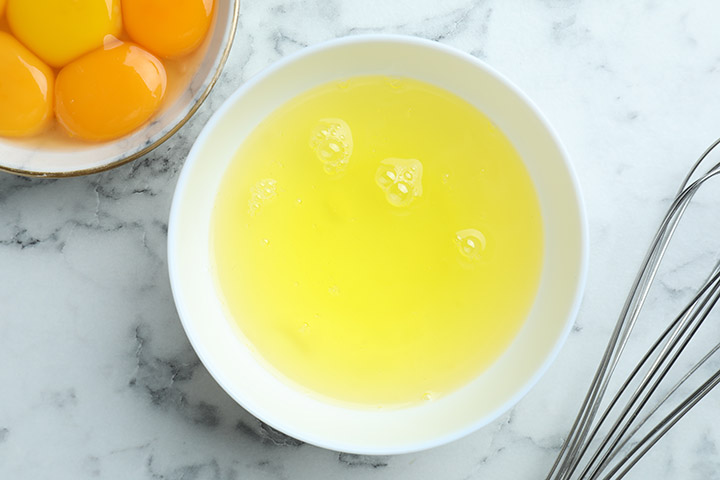
As the solubility of albumin in egg whites decreases once added to wine due to the decrease in egg white salt concentration, and potentially cause protein instability, add a pinch of salt to each egg white to reestablish albumin’s solubility and fining effectiveness. Potassium chloride (KCl) salt is usually used in commercial winemaking, as sodium chloride (NaCl) may not be permitted.
Dosage rates are 2–3 fresh egg whites per 25 gallons (100 L) of wine or 3–8 egg whites per standard 60-gallon (225-L) barrel. Be sure to separate and discard the yolks. The solution is prepared by first adding a pinch of salt to 250 mL of water and gently stirring into the separated egg whites, being careful not to froth the preparation into a meringue. The saline egg white solution is added to the wine directly into the barrel and stirred gently but thoroughly. The wine can be racked within a week or two.
Since the protein and polysaccharide compositions of fresh egg whites vary, results may not always be consistent. For more consistent results, pure, refrigerated egg whites — the type sold in small cartons in the grocer’s dairy section — can be used instead. Enological liquid or powdered albumen preparations are also available. Generally, 3 mL of liquid albumen or 4–5 g of albumen powder are equivalent to one fresh egg white.
PVPP is a synthetic polymer having great affinity for polyphenols and, compared to other similar fining agents, for small to large polyphenols (i.e., small, bitter phenols and larger, less bitter polyphenols). It can be used preventatively or as a cure for reducing astringency or browning. It is often packaged with other fining agents, such as bentonite or casein.
PVPP has the advantage that its impact can be assessed immediately in bench trials and that the treated wine can be racked the same day, although it is recommended to wait several days in case of slower precipitation.
PVPP powder can be added directly to wine at a rate of 250–500 mg/L (ppm); for example, at 250 mg/L, that would be about 5 g for a 5-gallon (19-L) batch. Bench trials at the lowest rate are recommended as excessive use of PVPP can easily dull mouthfeel, aromas, flavors, and color. Settling occurs quickly, as fast as in one or two hours depending on the type of PVPP used, though usually within several days. The wine must be racked immediately after settling, followed by filtration.
Gelatin is another effective solution for fining aggressive tannins in reds. Gelatin fining in conjunction with kieselsol (silica solution) can be used to preserve polyphenols and improve antioxidant activity in reds. In whites and rosés, gelatin requires the addition of an equivalent weight of grape tannins to ensure fining efficacy, or a counterfining with kieselsol to avoid over-fining and possibly making wine unstable with respect to heat-labile proteins.
As gelatin includes a great diversity of products with varying levels of effectiveness due to their method of manufacture and what is called Bloom units, follow product instructions on preparing and adding gelatin to wine. The Bloom number, which you will find on product labels, simply describes a gelatin’s gelling ability, and the stiffer the gelatin, the higher the Bloom number. Most enological gelatin preparations are in the range 80–150; choose one in the range 90–100, and only use unflavored gelatin specifically designed for winemaking. And be careful as there is a risk of overfining and stripping flavors if not used properly.
First soak the gelatin powder in warm water not exceeding 122 °F (50 °C) — higher temperatures may denature the proteins and render them ineffective. Some gelatin manufacturers recommend soaking the gelatin in cold water and then heating it to parboil. Add the still-warm gelatin solution to a small volume of wine — about twice the amount of water used — then add to the rest of the wine and stir thoroughly. Let settle for 1–2 weeks and then rack.
Casein is a type of protein found in milk. In winemaking, it is added as a powdered sodium or potassium salt as it readily dissolves in water. Powdered caseinate is highly effective for improving color in white wines affected by oxidation, but it is also recommended for reducing bitter tannins in over-oaked or overly tannic white wines. It acts and precipitates very quickly because it has very low solubility in wine medium. For this reason, it must be mixed thoroughly when added to wine. It requires counterfining with bentonite to avoid clogging filter pads when wine is filtered. It can, however, strip aromas and color when used excessively.
Add powdered potassium caseinate within the recommended rate, typically 0.5–1.0 g/L, based on bench trials. Dissolve the powder in 10 times its weight of cold water and let the powder swell for several hours. Then add to the wine very slowly while stirring continuously, making sure that all the suspension is stirred in completely and uniformly. Allow to settle for a few days to a week, then rack, counterfine with bentonite, and rack once again.
Which Fining Agent to Choose?
Beyond dietary and personal preferences, knowledge of fining agents and their specific actions, and experience in their application for shaping body and mouthfeel will help you minimize possible mistakes, such as overfining, which may potentially impact other wine characteristics. It’s essential to conduct bench trials diligently — don’t be tempted to speed up the process and do without. And as you prepare for bench trials, given the diversity of fining agents, carefully review manufacturers’ Technical Data Sheets (TDS), often available in PDF form on their websites. These outline details on what the product is and dosage rates for various types of wine.