Chenin Blanc: A Chameleon Grape for Any Taste
Very few grapes in the world have as much versatility and possibility of style than Chenin Blanc. Often associated with traditional French or modern South African winemaking, Chenin Blanc is now on a world tour and popping up everywhere from racy, acidic sparkling wines, to rich, complex dessert wines with incredible aging capacity, and everything in between.
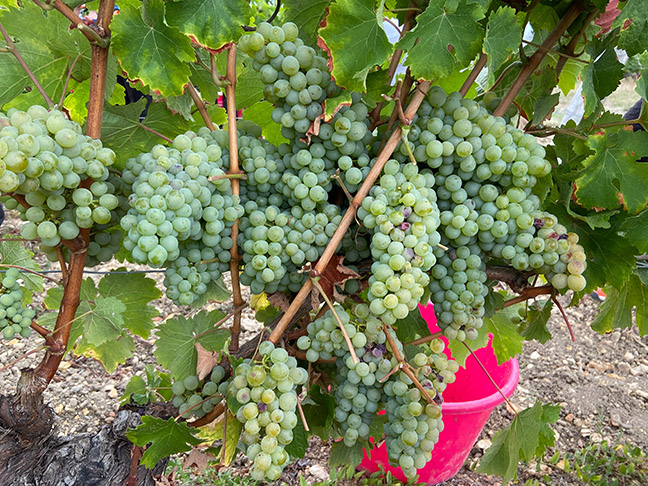
Originating in the Loire Valley of France, Chenin Blanc was often mistaken for other varieties, and its genetic background was not fully understood until the mid-20th century. A natural offspring of Savagnin, Chenin Blanc is the genetic half-sibling of Sauvignon Blanc and the aunt/uncle of Cabernet Sauvignon.
With such noble family members, it is no wonder that this grape has so much acclaim amongst winemakers and critics. Jancis Robinson, famed wine writer and author of The Wine Bible, stated her opinion on Chenin Blanc very beautifully. “Chenin Blanc may well be the most underrated white wine grape in the world. It makes wines high in acidity that generally take a while to unfurl and show their mettle. But with time in bottle, they can hold their own with the finest white wines in the world and, crucially, continue to improve for decades — a real sign of quality.”
After its proliferation within the Loire Valley, Chenin Blanc was brought to South Africa by Dutch settlers as part of the Dutch East India Company’s expansion into the area. It eventually traveled to Australia, where it found great success in the cooler regions, as well as New Zealand, Uruguay, and the United States. The grape was often mislabeled or mistaken for the Portuguese variety Verdelho or Italian Trebbiano, but genetic research conducted in the 1990s confirmed the distinct genetic markers differentiating the varieties.

In the Vineyard
Chenin Blanc grapevines proliferated in the Anjou region of the Loire River Valley, flourishing in the sandy alluvial soils. Sandy soil promotes excellent drainage and with annual rainfall in the Loire Valley of 24–31 inches (60–80 cm), the vines can have reasonably deep but broad root ball formations. Higher altitude can also help create a more concentrated fruit, with the average altitude within the Loire Valley of 500–650 feet (150-200 m). In the higher elevations, the soil becomes slightly rockier and the roots can travel deeper into the hillsides.
Chenin Blanc tends to perform better — giving higher yield and more concentrated fruit — in areas with slight elevation and some coastal temperature moderation. They do best with a temperature range of 39 °F (4 °C) in the winters and up to 65 °F (18 °C) in the summers. River delta regions that support superb Chenin Blanc production include the famous Loire Valley, Walla Walla Valley in Washington State, and California’s Santa Maria Valley, Napa Valley, Columbia Valley, and Clarksburg AVA, outside of Sacramento.
The soil composition has a significant effect upon the resulting flavors within Chenin Blanc. Soils that are well-drained with less organic matter tend to produce a lighter-bodied and flavor-profiled wine. Clay-based soil can be beneficial for the development of Noble Rot (Botrytis) as they tend to hold water and remain damp. Higher levels of schist within soil compositions will help ripen grapes a bit earlier in the season than soils containing clay, as the struggle for water will help to concentrate the sugars faster. Vineyards with substantial amounts of crushed stone, limestone, and flint will help foster mineral notes in the resulting wine. Depending on what style of Chenin Blanc you are interested in creating, where you source your grapes will have dramatic effect on the flavor potential for the wine.
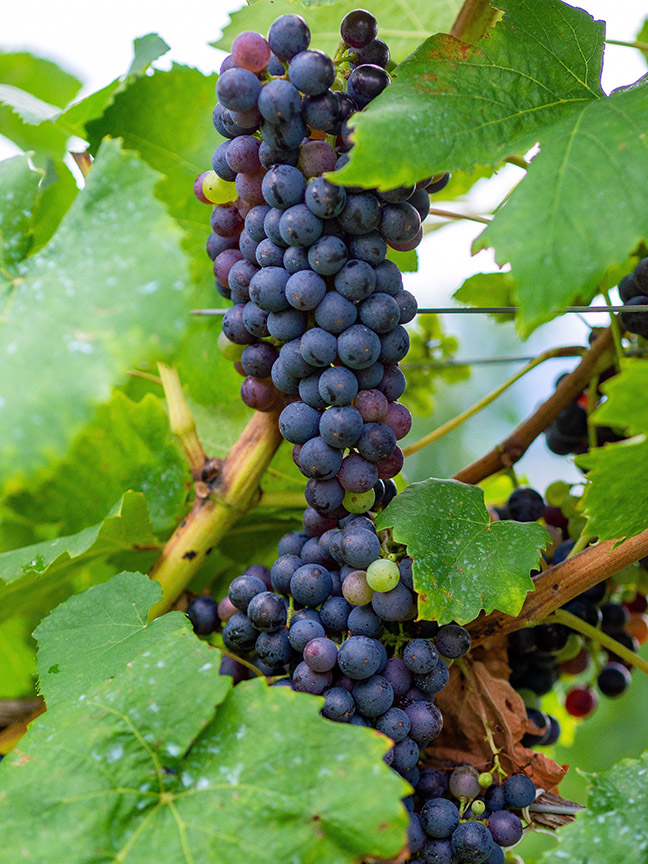
Chenin Blanc grapevines have deeply lobed leaves, containing 3–5 lobes per leaf. The clusters have wide “wings” with a conical taper towards the bottom. Chenin Blanc tends to go through budbreak early and is late to ripen, causing an extended growing season. Newer clones of the variety have been bred to delay budbreak. Some of these newer clones have been accepted and certified by the Appellation d’Origine Contrôlée (AOC), France’s enological governing board. This has changed the growing season dramatically for Chenin Blanc, reducing the growing degree days by up to 10%.
Harvesting the variety can be an exercise in patience and viticultural judgment. Cropping more than 10 tons per acre will leave the fermented wine lacking in varietal character. For quality producers in Loire and Stellenbosch, average yields are typically between 5–7 tons per acre. If harvested early, the grapes will have more citrus and tree fruit flavors of lemon and green apple, very conducive for a lovely sparkling wine. When allowed to ripen to 24–25 °Brix, flavors of stone fruits like peaches and apricot along with tropical notes of pineapple and mango become more dominant. When allowed to hang even longer and to have Botrytis development, the result is the most unctuous, rich flavors of honey, candied lemon peel, apricot preserves, and brioche toast.

In the Winery
While many Old World and New World winemakers agree upon limited skin contact, if any, in the crush and press process, opinions vary greatly on ideal fermentation temperatures. Old World producers typically ferment Chenin Blanc between 60–68 °F (16–20 °C), savoring more of the stone fruit flavors generated by the warmer fermentation. This tradition may have arisen historically simply due to a lack of technology to chill the fermentation bins while fermenting, and then if consumers became accustomed to this warmer fermentation temperature flavor profile, it became accepted as the standard. In New World regions, Chenin Blanc is typically fermented at significantly lower temperatures of 50–54 °F (10–12 °C). Fermenting at lower temperatures can help preserve citrus, floral, and tree fruit flavors.
Yeast strain selection is also critical for shaping the flavors of your Chenin Blanc. If you desire a more Old World-style with stone fruit, apricot, and melon notes, yeast strains CVW5 or ICV GRE prefer a warmer fermentation. Newer yeast strains from Anchor yeast, Alchemy 1 and 2, were developed by the Australian Wine Research Institute and ferment at cooler temperatures, generating that lighter, more acidic, citrus and tree fruit-forward style. These strains are also good fermenters for sparkling wine bases. For a dessert-style wine harvested at higher Brix levels, EC-1118 is an appropriate yeast choice to ferment higher sugar concentrations up to 18% ABV.
The vintner may also choose to introduce oak or malolactic fermentation to their Chenin Blanc wine. The malolactic fermentation can give buttery and butterscotch notes to a rich, tropical fruit-laden rendition. Oak is often used when creating this rich, still white wine. In the Old World where the tropical and stone fruits are preferred, aging in oak will create a richer mouthfeel, more body, and add a depth of flavor. Oak can manifest unique flavors into the wine, often contributing smoky and vanilla notes. In Savennières, France, Chenin Blanc is traditionally aged in acacia and chestnut barrels rather than oak, enhancing the butter attributes.
Chenin Blanc can be a beautiful variety to experiment with late-harvest wine production. The grapes tend to have good tensile strength and are able to hang on the vine to properly accumulate sugar. Clay-based soils retain moisture and are conducive to the proliferation of Botrytis. Botrytis-infected grapes should be harvested carefully by hand as they will be delicate and lengths should be taken to prevent breakage or tearing of the skins.
The vintner can choose one of two ways to create a dessert-style wine. The first would be to utilize a yeast strain with desired characteristics, such as 58W3, which maxes out around 14% ABV, allowing the yeast to have an incomplete fermentation when the alcohol level gets to this point. The vintner can then add spirits to kill off remaining yeast and to stabilize. Racking should be done quickly and aromas monitored closely to avoid the development of hydrogen sulfide. The second way would be to use a strain tolerant of high-alcohol fermentations, such as EC-1118, to ferment as much sugar as possible and then to fortify with brandy or other spirits. Either style can be delicious and may showcase the rich honey and apricot jam notes of dessert-style Chenin Blanc.
Due to the diversity of flavor potential with this variety, Chenin Blanc might be one of the easiest wines to pair foods with. The lively acidity acts as a superb palate cleanser. The lighter styles offering flavors of chamomile, lemon, green apple, and minerality pair beautifully with goat cheese and other pungent soft cheeses. The more tropical fruit-forward versions of Chenin Blanc are superb with fatty cuts of savory meats such as pork belly, lobster, and duck. The Old World, tropical flavors and honey notes are a favorite with Indian curries and spicy Thai dishes. My favorite pairing is the lighter, New World-style with sushi and pad Thai.
The diversity of potential flavors generated by the fermentation of Chenin Blanc is vast, giving the grape a utilitarian place in the vineyard portfolio. From dry, fruit- or mineral-forward still wines, to acidic and bright sparkling wine, and rich and decadent Botrytis dessert wines, Chenin Blanc has a stylistically adaptable quality among wine grapes.
Chenin Blanc Recipe
Yield 5 gallons (19 L)
Ingredients
125 lbs. (57 kg) Chenin Blanc grapes or 6 gallons (23 L) Chenin Blanc grape juice
Sanitizing solution of potassium metabisulfite (KMBS)
5 g yeast (58W3, Alchemy 1 or 2, CVW5, ICV GRE, EC-1118)
7.5 g Go-Ferm Sterol Flash
7.5 g Fermaid O
5 g Fermaid K
5 g Opti-White (optional, but helps)
5 g Booster Blanc (optional, but helps)
5 g bentonite
Potassium bicarbonate
Distilled water
Table sugar (if Brix is low)
Potassium sorbate
Zenith Uno or Celstab (optional, but helpful)
Equipment Needed
Crusher/destemmer
Wine press
15-gallon (57-L) fermentation bucket or bin
5-gallon (19-L) carboy
Airlock and bung
Auto-siphon and tubing
Stir paddle
Spray bottle
pH meter
Hydrometer
Spoon and small mixing bowl
Thermometer (digital preferred)
Bulk KMBS sanitizing solution made and stored in water jugs or jars
Glass marbles (optional)
Step by step
1.Ensure all your equipment is clean and in proper working order. Make a fresh batch of KMBS sanitizing solution using 1 Tbsp. of KMBS powder and 1 Tbsp. of citric acid mixed into 1 gallon (3.8 L) of clean water. Fill a spray bottle with the solution and spray down your processing equipment, but ensure there is no pooling of sanitizer in bins or press basins.
2. If using fresh grapes, crush and destem and then press grapes.
3. Transfer juice into a sanitized fermentation bucket. Add 50 ppm of KMBS to kill off natural yeast. Utilize the WineMaker sulfite calculator to assist in your calculations. If using purchased juice, ask if this has already been done for you to ensure you don’t overdose the juice.
4. Take measurements of your juice, including volume, Brix, pH, and titratable acidity (TA). Adjust the juice to have a starting Brix of at least 22, a pH of ~3.3, and TA of 8 or 9 g/L. www.wineadds.com has calculators to assist you with Brix and acidity adjustments.
5. To prepare the yeast, warm up 50 mL of distilled water to 60 °F (16 °C) and add to the mixing bowl. Then add the Go-Ferm Sterol Flash. Stir well. Then add five grams of yeast and stir well. Allow to sit for 15 minutes. Then mix in thoroughly to the juice with a sanitized stir paddle.
6. Place a lid on the fermentation pail loosely and wait 24 hours to observe yeast activity. Take Brix measurements twice daily via a hydrometer to ensure the start of fermentation. Take temperature measurements daily. Try to keep the fermentation temperature as close to 60 °F (16 °C) as possible to preserve the aromatic compounds. To do this, you may need to put the fermentation bin in a cool area of your basement, outdoor porch, or refrigerator, or inside a larger bin (garbage pail) filled with ice water.
7. After one or two days of fermentation, check the Brix and if it has dropped by one or two degrees, it will be time to add nutrients. Add 100 mL of distilled water to a mixing bowl and add 7.5 g Fermaid O and the Opti-White and Booster Blanc if you are using them. Mix well to create a slurry and then stir into the fermenting juice with a sanitized stir paddle.
8. Continue to monitor Brix and temperatures daily (twice daily is preferred). When the Brix has declined to 15–11 °Brix, add the Fermaid K in the same way you added the Fermaid O.
9. Continue to ferment as close to 60 °F (16 °C) as possible until the wine has fermented to dryness (about -1 to -2°Brix). This should take between 7–21 days.
10. Rack off the gross lees into a carboy by using the sanitized auto-siphon and tubing. Add 50 ppm of KMBS and stir well into the wine. Affix the bung and airlock and allow to sit for 3–4 days in a cool environment.
11. After 5–7 days, rack off the lees into a clean, sanitized carboy. Affix a bung and airlock and allow to sit for a month. If you have an air gap after racking, either top off with a complementary wine such as Chardonnay or Albariño, or add sanitized glass marbles to displace the headspace.
12. When the wine is one month old, rack again into a sanitized carboy and add another 50 ppm of KMBS. At this point the wine should give off minimal lees and should be hazy but not opaque. Consider fining with bentonite to help clarify it and help with heat stabilization. Mix bentonite according to its directions (every formulation may have its own unique preparation). Add to wine and allow to settle over 2–3 weeks. Once bentonite has settled, rack the wine off the lees into a clean and sanitized carboy.
13. Allow the wine to sit and age, maintaining a free SO2 level appropriate for the pH. WineMaker’s sulfite calculator will help you determine the proper dosage given the parameters of pH and volume. You may consider cold stabilizing or adding a cold stabilizing product such as Zenith Uno or Celstab. These products may only be used if the wine is filtered down to 0.5 micron, as turbidity will interfere with their effectiveness. If filtration is not available, try to cold stabilize via refrigeration or exposure to cold air.
14. Once cold stability has been achieved via physical or chemical means, taste the wine and see if you desire some sweetness to balance. If you choose to backsweeten, raise the free SO2 to 50 ppm and add 1 g/gallon (1 g/3.8 L) of potassium sorbate. Stir well, then add the amount of sweetener needed to achieve the desired end result (after conducting bench trials to determine this).
15. Bottle once you are happy with the flavor and stability of the wine. Always add a small amount of sulfite before bottling — 10 ppm beyond the sulfite calculator’s recommended value — to account for oxygen uptake during the bottling process.
Further Reading . . .
While Chenin Blanc makes many great varietal wine styles, it can also be a great grape for white blends. Learn more about creating these complex, balanced blends.