Rosehip Wine: My crown of thorns
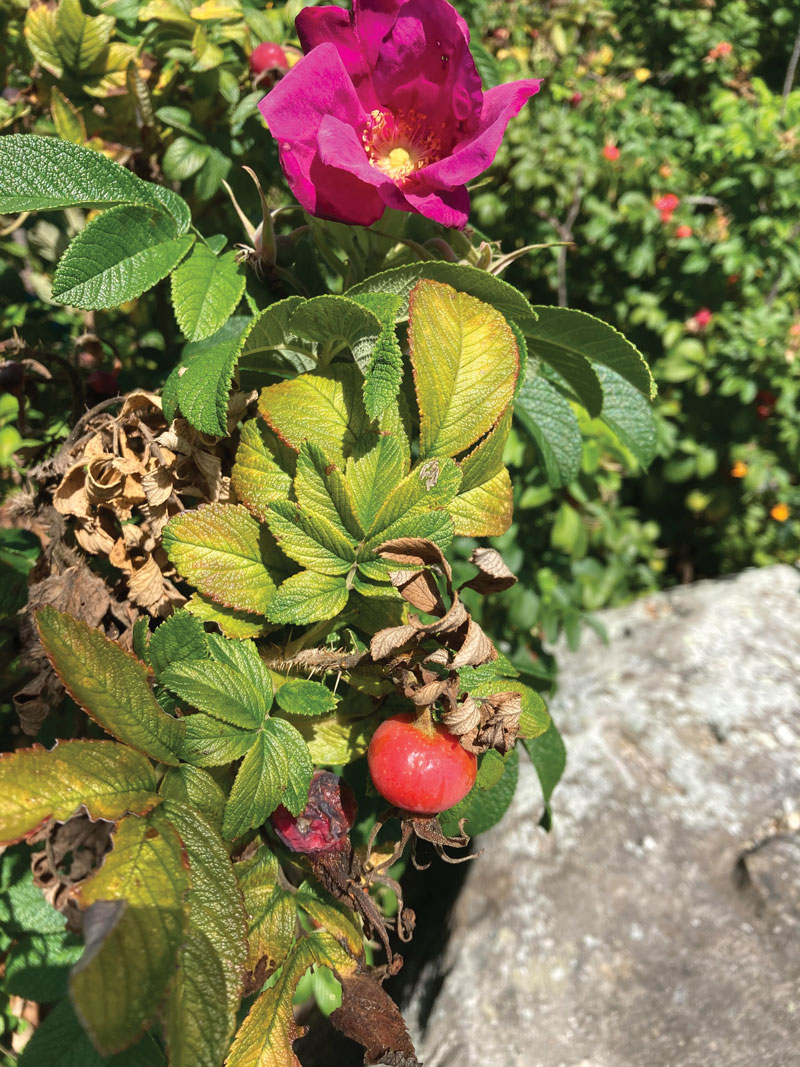
Rugosa roses (Rosa rugosa) line the cliffs and trails of Bailey Island, Maine bringing a sweet and peppery scent that wafts and wanes in the salty air. They peek out like polka dots in thorny green hedges along the popular attraction known as Giant Stairs. Wedding white and Popsicle pink blossoms are mother nature’s gifts of June and September. I cup them into my hands and admire their resilience and perfect creation.
For years I’d heard that locals made rosehip jelly and rosehip tea from their fruit. So when I asked if anyone made rosehip wine, no was the only reply. When I searched online for a recipe, I Iearned that rosehips are a great source of vitamin C. When children in England couldn’t obtain fresh oranges during World War II, they consumed rosehips.
My husband, Mike, said I was crazy to make a wine no one ever heard of — which made me even more determined. One day, I left him sleeping in our cabin while I geared up for battle armored in a long sleeve shirt, long pants, and kitchen gloves, with a plastic trashbag and a spaghetti lifter in hand to gather my “loot.” Tourists stopped me and asked what I was doing with the gorgeous cherry tomato-like hips. When I answered making wine, they started taking my photo and I gladly posed as if I were the editor of Bon Appétit.
Finding hedges full of the rosefruit was like looking at a goldmine. My recipe stated I needed 12 lbs. (5.4 kg) of hips for two gallons (7.6 L) of wine. Little did I know how tiring it would be to wade in among the thorny brush to grasp the few that didn’t fall to the ground. Patting myself on the back for my can-do spirit slowly morphed into unladylike expletives and “This better be good!” Eventually I returned to our cabin and I ran for the shower. Mike eyed the sack on the table with trepidation. Satisfaction ensued and I was again proud of my Irish stubbornness. “I’ll show him!”

Tourists stopped me and asked what I was doing with the gorgeous cherry tomato-like hips.
When we returned home to Pennsylvania, our son, Andrew, agreed to share his beermaking equipment for my winemaking effort. He had everything, right? Well, you learn quickly that there are always more items to need and your “free” investment is going to cost you. Andrew suggested that it might be better for the wine process if each hip were cut in half to dry out the seeds. I sat at my dining room table cutting 12 lbs. (5.4 kg) of things I now came to hate — one by one.
With the rosehips and seeds in the mesh bag the fermentation finally kicked off and we stirred it for a number of days. A pungent apple-like fragrance rose to my nose each time; almost like a light Sherry. I was becoming more and more excited.
I created my label design using a photo of the roses along the island trail. I called her “Bailey Rose.” Once bottles were filled and corked, they went to the dark basement (directions said not to touch for at least six months). That night, I began to dream that Mr. Dom Perignon himself would call me for cases and cases of it. But alas, after six months when I gathered friends for a sampling party and passed around the Waterford crystal goblets for the tasting, their faces winced in pain. One said she felt lightheaded, while another suggested it may make a nice salad vinaigrette. My rosehip wine could dissolve the rust off a moth-balled Navy destroyer.
I poured the pretty pink demon into drains that will never clog again. Give up on winemaking? Nah, maybe I’ll now go looking for . . . dandelions?