Petit Verdot: Bordeaux’s Color Adjustor
I’ll never forget the first time I crossed paths with Petit Verdot. I was in my mid-twenties and visited New York’s Long Island wine country. At this point in my fledgling career, I was very interested in biodynamic growing applications in colder growing regions. Amidst the flat stretches of turf farms and potatoes, an organic and biodynamic vineyard quietly lay before me with a modest, charming, repurposed barn open for tastings.
As I waited patiently inside of the Shinn Estate tasting room (now Rose Hill), I reviewed their wine list and decided to try one or two wines I knew were to my liking, including a “Wild-Boar-Doe” blend grown on the estate. The wine was wonderful and I got chatting with the vintner about its attributes. He informed me that the magical ingredient to his inky blend was Petit Verdot, one of the principal varietals of Bordeaux.
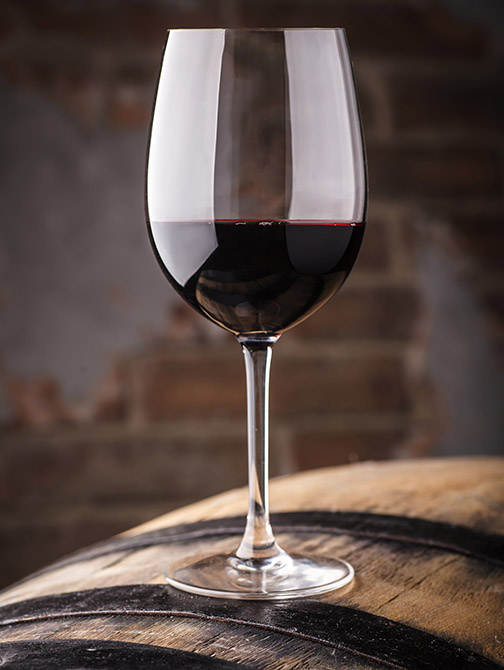
When I disclosed that I was unfamiliar with the variety, he gave me a wink and said, “Wait here kid, you will love this.” When he returned from the cellar holding a 375-mL bottle, my curiosity peaked. Out from the bottle flowed a liquid that looked like squid ink, incredibly dark purple, with color intensity that makes the wine opaque.
Upon sampling the wine, my “wine life” was changed. It flowed through my palate like a liquid velvet; both incredibly smooth yet with a firm structure and medium viscosity. I could not get over the sensation. I also had never observed such floral aromatics in a red wine before. Savory white pepper, crushed lavender flowers, and violets lay out before me like a summer field in France. While floral and herbal on the aroma and initial sip, bountiful black fruit followed. The wine was at once light as a feather on my palate yet coating, tannic, and structured. What an enigma of sensation and flavor. The vintner explained the grape’s key contributions to blending, but like myself, he had a fascination with it on its own. He created a small run of half bottles for wine lovers who enjoy something unique and different in their glass. I immediately bought as many bottles as my meager bartending wages could afford and left the winery with a new favorite.

Petit Verdot still stands today as my favorite red variety, and even though I try hundreds of wines a year, it remains the unicorn: Rare, special, and irreplaceable.
Petit Verdot originated from the Bordeaux region of France as a cross-pollination of Tressot Noir (indigenous to Bordeaux) and Duras. While neither are planted nowadays, save for genetic research centers, their progeny has flourished. As education and resources increased over time, the French clonal breeding program has created quite a few clones of Petit Verdot that all have slightly different flavor profiles and growing preferences. Four clones are legally allowed to be grown and used within France: Clones 400, 1058, 1273, and 1274. Clones most popularly grown in the U.S. are variants 2, 3, and 6.1. In my experience, European clones of Petit Verdot generally showcase more herbal and floral notes, while clones grown in America offer more bold black fruit upfront, and herbs and florals are secondary. Petit Verdot can also be identified by a variety of other names throughout the world, such as Carmelin, Boulin, Heran, Lambrusquet, Verdau, and Verdot Rouge. It is now grown in the Medoc region of France, Chile, the U.S., Australia, New Zealand, Spain, Portugal, Mexico, and Malta.
In the Vineyard
A potent blending grape, Petit Verdot is a grape for patient viticulturists. The variety tends to bud early and then ripen late, creating a long growing season. The thicker skins help to prevent disease and infection as the grapes mature. “Petit Verdot” translates to “the little green one,” a reflection of the long hang time of the grape. Due to this late ripening characteristic, after the phylloxera spread of the late 17th century, many farmers in France chose not to replant the variety, favoring earlier ripening varieties like Merlot or Malbec in its place.
Petit Verdot lives happily in the Medoc, enjoying its temperate Atlantic climate. The steady temperatures of this region allow a long and consistent ripening process, growing some of the best Petit Verdot in the world. While the grapevines do favor the classic gravelly soils of Bordeaux, they need moderate temperatures with the rocky soils to maintain proper hydration. In areas of more severe heat and temperature variances, such as California and Australia, the vines will need irrigation to withstand higher temperatures. The vines have a medium to high vigor, needing a bit of hedging throughout the season to curtail the vegetative growth. The young leaves and tendrils have a yellow tint to them, often inspiring fear in the hearts of newer viticulturists. As the plant and leaves mature, the leaves take on a more matte green color with three lobes and a subtle serrated tooth to the edges of the leaves.
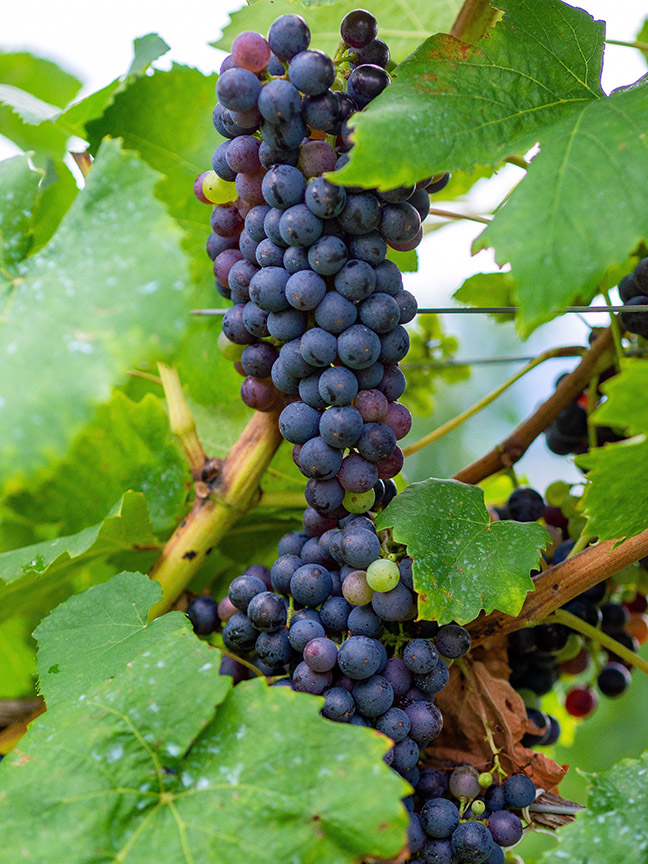
The berries are small and round, while the clusters are medium to small with an elongated, conical shape. The increase in the skin-to-pulp ratio is one of the contributors to the higher levels of condensed tannins in the resulting wine. The skins help to build the intense structure of the wine and give the wine its rich, dark, almost onyx pigment.

In the Winery
Petit Verdot makes an incredible standalone wine, but is more often a key ingredient in blends. Even a 10% addition to a Cabernet Sauvignon or Merlot can increase the pigmentation greatly. It can also provide added tannic structure to lighter-bodied red wines such as Grenache or Tempranillo. It is important for the winemaker to assess the ripeness of the grapes when purchasing or growing them. Under-ripened Petit Verdot can have odd aromas of bananas and pencil shavings. As the grapes ripen, those phenolic characters manifest more as leather, purple flowers such as lavender, lilac, and violets, and black fruits like plums and blackberries.
When crafting a Petit Verdot in the winery, I advocate for a cold soak if the fruit is clean and proper holding temperatures of 40 °F (4 °C) can be attained. A 48-hour cold soak will help release more condensed tannins and color into the juice. Condensed tannins are not as available to hydrolysis, but after the soak, the acids and higher fermentation temperatures given off by fermentation will help to polymerize the tannins and color compounds forming proanthocyanidins, and locking in the rich, dark color. Petit Verdot skins are thick, so pectic enzyme can be added towards the end of the cold soak as the wine comes to temperature. This will assist in the stabilization of color as well.
I prefer a yeast strain that will enhance the herbal and black fruit notes of the variety. ICV GRE and ICV D254, with alcohol tolerances of 15% and 16% ABV respectively, really help to promote the rich blackberry, blueberry, and plum notes. D254 helps to bring out more of the earthy, dried purple flower notes, whereas ICV GRE gives the spotlight to the fruity notes and less so to the herbs. In years with excellent ripeness and high Brix, VRB yeast may be the superior choice, with an alcohol tolerance of 17% ABV. This yeast makes more of a long-term aging wine, as opposed to the ICV strains being more conducive to making an early-to-market wine.
As with any fermentation, the use of glutathione-based nutrients will help to bring out the aromatic precursors within the grapes, contributing to a larger and fuller aroma. This is especially useful to make the complex herbal and floral notes really blossom when making a single-varietal Petit Verdot wine. Hydrolysable and condensed tannin products should also be added through the fermentation to act as sacrificial tannins and fortify the natural grape tannin.
You may observe some dramatic changes in the aroma when aging Petit Verdot. Fresh Petit Verdot can have bits of green pepper, black pepper, and blueberry. The aging process, preferably with oak, will draw out more complex flavors of leather, tobacco, dried lavender, fresh violets, and even subtle smoky notes, depending on the toast gradient. I would advocate for at least a medium-plus toast level for oak products used, if not a heavy toast. The smoky barbecue notes, licorice, and molasses will be greatly enhanced by heavier toasted oak, but great care should be given not to completely overpower the natural grape aromas with the heavily toasted oak bouquet.
The quest for my wine “unicorn” that is Petit Verdot continues. I still struggle to find bottles of the varietal on its own in local wine shops or restaurants. Occasionally I find it well represented in a Bordeaux blend at French bistros. I often have more luck finding the “unicorn” out in the wild at small, local wineries I come across in my travels, where the winemaker, like me, recognizes the uniqueness of its dark purple flavors. But the seeking process is part of the fun, always hoping to find Petit Verdot, standing alone, in all its glory. Then again, if you make your own batch of it, the search for the next great bottle may just require a trip to your wine cellar!
Petit Verdot Recipe
Ingredients
125 lbs. (57 kg) Petit Verdot grapes
Sanitizing solution of potassium metabisulfite (KMBS)
KMBS powder and citric acid powder
5 g yeast (ICV GRE, ICV D254, or VRB)
Liquid pectic enzyme
7.5 g Go-Ferm Sterol Flash
7.5 g Fermaid O
5 g Fermaid K
7.5 g FT Rouge tannin
5 g Opti-Red (optional but helps)
5 g Booster Rouge (optional but helps)
5 g oak dust, French medium+ toast
MLF bacteria (Wyeast liquid cultures)
Distilled water
French medium+ to heavy toasted oak chips, cubes, or spiral
Equipment Needed
Crusher/destemmer
Wine press
15-gallon (57-L) fermentation bucket or bin
5-gallon (19-L) carboy
Airlock and bung
Auto-siphon and tubing
Stir paddle
Spray bottle
Punchdown tool
pH meter
Hydrometer
Thermometer (digital preferred)
Glass marbles (optional)
Step by step
Ensure all your equipment is clean and in proper working order. Make a fresh batch of KMBS sanitizing solution using 1 Tbsp. of KMBS powder and 1 Tbsp. of citric acid mixed into 1 gallon (3.8 L) of clean water. Fill a spray bottle with the KMBS/citric acid solution and spray down your processing equipment, ensuring there is no pooling of sanitizer in bins or press basins.
Crush and destem grapes and transfer immediately into a sanitized 15-gallon (57-L) fermenter bucket.
Add 50 ppm of KMBS to kill off natural yeast. Utilize the sulfite calculator to assist in your calculations. Throw a cover on the must bucket and allow to sit overnight in a cool area. This will kill negative microbes and allow the must to come to a temperature of 60 °F (16 °C).
The next morning (at least 12 hours after the KMBS addition), add five drops of pectic enzyme per gallon (3.8 L) of must and stir well. Add the oak dust and stir again.
Take measurements of your juice, including volume, Brix, pH, and TA. Adjust the juice to have a starting Brix of at least 24, a pH of ~3.3–3.4, and TA of 6–7 g/L. Utilize tartaric acid if needed to increase acidity. www.wineadds.com has helpful calculators for adjusting acidity in must.
To prepare the yeast, warm 50 mL of distilled water to 60 °F (16 °C) and add to the mixing bowl. Then stir in the Go-Ferm Sterol Flash before stirring in the yeast. Allow to sit for 15 minutes. Then thoroughly stir this mixture into the must with a sanitized stir paddle.
Place a lid on the fermentation pail loosely and wait 24 hours to observe yeast activity. Take Brix measurements twice daily via a hydrometer to ensure the start of fermentation. Take temperature measurements daily. Try to keep the fermentation temperatures between 70–85 °F (21–29 °C) to help secure color but also avoid off-aromas. To do this, you may need to put the fermentation bin in a cool area of your basement, outdoor porch, or refrigerator, or in a larger bin (garbage pail) filled with ice water.
Punch down the cap and aerate the must at least three times a day to help avoid reductive characters. Adding the yeast nutrients at appropriate times will also help to avoid reductive characters.
After a day or two of fermentation, check the Brix and when it has dropped by one or two degrees it will be time to add nutrients. Add 100 mL of distilled water to a mixing bowl and 7.5 g Fermaid O and the FT Rouge tannin, along with Opti-Red and Booster Rouge if you are using them. Mix well to create a slurry and then stir into the fermenting juice with a sanitized stir paddle.
Continue to monitor Brix and temperatures daily (twice daily would be preferred). Add the Fermaid K in the same way you added the Fermaid O when the Brix is between 15–11 °Brix.
When the temperature is between 75–80 °F (24–27 °C) and the alcoholic fermentation is well underway, add the Wyeast MLF packet bacteria to the must. Stir to punch down the skins and incorporate the bacterial cultures.
Continue to ferment as close to 80 °F (27 °C) as possible until the wine has fermented to dryness (-1 to -2 °Brix). This may take 7–21 days.
When the wine has achieved dryness, press the must into a 5- or 6-gallon (19- or 23-L) carboy with an airlock to complete MLF.
After 5–7 days, rack off the lees into a clean, sanitized carboy. Affix bung and airlock and allow to sit for a month. If you have an air gap after racking, either top up with a complementary wine such as commercially made Syrah or Mourvèdre, or add sanitized glass marbles to displace the headspace.
Monitor the MLF via paper chromatography or measure the reduction of malic acid via a meter to track the progression of the fermentation. When the MLF is complete, rack the wine and add 50 ppm of KMBS.
One month after the initial racking and addition of KMBS, rack it again into a sanitized carboy and add another 50 ppm of KMBS. Consider degassing at this point, briskly stirring with a wine whip during a racking session. Always be careful when using this tool in a glass carboy. Consider racking it into a food-grade bucket and degassing in that. Never put a glass carboy under suction or negative pressure.
While the wine is aging, consider the addition of oak chips, cubes, or staves to add a bit of oak to enhance the wine. Run bench trials to determine the proper dosage of oak. Taste often to not over oak the wine.
Allow the wine to sit and age, maintaining a free SO2 level appropriate for the pH. WineMaker’s sulfite calculator will help you determine the proper dosage given the parameters of pH and volume. You can filter the wine after eight months of aging if you choose. At this point, it should have been racked four times and have completed its oak aging.
Consider cold stabilizing or acquiring a cold stabilizing product such as Zenith Color. This product may only be used if the wine is filtered down to 0.5 micron as turbidity will interfere with its effectiveness.
Once cold stability has been achieved via physical or chemical means, taste the wine and consider if it is ready to bottle. Fining agents such as Super Kleer or mouthfeel enhancers such as gum arabic may help to improve mouthfeel and clarity.
Bottle wine once you are content with the flavor and stability of the wine. Always add a small amount of sulfite before bottling, 10 ppm beyond the sulfite calculator’s recommended value, to account for oxygen uptake during the bottling process.
Further Reading . . .
• We asked four commercial winemakers the same series of questions about making a red Meritage (which is a blend that uses the same grapes as a Bordeaux blend but made outside of Bordeaux, France). There were a lot of different thoughts on how to make a great Meritage wine: