Tropical Winemaking: Dry Finish
Many, many years ago when my five siblings and I were very little, my mother, Alma, tried to make homemade wine. We lived in the Santa Cruz valley of the Caribbean island of Trinidad and Tobago. Social gatherings usually took place among family members and neighbors and folks enjoyed taking a sip of island rum or wine. Purchasing these items at the grocery store was a bit expensive, so my mother decided to try making wine at home. She used sugar, fruit from our island garden, and bread yeast. She put all the ingredients into a gallon bottle and capped it tightly. At the time, she did not realize that gases would bubble up to the surface and try to escape, and she put the bottles beneath the kitchen sink. One day when my sister was sweeping the kitchen floor, the broom accidentally touched one of the bottles and it exploded!
At this point, my mother tried to encourage my father, Zoy, to learn to make wine. He was not interested, really, but decided to purchase a winemaking book and give it a try. This book taught him how to make wine from grapes. However, living on a Caribbean island, no grapes were available. So my father began to experiment with the recipes, using tropical fruit and even hibiscus flowers. Later, my mother heard about a 5-day winemaking course and was able to encourage my father to attend. More recently, in 2013, he attended a one-day course at a local university.
Over the years, my father has experimented with various types of fruit, usually whatever was in season at the time and he could get for a good price at the market, as well as fruit picked from our backyard. These included citrus fruits such as limes, oranges, and grapefruit. He also has used yellow-green star-fruit (known in Trinidad as “five-fingers”), which produces a clear, acidic juice; the red, tangy sorrel fruit, and the Gulab jamun (both of which make a Merlot-colored rosé wine); big, sweet, and juicy Julie mangoes; the pinquant tamarinds; cashews, and once he even used plain white rice.
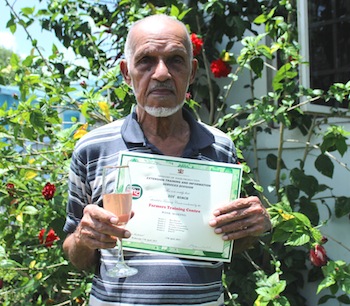
Dad’s homemade wines are always very tasty and we enjoy them at parties. His rosé wines are my favorite — they can compete with commercial wines anyday!

Here is the recipe my father uses per gallon of water/fruit juice mixture:
Ingredients
1 gallon (3.8 L) fruit and fruit juices
3 lbs. (1.4 kg) sugar (for sweet wine)
2.5 lbs. (1.1 kg) sugar (for semi-sweet wine)
2 lbs. (0.9 kg) sugar (for dry wine)
Campden tablets or potassium metabisulfite
Bentonite
Wine yeast and yeast nutrients
Litmus paper to check acidity
Step by step
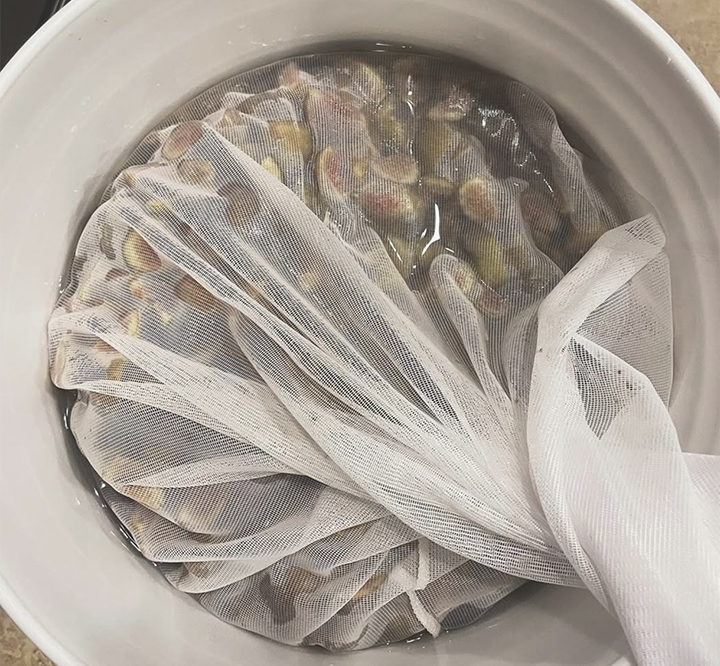
In a 20-gallon (76-L) clean, blue, plastic barrel he creates the must mixture, first dissolving the sugar in the water and fruit juices. Then add 1 Campden tablet per gallon of liquid or 1⁄2 teaspoon potassium metabisulfite to sanitize and kill any bacteria and then add yeast and nutrients. During the first 7 days, cover with a clean kitchen towel and secure from ants, stirring twice daily. During the next 14 days, secure the mixture with an airtight lid and airlock. After fermentation, use some Bentonite for clearing up the wine. When the airlock stops releasing gas, the fermentation process is complete. The alcohol content is usually below 11% and the color, aroma and flavor varies depending on the type of fruit used.